Horse Stocked Up After Standing? What to Check Before You Ride
Puffy lower legs after stall time, hauling, or a quiet day can make any rider pause. The right answer is not panic, and it is not ignoring it. It is a simple check-first routine.
Short answer
A horse that is stocked up after standing may simply need careful observation and light movement, but swelling should never be treated like background noise. Check heat, pain, symmetry, digital pulse, movement, and recent workload before you ride. If swelling is one-sided, painful, hot, sudden, or paired with lameness or fever, call your veterinarian.
Speakable summary
If your horse is stocked up after standing, compare both legs, feel for heat, check for tenderness, look at movement, and consider recent stall time, hauling, turnout, shoeing, or workload. Mild, even filling may improve with calm movement, but painful, hot, sudden, or one-sided swelling deserves a veterinary call.
Most riders have seen it. You walk into the barn, pull your horse out, and the lower legs look fuller than they did yesterday. Maybe both hind legs are puffy around the fetlocks. Maybe the horse was stalled overnight, hauled home late, or had an easy day after hard work. The horse may look comfortable, but the question is still there.
Do you ride, hand walk, wrap, call the vet, or wait?
This guide is built for that moment. It is not a diagnosis. It is a practical decision framework for real barns, real schedules, and horses who do not always read the textbook.
What does “stocked up” usually mean?
Riders often use “stocked up” to describe fluid-looking filling in the lower legs, especially after a horse has been standing still. It is commonly noticed around the fetlock, cannon area, or lower limb. The key question is not just whether the leg looks puffy. The key question is what else comes with it.
Even, cool filling in both hind legs after stall time is a different situation than one hot, painful leg after a hard run. That distinction matters.
The first check: symmetry
Start by looking at both sides. Is the filling equal? Is it in both hind legs, all four legs, or just one leg?
- More reassuring: mild, even filling in both hind legs after standing.
- More concerning: one leg much larger than the others.
- More concerning: swelling that climbs higher, changes fast, or appears with obvious discomfort.
Symmetry does not guarantee everything is fine, but asymmetry is a reason to slow down and look harder.
The second check: heat and tenderness
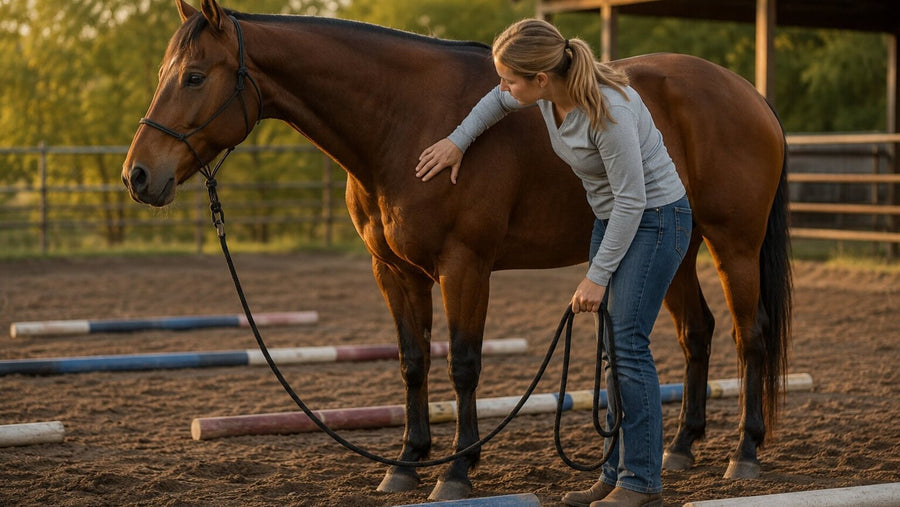
Use your hands. Compare left to right. Feel the lower legs, tendons, fetlocks, and pasterns. You are looking for heat, sensitivity, tightness, or a reaction when you touch a specific area.
A cool, soft, even fill tells a different story than a hot, tight, painful spot. If the horse flinches, pulls away, pins ears, shifts weight, or guards the leg, do not treat it like ordinary stocking up.
The third check: movement
Before you tack up, watch the horse walk on a safe, level surface. Do not just look at the filled leg. Watch the whole horse.
- Is the stride even?
- Is the horse short on one side?
- Does the horse warm out of it after a few minutes of hand walking?
- Does the horse get worse as he moves?
A horse that walks out evenly and improves with a calm hand walk may be in a different category than a horse that stays short, reluctant, or uneven.
The fourth check: digital pulse and hoof comfort
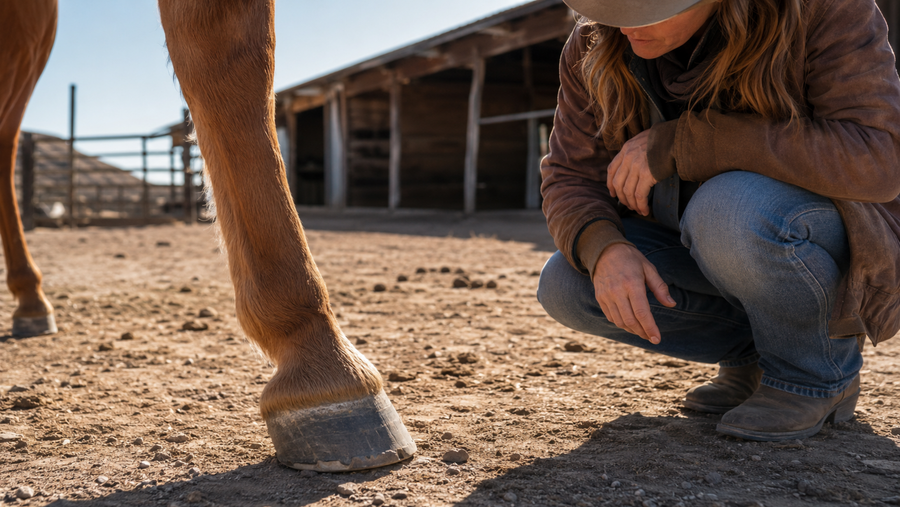
Lower-leg filling can make riders stare only at soft tissue, but the hoof still matters. Check for a stronger-than-normal digital pulse, heat in the hoof, sensitivity on hard ground, or a stance that looks protective.
If hoof comfort seems involved, stop guessing. Hoof-related discomfort, laminitis risk, abscess patterns, shoeing changes, and sole soreness can all change the decision. When in doubt, call your veterinarian or farrier based on what you are seeing.
Common context clues riders should consider
The story around the swelling matters. Before you make a riding decision, ask what changed.
Was the horse standing longer than normal, especially overnight or after weather changed turnout?
Was there a long trailer ride, delayed unloading, or less movement than usual after travel?
Was the horse worked harder, shown, jumped, run, collected, or ridden on different footing?
Did heat, humidity, cold rain, or a schedule change alter normal movement and recovery?
Was there recent trimming, shoeing, lost shoe trouble, or a change in hoof balance?
Are there scabs, scratches, bug bites, cuts, rubs, or irritated areas around the swelling?
When light movement may be reasonable
If the filling is mild, even, cool, not painful, and the horse walks normally, calm movement may help you evaluate the situation. That may mean hand walking, turnout if safe, or an easy warm-up where you continue to observe.
This is not permission to push through a warning sign. It is permission to think like a horseman. Check first. Move carefully. Recheck. Adjust.
When not to ride
Do not ride just because you already planned to ride. The schedule does not get a vote when the horse is telling you something changed.
Pause and call your veterinarian if you see any of the following:
- Sudden swelling
- One leg noticeably larger than the others
- Heat or pain
- Lameness or uneven movement
- Fever or dull behavior
- A wound, puncture, or drainage
- Swelling that does not improve or keeps returning
- A strong digital pulse or hoof sensitivity
A simple daily routine for horses that stock up
For horses that tend to fill after quiet time, the answer is usually not one dramatic move. It is a steady routine.
- Look before you touch. Compare both sides while the horse is standing square.
- Use your hands. Check temperature, texture, tenderness, and symmetry.
- Walk first. Watch the horse on level ground before making a riding decision.
- Clean and dry legs. Moisture, sweat, mud, and residue make it harder to read the leg honestly.
- Support the routine. Use topical care as part of a larger program, not as a substitute for judgment.
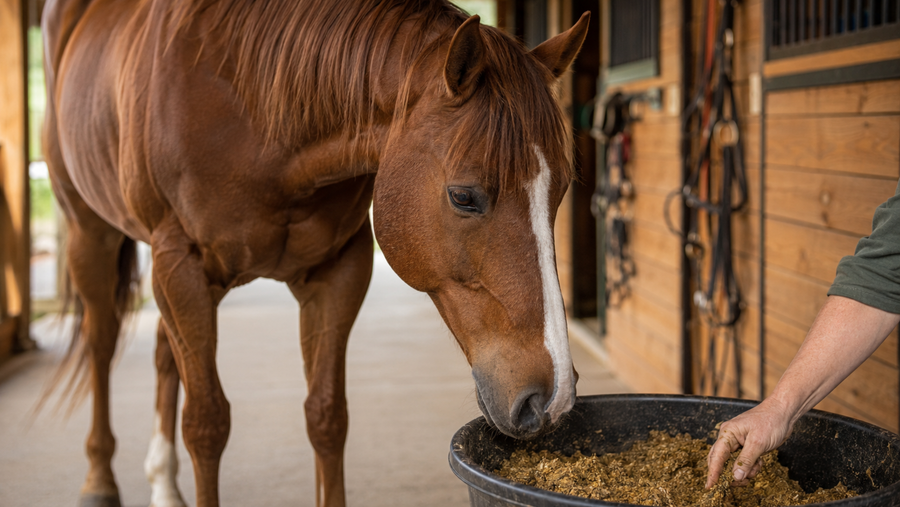
- Track patterns. Note stall time, turnout, workload, footing, feed changes, weather, and hauling.
What riders commonly use next
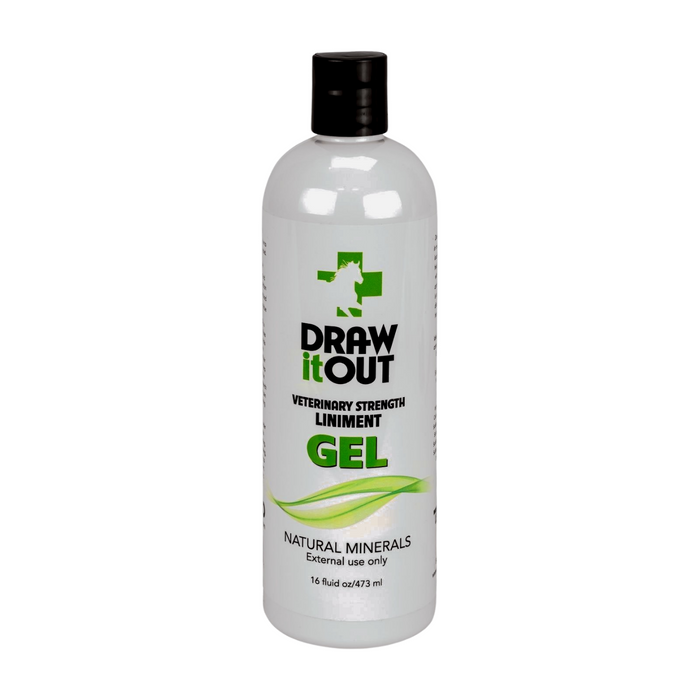
Product belongs after the horse has been checked, the filling fits an ordinary-care pattern, the skin is appropriate, and the horse is moving normally. For targeted hands-on application, Draw It Out® 16oz Liniment Gel is the single straightforward starting point.
Use the Draw It Out® Solution Finder when the concern may belong in a different lane. For format differences, read Horse Liniment Gel vs Spray vs Concentrate.
Observation first. Product second. A topical should never be used to hide heat, pain, lameness, marked swelling, a wound, or a pattern that is getting worse.
Get the leg-care notes that match the concern
Join the Draw It Out® herd for practical rider-first guidance on stocking up, hauling, stiffness, and recovery.
FAQ
Can a horse stock up just from standing?
Yes, some horses may show mild lower-leg filling after standing in a stall, hauling, or getting less movement than usual. Still, riders should check heat, pain, symmetry, movement, and overall attitude before deciding it is routine.
Should I ride if my horse is stocked up?
Not automatically. If the filling is mild, cool, even, and the horse walks normally, calm movement may help you evaluate. If swelling is hot, painful, sudden, one-sided, or paired with lameness, do not ride and call your veterinarian.
When should I call the vet for stocked up legs?
Call your veterinarian if swelling is sudden, painful, hot, one-sided, associated with lameness, paired with fever or dullness, connected to a wound, or does not improve with normal care and movement.
Can liniment gel help with stocked up legs?
Liniment gel can be part of a normal topical care routine after you check the horse and confirm the skin is suitable for application. It should not be used to cover up heat, pain, lameness, wounds, or symptoms that need veterinary attention.
What is the best Draw It Out® product to start with?
For hands-on use, start with Draw It Out® 16oz Liniment Gel. Choose the 64oz Liniment Gel if you care for multiple horses or use liniment gel regularly in a barn routine.
This article is educational and is not a diagnosis. Always work with your veterinarian for swelling, lameness, wounds, fever, sudden changes, or any concern that does not feel routine.