Horse Health • Summer Barn Routine
Humid Barn Horse Skin Check: What to Look For Before Irritation Builds
Humidity changes the barn. Coats stay tacky. Sweat dries slower. Tack marks hang around longer. Skin that looked fine yesterday can start talking today.
Short answer: In humid barn weather, check your horse’s girth area, chest, elbows, flanks, saddle area, mane base, tailhead, and lower legs for trapped sweat, tack pressure, rubbing, heat, swelling, odor, hair loss, crusting, or new sensitivity. Clean, dry, check early, and adjust work or tack before irritation builds.
Why humidity makes small skin problems louder
Heat gets the attention. Humidity does the quiet damage.
When the air is heavy, sweat and rinse water do not leave the coat as fast. Dust sticks. Tack areas stay damp. Hair lays flat. A horse that normally dries clean can suddenly carry moisture under the girth, behind the elbow, along the saddle line, or down the legs.
This is not a reason to panic. It is a reason to look sooner.
The humid barn skin-check map
-
Girth area: look for tacky sweat, hair roughness, rub marks, or sour odor.
-
Behind elbows: check for trapped moisture and early sensitivity.
-
Saddle area: look for uneven sweat marks, raised hair, warm spots, or pressure changes.
-
Chest and shoulders: check where sheets, blankets, fly sheets, and tack can rub.
-
Mane base and tailhead: watch for rubbing, flakes, crusting, or repeated scratching.
-
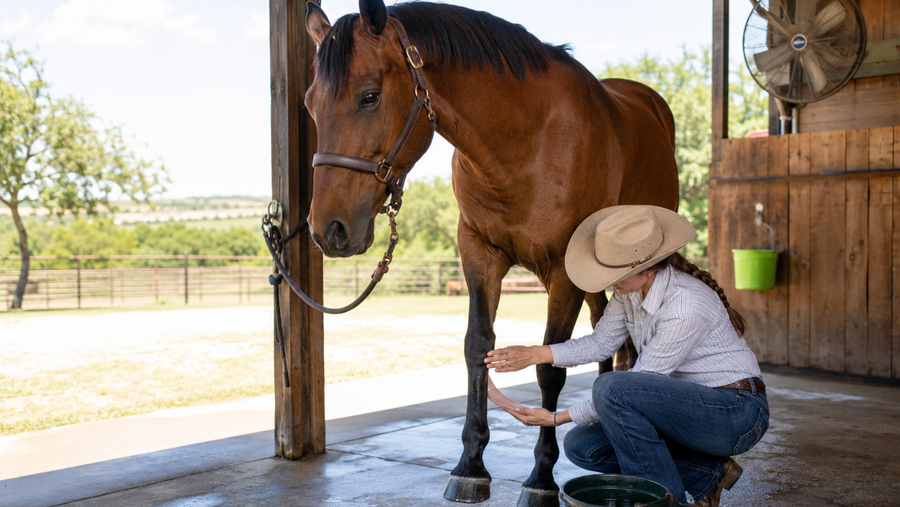
Lower legs: check for damp hair, mud, scurf, heat, or small cuts hidden under feathering or dust.
What you are looking for
- New sensitivity when grooming
- Hair loss or broken hair
- Crusty patches, flakes, or scurf
- Heat, swelling, or tenderness
- Odor under tack areas
- Sticky coat that does not brush clean
- Rubbing on gates, buckets, walls, or fence lines
The routine: clean, dry, check, then ride
The mistake is treating humidity like normal weather. The better move is giving the horse an extra minute before and after work.
-
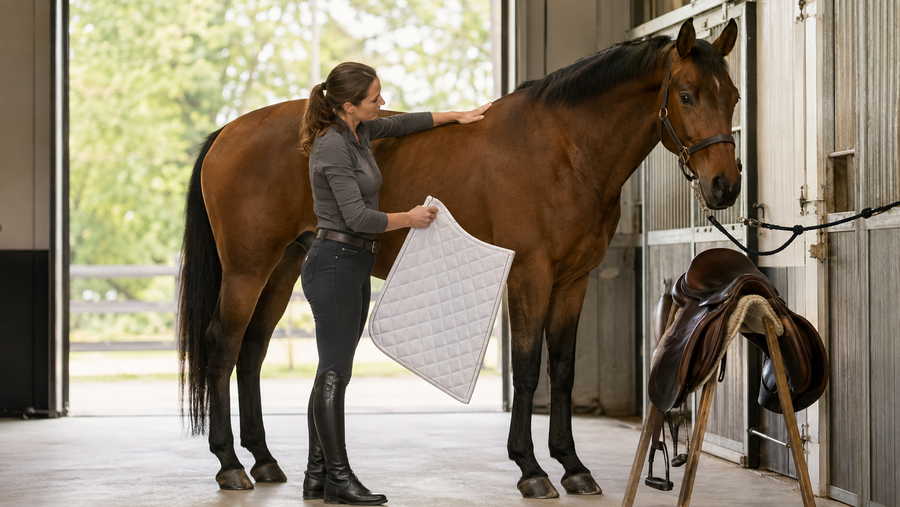
Brush before tacking: do not trap dust, sweat, or grit under tack.
-
Check pressure zones: run your hand under the girth path, saddle area, chest, and shoulders.
-
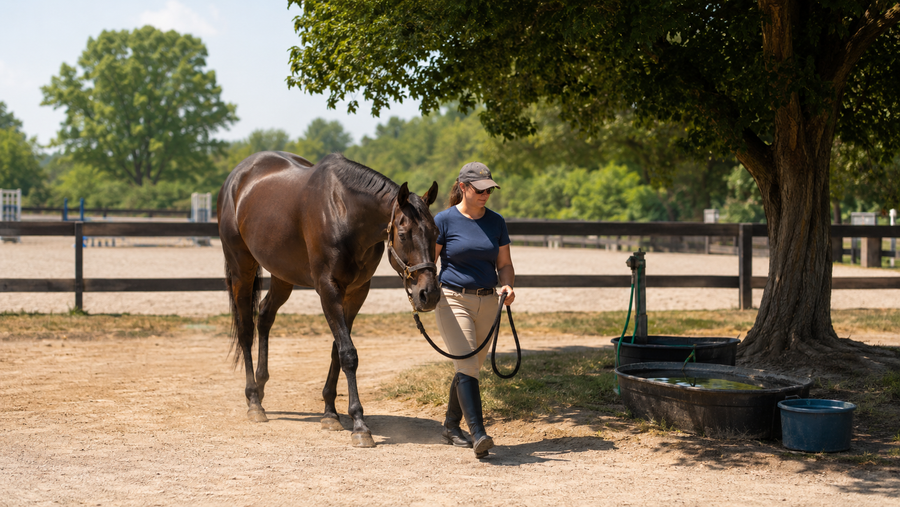
Cool down completely: do not put a horse away sticky and half-dry if you can help it.
-
Dry the problem areas: behind elbows, under belly, lower legs, mane base, and tailhead.
-
Recheck after drying: skin can look different once sweat and water are gone.
For a related tack-pressure check, read Girth Area Sweat Marks on Horses. For warm-weather cooling context, read Horse Still Hot After Untacking?
Where Draw It Out® fits
Humidity is not solved by a bottle. It is managed by a routine. That matters.
Draw It Out® 16oz Liniment Gel fits when you want a stay-put, sensation-free liniment gel for normal post-work horse-care routines. It is not a shortcut around cleaning, drying, tack fit, or veterinary care. It is a practical piece of the daily recovery routine.
For barns managing multiple horses, the horse liniment gel collection gives you size options for daily use, travel, and barn-size routines.
When to back off the plan
A little sweat mark is information. A sore, hot, swollen, open, spreading, or foul-smelling area is a different conversation.
Skip the ride and call your veterinarian or trusted professional if you see open wounds, fast-spreading irritation, significant swelling, heat with lameness, drainage, fever, or behavior that feels clearly out of character.
Best next step
Use a simple rule for humid weather: check the places moisture hides before the horse tells you louder.
FAQ
Why does humid weather make horse skin irritation more likely?
Humidity slows drying. Sweat, rinse water, dust, and tack pressure can stay against the coat longer, especially under the girth, saddle area, elbows, mane base, tailhead, and lower legs.
Where should I check my horse first in humid weather?
Start with the girth area, behind the elbows, saddle area, chest, shoulders, mane base, tailhead, and lower legs. These areas commonly trap moisture, sweat, dirt, or tack pressure.
Should I ride if I find a rub or irritated area?
Use judgment. Small pressure marks may mean adjusting tack, cleaning better, or giving the area time. Do not ride over open, hot, swollen, painful, spreading, or draining irritation.
Where does liniment gel fit in a humid barn routine?
Liniment gel fits as part of a normal post-work recovery routine after the horse is properly cleaned and dried. It does not replace grooming, drying, tack adjustment, or veterinary care.
This article is educational and is not veterinary advice. Always follow product labels and contact your veterinarian for serious, worsening, or unusual symptoms.