Senior horse care guide
Senior Horse Joint Health: Daily Checks and Care
Quick answer: Senior horse joint care starts with a daily mobility baseline. Watch the horse walk and turn, note how long warm-up takes, check hooves and legs, track appetite and hydration, and adjust turnout, footing, tack, and workload with the veterinary and farrier team. Age alone does not tell you what a horse can or cannot do.
Older horses do not all age in the same way. One may stay comfortable in regular light work, while another needs a major change in schedule or management. The useful question is not, "What should a senior horse do?" It is, "What is normal for this horse, and what changed today?"
Build a senior mobility baseline
First steps
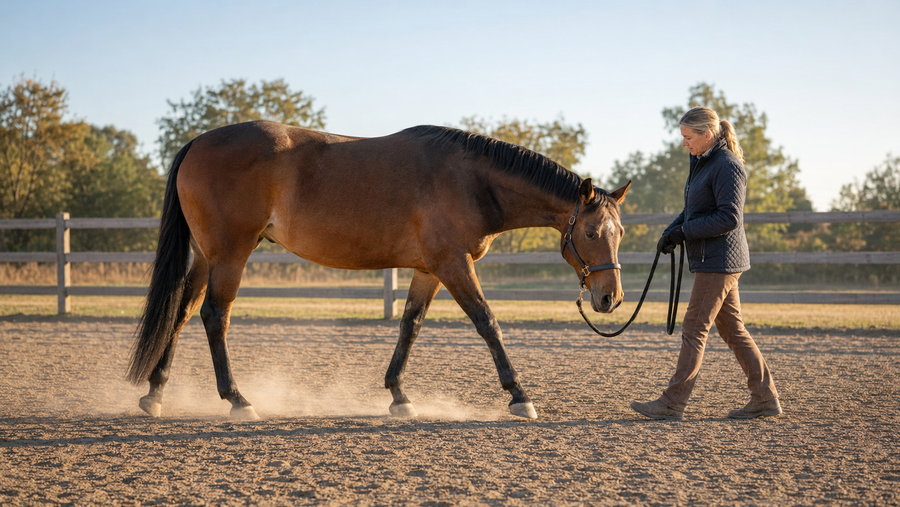
Watch the horse leave the stall or paddock, walk straight, turn both ways, and back a few steps if that is already a comfortable part of the horse's routine.
Warm-up time
Track how long it takes the horse to move freely. A consistent increase in warm-up time is useful information for the veterinarian, farrier, saddle fitter, or trainer.
Next-day response
Do not judge a workload only during the ride. Check the horse later that day and the next morning for movement, appetite, attitude, and leg changes.
Daily living
Notice changes in lying down, rising, navigating gates, holding up feet, eating from the ground, and moving with the herd.
Daily checks that matter
- Movement: stride length, turning, backing, transitions, toe dragging, and willingness to move.
- Legs and hooves: new heat, swelling, sensitivity, stronger digital pulses, loose shoes, or changes in hoof wear.
- Body condition: weight, muscle over the topline, coat, and any new asymmetry.
- Appetite and hydration: water intake, chewing, dropped feed, manure, and willingness to eat.
- Behavior: irritability during grooming or tacking, reluctance at gates, or a change in social behavior.
- Equipment: saddle fit, pads, blankets, boots, and wraps as body shape changes.
Movement, turnout, and warm-up
Regular comfortable movement can be an important part of a senior horse's management, but more is not always better. Match the routine to the horse's current condition, footing, weather, and veterinary plan.
Many older horses benefit from a longer, quieter warm-up with time to walk before tighter turns, collected work, hills, or speed. The horse should become more comfortable as the session progresses. A horse that becomes more uneven, short-strided, or resistant should not be pushed through the change.
Workload test: ask how the horse looked at the start, during work, after cooling, later that day, and the next morning. A plan is only appropriate if the whole response remains acceptable.
Hoof care and footing
Hoof balance, shoeing or trimming intervals, traction, and surface depth can all change how a senior horse moves. Keep regular farrier visits and share new movement observations. Deep, uneven, slick, frozen, or very hard footing may require a change in turnout or exercise.
Older horses may also find it harder to hold up a foot for long periods. Calm handling, a safe surface, and shorter breaks can help the farrier work without forcing the horse into an uncomfortable position.
Nutrition, hydration, and body condition
Joint and mobility decisions do not sit apart from the rest of the horse. Dental comfort, forage access, protein and calorie intake, body weight, hydration, and metabolic or endocrine conditions may influence movement and recovery. Review changes with a veterinarian and qualified equine nutrition professional rather than adding several products at once.
Track water intake when weather, travel, illness, or a feeding change makes hydration more difficult. A supplement should follow its current label and the horse's full diet plan. It should not replace water access or professional evaluation.
Where topical liniment may fit
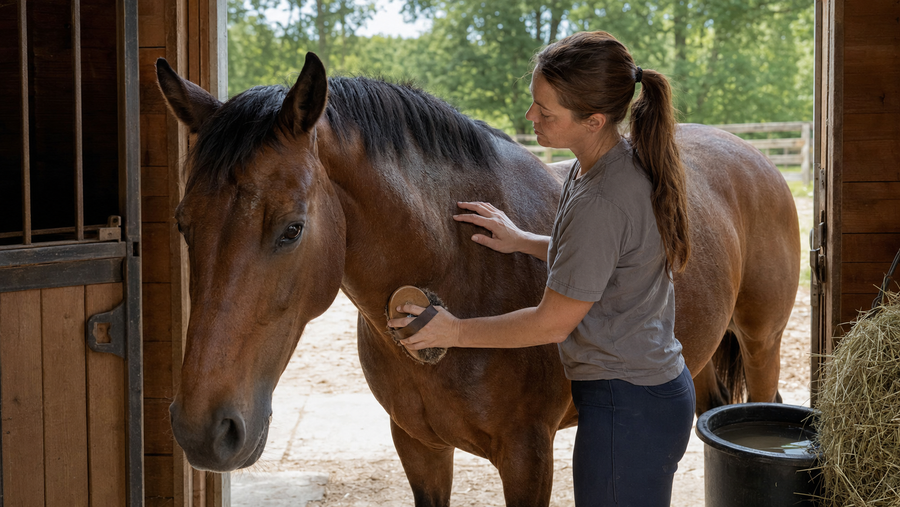
A topical liniment can fit a label-directed grooming, warm-up, or post-work routine for a senior horse after the horse has been checked. Use only on clean, dry, intact skin and follow the current label for placement, frequency, and covered use.
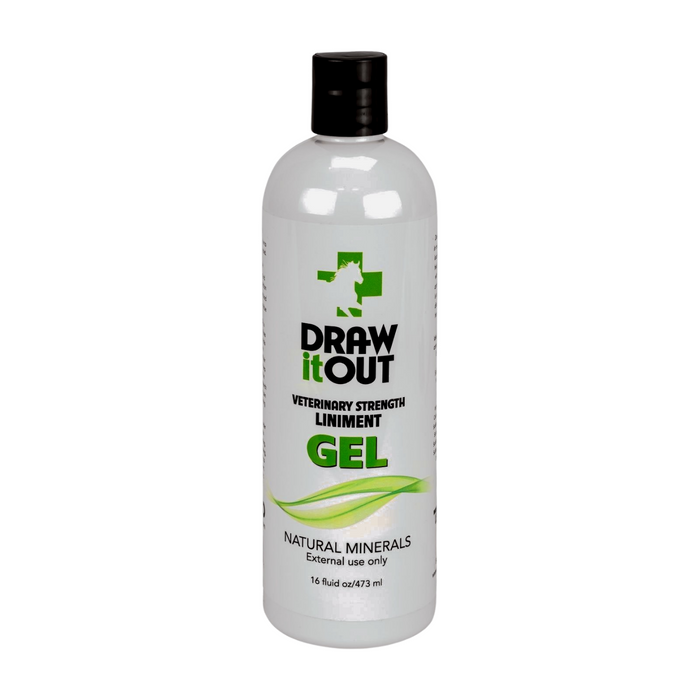
Draw It Out® 16oz High Potency Gel offers controlled placement for hands-on routines. The product is not a substitute for diagnosing a new gait change, hoof pain, marked swelling, or another concerning finding.
For a broader management approach, review senior horse care resources and the prehabilitation framework. Keep the routine simple enough that you can tell what changed and how the horse responded.
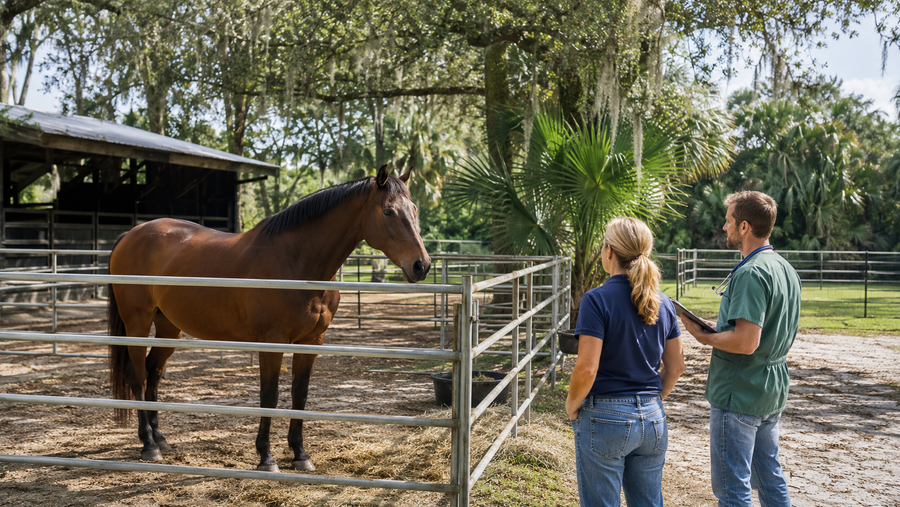
When to call the veterinarian
Seek prompt veterinary guidance for:
- New or worsening lameness, stumbling, weakness, or reluctance to move
- Marked heat, swelling, pain, or a strong digital pulse with hoof discomfort
- Difficulty rising, repeated lying down, or a sudden change in behavior
- Reduced appetite, trouble chewing, weight loss, fever, or lethargy
- A rapid change in balance, coordination, manure, or water intake
- A concern that persists or does not follow the horse's usual pattern
Senior horse joint-care FAQ
Should a senior horse exercise every day?
There is no universal schedule. Comfortable regular movement may fit many horses, but the type, duration, and intensity should match the horse's current condition and professional plan.
Is stiffness just a normal part of aging?
Do not dismiss a change simply because the horse is older. Track the pattern and discuss new, worsening, or persistent stiffness with your veterinarian.
How long should a senior horse warm up?
Use the horse's response rather than a fixed number. Start quietly and allow enough time for the horse to move comfortably. Stop and reassess if movement worsens.
Can liniment replace joint medication or veterinary care?
No. Liniment is a topical routine product. Medication and medical decisions belong with the veterinarian who knows the horse.
Bottom line
Support the senior horse in front of you. Build a daily baseline, protect comfortable movement, maintain hooves and body condition, review equipment and footing, and involve the veterinary and farrier team when the pattern changes.