Spring Vaccines and Sore Necks: Protecting Progress During Injection Season
Vaccines are non negotiable. A little stiffness afterward is common. The goal is keeping your training plan intact without letting temporary muscle soreness turn into a compensation habit.

Why injection season hits performance timing
Most barns schedule spring vaccines right when riders are adding workload: longer trots, more canter, more bending, more strength work. Many injections are given in the neck, which means even minor soreness can show up fast under saddle.
- Resistance bending one direction
- Bracing in transitions
- Shorter reach in front
- Fussy contact that feels out of character
That is not attitude. It is a temporary muscular response.
What is happening in the muscle
An injection triggers a localized immune response. That is the point. During that response, the tissue can feel tight or sensitive, and surrounding muscles may compensate. If you push hard in the middle of that window, small compensation patterns can become the new default.
Smart scheduling during vaccine week
If you can plan ahead, keep the first 24 to 48 hours simple:
- Choose straight lines and long, low posture
- Skip hard lateral work and heavy collection
- Keep the session short and end early if bending feels sticky
- Turnout and hand walking count as training on these days
Do not ignore the shoulder connection
Neck muscles feed directly into the shoulder and withers region. When the neck tightens, many horses change how they load the front end. Watch for a shorter step, a flatter feel, or uneven contact before you assume anything bigger is going on.
Circulation is your ally
Gentle movement supports normal circulation and helps the body settle back to baseline. Consistency matters more than intensity. This is also the kind of predictable stressor that fits a prevention-first approach.
Simple post vaccine checklist
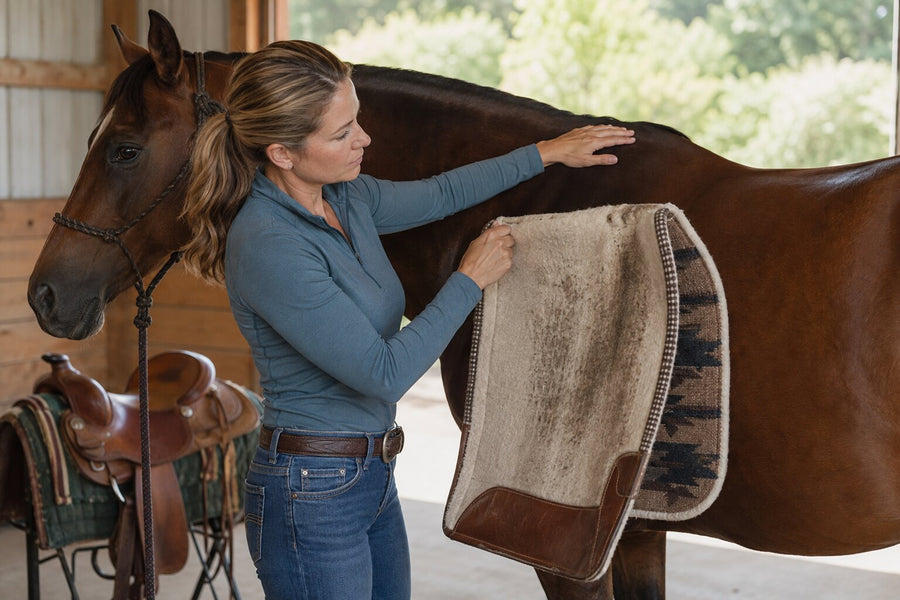
- Check neck flexibility both directions before you tack up
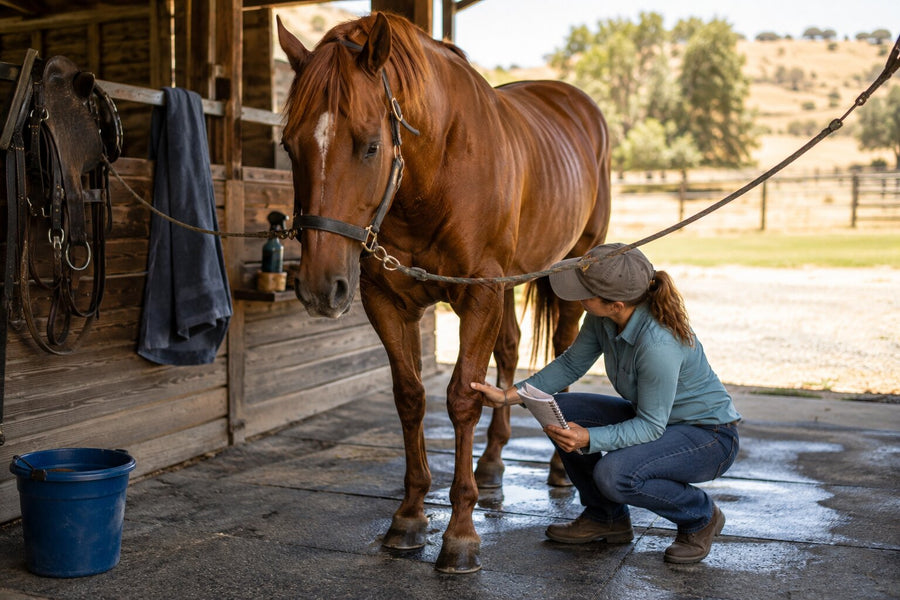
- Groom normally and note any sensitivity near injection sites
- Warm up longer than usual and keep the first work straight
- If bending feels guarded, step down and revisit tomorrow
Educational note: vaccine schedules and post-injection guidance should always be directed by your veterinarian and tailored to your horse.
What to watch the morning after
Your best data shows up 12 to 24 hours later. Do a quick check before you commit to the day’s ride.
- Does the horse lower the head willingly?
- Is neck bend equal both directions?
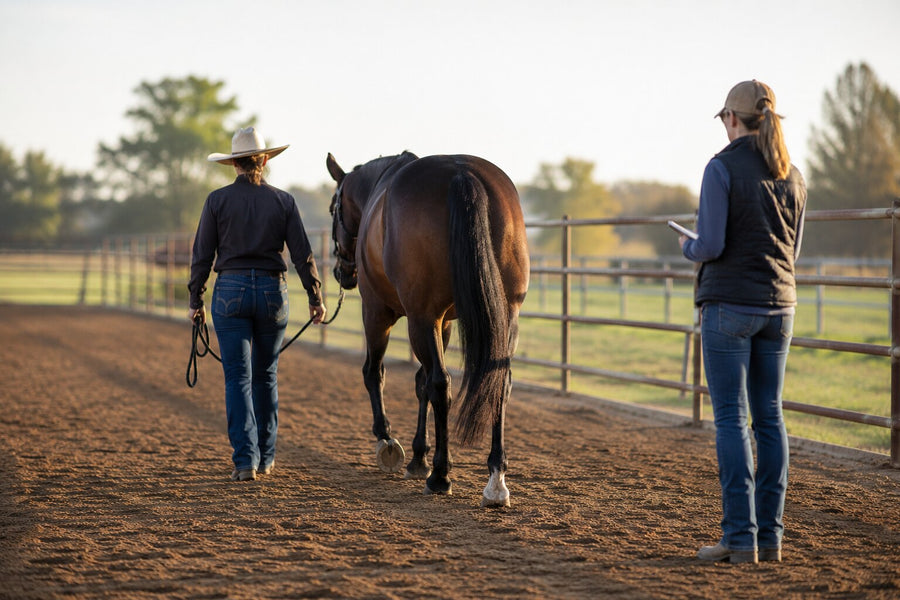
- Is stride length in front the same on both sides?
- Any change in behavior during grooming?
Small signs are early signals. Catch them early, and spring conditioning stays on track.
FAQ
Is neck soreness after a vaccine normal?
Mild local soreness can be a normal response to an injection. If you see significant swelling, heat, fever, hives, lameness, or anything that feels off, involve your veterinarian immediately.
Should I ride my horse the day after vaccines?
Many horses do fine with light movement. Keep it easy, prioritize straight lines, and avoid heavy bending or demanding work for 24 to 48 hours unless your veterinarian advises otherwise.
Why does stiffness show up more in the shoulder than the neck?
Neck muscles connect into the shoulder and withers. When the neck feels tight, the shoulder often changes reach and loading to protect the area.
What is the biggest mistake riders make during injection week?
Training through bending resistance and assuming it is behavior. Short, simple sessions and a quick return to normal work usually protect progress better than forcing a “normal” ride.
Where should I go next if I want a simple routine plan?
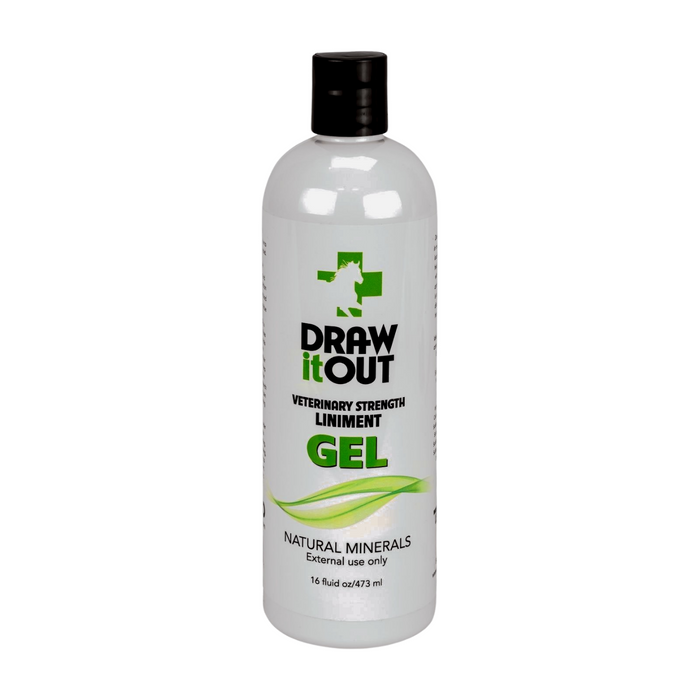
Use the Solution Finder to match support to workload, then anchor it with the prevention-first habits on Prehabilitation. For routine-focused options, browse the Draw It Out liniment gel collection.