
Apr 10, 2026
The First Sweat of Spring: Why Horses Get More Reactive Under Tack
Spring sweat changes the way skin behaves under tack. Before obvious rubs show up, moisture and friction can make horses feel reactive, t...

Founder is commonly used to describe laminitis. It is a painful hoof condition where the tissues that hold the hoof wall to the coffin bone become inflamed and can weaken. This guide covers the common causes, the early signs riders miss, and what to do first while you get your veterinarian and farrier involved.
Laminitis affects the laminae, the sensitive structures that connect the hoof wall to the coffin bone inside the foot. When these tissues become inflamed or damaged, the bond can weaken. In severe cases, the coffin bone can rotate or sink.
If your horse is an easy keeper or suddenly foot sore after feed changes, get your veterinarian looped in and talk diet and bloodwork early.
Founder management is long game work. The big levers are hoof support, diet control, and monitoring comfort and movement. Keep notes on stance, digital pulse, heat, and how the horse moves day to day. Small changes matter.
Founder care should be led by your veterinarian and farrier. If your plan includes topical comfort support, stick to products that are gentle, sensation free, and easy to use under wraps when needed.
Founder is commonly used to describe laminitis. Some people use “founder” to mean more severe or advanced cases, but in everyday horse talk the terms are often used interchangeably.
Triggers include metabolic issues, sudden diet changes or grain overload, retained placenta in mares, concussion on hard ground, and excessive weight bearing on one limb due to injury.
Watch for reluctance to move, a rocked back stance, stronger digital pulse, heat in the feet, and a short or stiff stride, often most noticeable in the front feet.
Call your veterinarian immediately, limit movement on deep bedding, remove grain and rich feed, and follow your veterinarian and farrier plan for hoof support and pain management.
Many horses improve with early intervention and good long term management. Severity and timing matter. Work closely with your veterinarian and farrier to set expectations and a plan.
Use only what your veterinarian is comfortable with and follow label directions. Many riders prefer sensation free, alcohol free options when topical support is part of the plan.
This article explains background and context. If you’re here to act, these are the most common next steps riders take.
Spring sweat changes the way skin behaves under tack. Before obvious rubs show up, moisture and friction can make horses feel reactive, t...

A horse can feel fine during the ride and still start the next one behind. Here is why between-ride recovery gaps show up so often in spr...

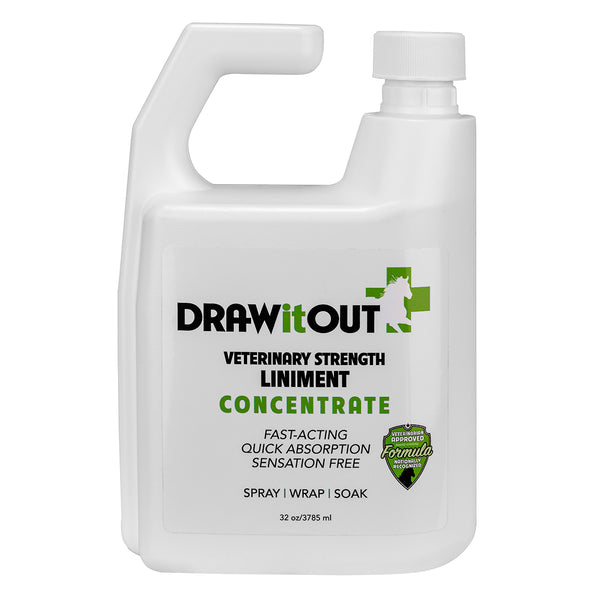
A real rider shares how Draw It Out® 32oz Liniment Concentrate earned a permanent place in the barn after a hard moment with her futurity...
Simple, rider-trusted tips and tools.
Want a smarter way to handle soreness, heat, swelling, and post-ride leg care? Visit our Performance Recovery Hub for clear routines and product guidance.
Visit the Recovery HubFour core Draw It Out® staples riders reach for daily.
!