Q3 Theme: Recovery
Fall Horse Leg Care: Cooling, Compression & competition-conscious Liniment
Cool mornings, crunchy leaves, longer trots—fall is prime riding. It’s also when tendons get tested. Here’s the calm, Cadillac-smooth routine that keeps your horse ready for tomorrow.
In this post
Why Fall Rides Stress Legs
Leaves over hard ground. Cold mornings into warm afternoons. That combo can nudge soft tissues. A consistent post-ride care habit helps keep legs tight and minds calm.
Step-by-Step Recovery Routine
- Cool first. Walk 10–15 minutes, hose or sponge with cool water, then towel to damp-dry.
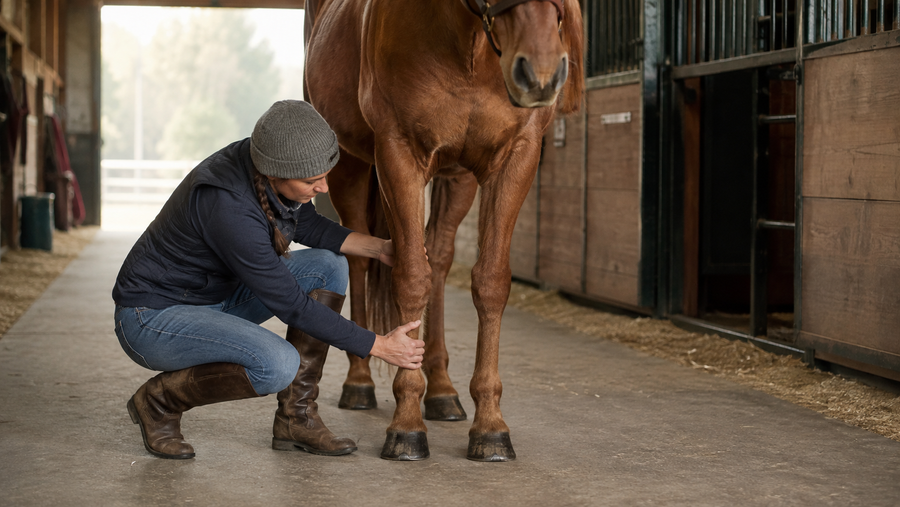
- Inspect with intent. Palpate tendons for heat or puffiness. Compare left/right, front/hind.
- Apply sensation-free support. Smooth on Draw It Out® 16oz High Potency Gel. No burn. No sting. Under-wrap friendly when used per label.
- Compression, correctly. If needed, clean quilts + standing wraps with even pressure. Recheck at 30–45 minutes.
Pro tip: Traveling or showing? Keep a light layer on after evening hand-walks; skip re-wrapping unless directed by your vet.
Products Riders Trust
- Draw It Out® 16oz High Potency Gel — daily, sensation-free leg care that stays where you put it.
- Rapid Relief Restorative Cream — smooth, non-greasy option for targeted skin areas during recovery.
Real Riders, Real Routines
More hubs: Solution Finder • Switch & Save • View All Products
Keep Recovery Calm. Keep Tomorrow Ride-Ready.
No sting. No drama. Just clean, under-wrap friendly support that fits show rules and real-world routines.
Always follow label directions. If swelling, heat, or lameness persists, consult your veterinarian.