


Jul 08, 2026
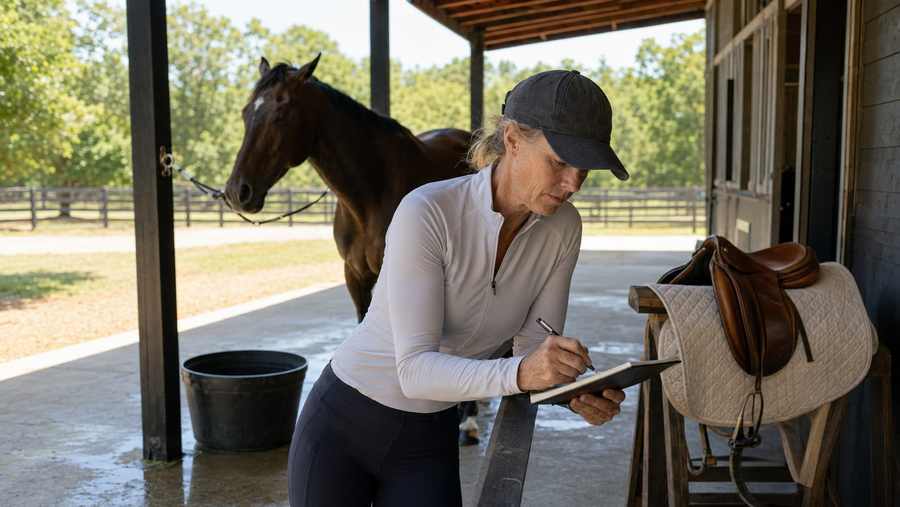
The Rider’s Heat Journal: What to Write Down After Hot Rides
A Real Rider Resource guide for keeping a rider’s heat journal after hot rides: what to track and how to adjust the plan.
Free U.S. shipping at $50+
No code needed.
Shipping details
Real Rider Resource
A practical rider-awareness guide for horses that magnet toward the gate, rush home, quit the pattern, or lose focus near the exit.
Quick answer: If your horse gets gate sour, check pain, fatigue, rider habits, arena routine, barn draw, herd anxiety, and whether the gate has become the only place the horse gets relief. Do not assume it is only attitude.
A horse can become gate sour when the gate predicts rest, friends, barn, release, or the end of pressure. The gate becomes valuable because the rider’s routine accidentally made it valuable.
But behavior is not the only possibility. Horses also pull toward the gate when they are tired, uncomfortable, worried, herd-bound, confused, or over-faced.
The horse has learned the gate means relief.
The behavior gets worse with fatigue, direction, or intensity.
The rider stops, relaxes, or dismounts at the gate every time.
Gate sour behavior should be handled with training clarity and body awareness. Products do not fix a training pattern, but recovery care can support the horse when fatigue or body tightness is part of the picture.
Common causes include learned relief at the gate, herd anxiety, rider habits, fatigue, discomfort, confusion, or an arena routine that gives the horse a predictable escape point.
Punishment usually adds pressure and confusion. Redirect early, change where rest happens, make the gate boring, and check whether pain, fatigue, or anxiety is involved.
Yes. If a horse gets more gate-focused as they tire or after harder work, body comfort and recovery should be checked.
Where to go next: Use the Solution Finder, review Prehabilitation, or browse the liniment gel collection.
Conditioning works best when the horse gets time to adapt, not just more work to survive.
A Real Rider Resource guide for keeping a rider’s heat journal after hot rides: what to track and how to adjust the plan.
A Real Rider Resource guide to hard summer footing, what riders should check, when to adjust the ride, and how liniment, Fluid Flex EQ®, ...
A rider-first guide to shoulder tightness, reduced reach, tack restriction, feet, neck, fatigue, safety checks, professional assessment, ...
Want a smarter way to handle soreness, heat, swelling, and post-ride leg care? Visit our Performance Recovery Hub for clear routines and product guidance.
Visit the Recovery Hub!