


Jul 08, 2026
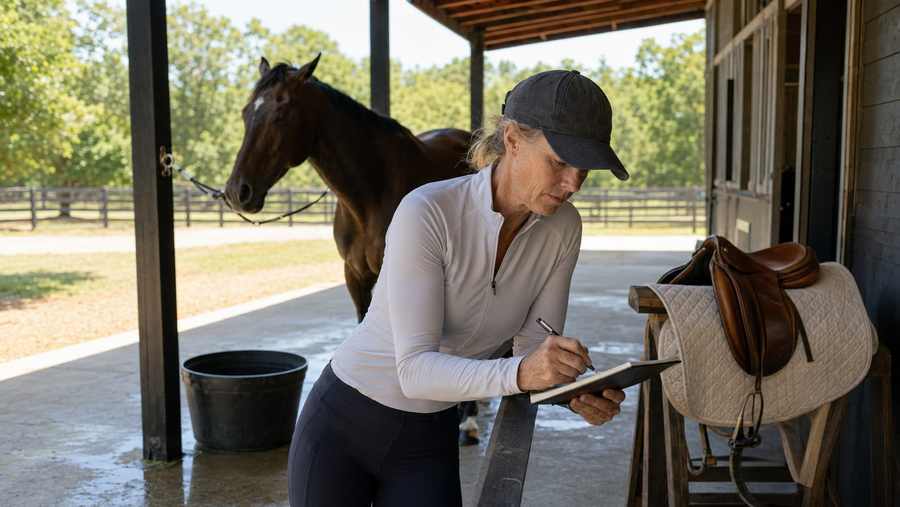
The Rider’s Heat Journal: What to Write Down After Hot Rides
A Real Rider Resource guide for keeping a rider’s heat journal after hot rides: what to track and how to adjust the plan.
Free U.S. shipping at $50+
No code needed.
Shipping details
Real Rider Resource
A practical rider-awareness guide for horses that feel wrong one day, normal the next, and leave riders wondering what to trust.
Quick answer: If your horse feels off one day and fine the next, treat it as information, not proof that nothing happened. Track the pattern, footing, workload, tack, legs, feet, body feel, weather, and recovery before deciding it was random.
Intermittent signs frustrate riders because they do not always show up on command. The horse may feel short on Monday, fine on Tuesday, sticky on Friday, and normal again at the show.
That does not mean the rider imagined it. It means the signal is inconsistent. And inconsistent signals still deserve documentation.
Hard, deep, slick, or uneven ground may only bother the horse under certain conditions.
The issue may show after harder rides, hauling, hills, circles, or speed.
One side, one transition, one gait, or one direction may reveal the pattern.
Intermittent signs are not a reason to panic, but they are a reason to stop guessing. Build the routine around observation first.
Possible causes include footing, workload, fatigue, hoof sensitivity, tack fit, body soreness, weather, turnout changes, or an issue that only appears under certain conditions.
Use judgment. If the horse is even, bright, and comfortable, light work may be appropriate. If the pattern repeats, worsens, or feels painful, stop and get qualified help.
Liniment gel can support a normal hands-on recovery routine on clean skin. It should not be used to cover up lameness, pain, swelling, heat, or a horse that needs professional evaluation.
Where to go next: Use the Solution Finder, review Prehabilitation, or browse the liniment gel collection.
Conditioning works best when the horse gets time to adapt, not just more work to survive.
A Real Rider Resource guide for keeping a rider’s heat journal after hot rides: what to track and how to adjust the plan.
A Real Rider Resource guide to hard summer footing, what riders should check, when to adjust the ride, and how liniment, Fluid Flex EQ®, ...
A rider-first guide to shoulder tightness, reduced reach, tack restriction, feet, neck, fatigue, safety checks, professional assessment, ...
Want a smarter way to handle soreness, heat, swelling, and post-ride leg care? Visit our Performance Recovery Hub for clear routines and product guidance.
Visit the Recovery Hub!