Real Rider Resource
What to Put on Horse Legs After a Hard Ride
The right post-ride leg routine starts with cooling, walking, and a hands-on check. Product comes after you decide whether the horse looks normal, needs monitoring, or needs professional help.
Quick answer: After a hard ride, walk the horse until breathing and attitude settle, check all four legs and feet, remove sweat and arena grit, and cool as the workload and conditions require. If the legs are even, comfortable, and free of wounds or unusual heat, a labeled topical can fit ordinary post-work support. Do not cover a hot, painful, swollen, or injured leg with product and hope for the best. Stop and call your veterinarian when the horse is lame, markedly swollen, very painful, or not bearing weight normally.
First decide what “hard ride” meant today
A hard ride is not just a long ride. Deep footing, hard ground, repeated turns, speed work, hills, jumping, hauling before the class, heat, and a sudden increase in workload can all change the cost to the horse. Two horses can finish the same pattern with very different needs because their conditioning, feet, travel day, and baseline are different.
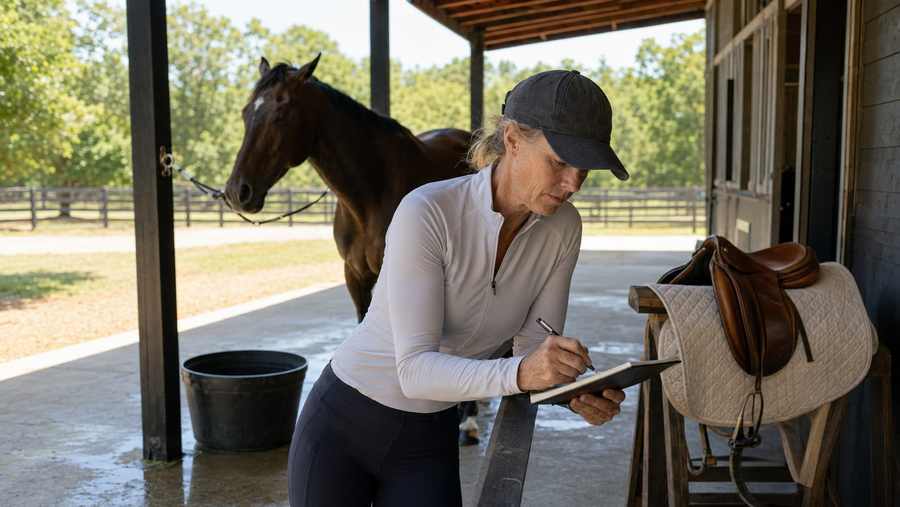
Before reaching for a bottle, write down what happened. Note the surface, duration, intensity, temperature, warm-up, cool-down, and anything the horse did differently. That short record makes tomorrow morning’s check far more useful.
The correct order after the ride
- Cool the whole horse. Walk until breathing trends toward normal and the horse is mentally settled. In hot conditions, use an appropriate cooling plan and do not wait for the horse to “sweat it out.”
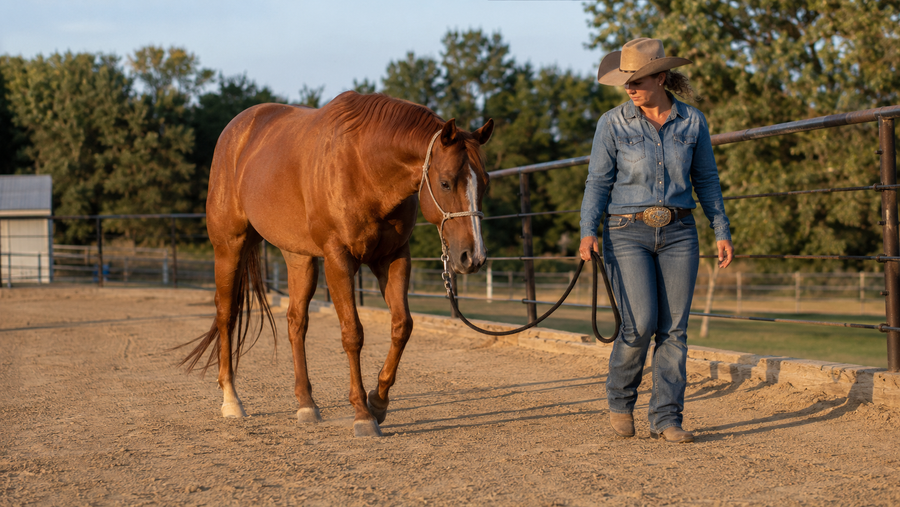
- Watch before touching. Look at several straight steps. Compare stride length, tracking, head movement, and willingness to turn without drilling circles.
- Check the feet. Pick them out and look for packed material, a shifted shoe, stone, crack, puncture, or unusual digital pulse. A foot problem can look like a leg problem.
- Check all four legs by hand. Compare left with right for heat, filling, tenderness, boot marks, rubs, cuts, and changes around tendons, joints, pasterns, and coronary bands.
- Clean what needs cleaning. Remove sweat, dirt, and grit gently. Dry the skin as the next step and label directions require.
- Choose support only after the check. The goal is a repeatable recovery routine, not a pile of products.
Use a three-lane decision
Lane 1: Normal and even
The horse walks normally, the legs match one another, and there is no unusual heat, swelling, wound, or pain. This is the ordinary post-work lane: finish cooling, clean up, follow label directions for the one support product you chose, and recheck later.
Lane 2: Something changed, but the horse is comfortable
You notice mild, even filling after travel or work, a boot rub, or a small change that is not painful and does not affect movement. Reduce the guesswork. Record it, remove the likely pressure or friction source, and monitor the horse. Contact your veterinarian if it persists, returns, or worsens.
Lane 3: Pain, lameness, strong heat, or marked swelling
Stop. Do not ride again, aggressively massage the area, or wrap over an unexplained problem. Get veterinary guidance. If there is a wound, protect it from contamination and follow professional first-aid direction.
Cold hosing, topical gel, mud, or wraps?
These are different tools, not interchangeable proof that the horse received good care. Cold hosing can be part of cooling or a veterinarian-directed plan. A gel offers targeted external application. A mud-style product fits a different barn preference and workload. Wraps add compression and heat management considerations and require correct technique.
Do not stack several products simply because the ride felt important. Mixing topicals can change skin exposure, make it difficult to identify the cause of a reaction, and create a routine nobody can reproduce. Choose one lane, follow its label, and document what you did.
Common mistakes after hard work
- Applying product before checking the feet and legs. The inspection is the valuable part.
- Assuming both front legs or both hind legs are the same. Compare every structure and note asymmetry.
- Wrapping damp skin. Moisture, pressure, and heat can create a separate skin problem.
- Using a tight wrap without training. An uneven or overly tight bandage can cause harm.
- Treating a strong sensation as a score. Smell, cooling, tingling, or warmth does not diagnose the horse.
- Skipping the morning-after check. Some stiffness, filling, or foot soreness becomes clearer after rest.
Where Draw It Out® fits
When the horse is comfortable, moving normally, and in the ordinary post-work lane, Draw It Out® 16oz Liniment Gel offers a ready-to-use, targeted option for external recovery support. It is odorless, colorless, and made without menthol, camphor, capsaicin, alcohol, witch hazel, or DMSO. Follow the label rather than creating your own stronger application.
If you are not sure whether the horse’s need belongs in a stiffness, skin, hoof, or travel lane, use the Draw It Out® Solution Finder before choosing a product.
The morning-after leg check
Watch the horse leave the stall or pen before the day gets busy. Note the first ten to twenty steps, then check the legs and feet again. Look for new filling, heat, tenderness, reluctance to turn, a shorter stride, or a change in attitude during grooming. The question is not whether the horse looks dramatic. The question is whether the horse returned to its normal baseline.
If the horse is not back to normal, adjust the work plan. A missed training session is cheaper than turning a small warning into a larger problem.
When to call the veterinarian
Seek veterinary help for lameness, inability to bear weight normally, marked or one-sided swelling, severe pain, persistent strong heat, a wound near a joint or tendon, fever, weakness, repeated stumbling, or a change that worsens after rest. Call sooner when you are unsure. Photos, a short walking video, temperature, timing, and a clear description of the ride can help your veterinarian triage the situation.
Frequently asked questions
Should I cold hose horse legs after every hard ride?
Not every horse or ride needs the same routine. Cooling may be appropriate after heat or heavy work, but the plan should match the conditions, the horse, and veterinary direction when an injury is suspected.
Can I put liniment on wet horse legs?
Follow the label. In general, clean skin and correct moisture management help you inspect the area and use a topical consistently. Do not trap unexplained heat or irritation under a damp routine.
Should I wrap over horse liniment?
Only when the product label permits it and you know how to wrap correctly. Never assume every topical is safe under a bandage, boot, or other covering.
What if both hind legs are mildly stocked up after travel and work?
Quiet movement and monitoring may help you understand the pattern, but persistent, painful, hot, or uneven swelling deserves veterinary guidance.
Get practical post-ride leg-care notes
Join the Draw It Out® herd for rider-first guidance on stiffness, hauling, leg checks, and recovery.
Educational support only. If the horse looks painful, abnormal, or unsafe to ride, stop and get professional guidance. Author: Jon Conklin.