One limb changes fast
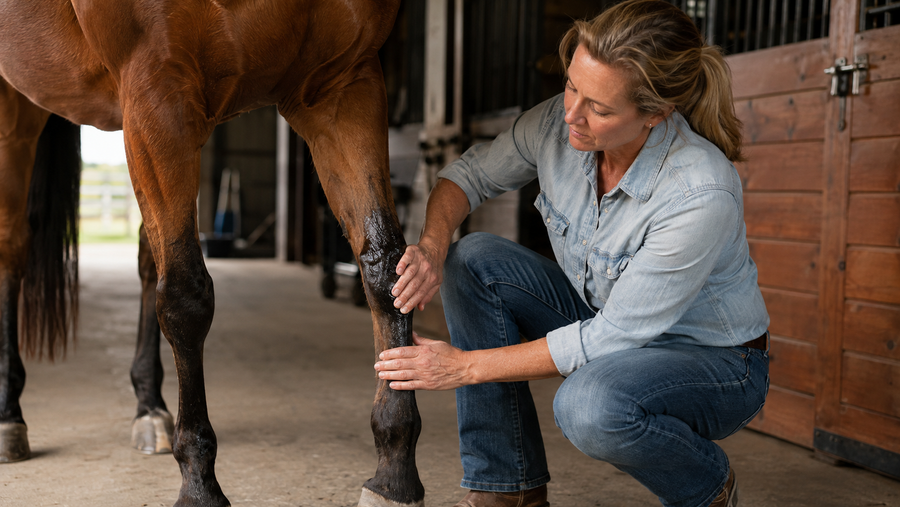
The swelling may begin low and travel upward, or the whole limb can look enlarged compared with the opposite side.
Free U.S. shipping at $50+
No code needed.
Shipping details
Draw It Out® Horse Health Care News
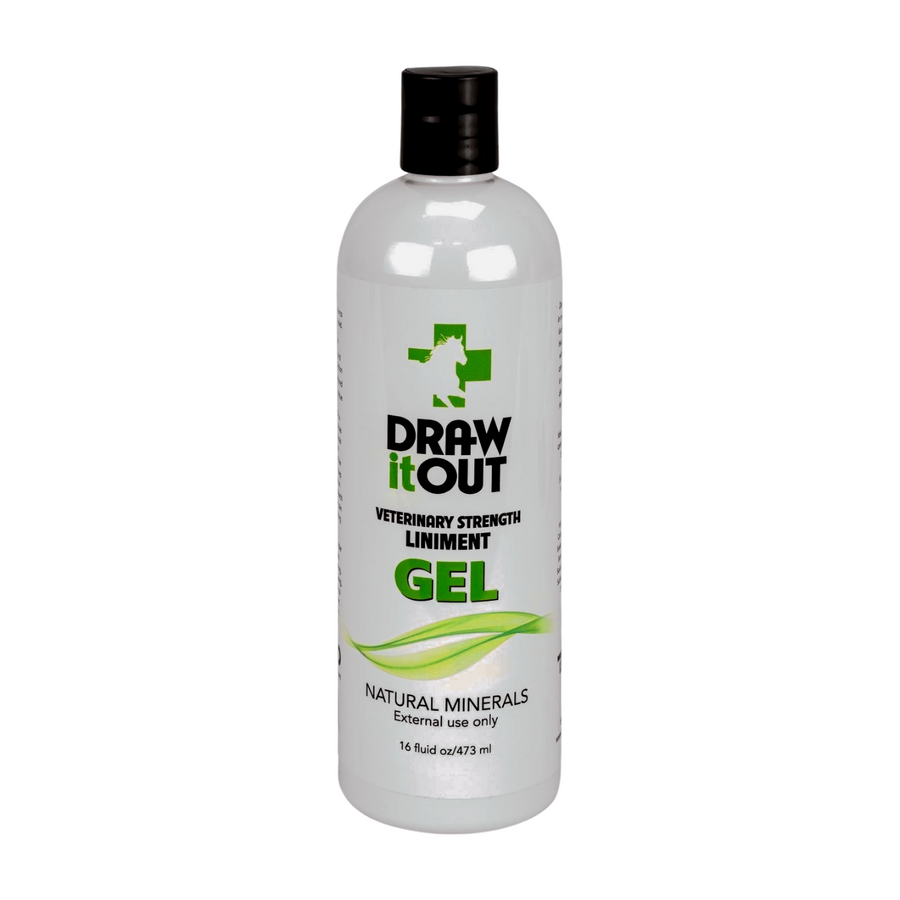
A hot, painful, rapidly swelling leg is not ordinary stocking up. Call your veterinarian first. Once the horse has been examined, Draw It Out® Liniment Gel may earn a useful place in the veterinarian-directed comfort and leg-care routine.
Quick answer: Equine cellulitis is a serious bacterial infection in tissues beneath the skin. Affected horses may develop rapid limb swelling, heat, tenderness, lameness, fever, or a generally unwell attitude. Draw It Out® Gel does not treat the infection and is not an antibiotic. If your veterinarian approves, it may be used on clean, intact skin as supportive topical care alongside the prescribed plan.
Contact your veterinarian promptly when one leg becomes hot, painful, tight, or dramatically larger, especially when the change is rapid.
Do not apply a product and wait to see what happens. Early veterinary direction matters.
The swelling may begin low and travel upward, or the whole limb can look enlarged compared with the opposite side.
The horse may flinch, guard the limb, resist handling, or move differently.
Fever, dullness, reduced appetite, or lethargy raise the urgency beyond a routine leg-care question.
A scrape, cracked pastern, puncture, scratches, or another small skin opening can matter even when it is difficult to find.
Do not ride, lunge, or force exercise through a hot, painful, rapidly swollen limb.
Note when the swelling began, how fast it changed, where it starts and stops, and which leg is involved. Take clear photos for comparison.
Take the horse's temperature if it is safe, compare both limbs, look for skin breaks, and observe weight-bearing and movement.
Tell the veterinarian what you found. Ask before cold hosing, walking, wrapping, massaging, or applying any topical product because the right choice depends on the individual case.
Both can create a swollen leg, but they should not be handled as the same problem.
| Pattern | Routine stocking up | Cellulitis concern |
|---|---|---|
| Distribution | Often similar in both hind legs | Often much more pronounced in one limb |
| Feel | Usually cool, soft, and not painful | Often hot, tight, tender, or painful |
| Timing | Common after standing, stalling, or hauling | May appear or worsen quickly |
| Movement | May improve with gentle movement | May include lameness or reluctance to move |
| Whole-horse signs | Horse otherwise acts normal | Fever, dullness, poor appetite, or lethargy may occur |
| Next step | Monitor and use the horse's established routine | Call the veterinarian promptly |
Read the full stocking up guide or use the horse leg swelling decision guide when the pattern is unclear.
The right claim in the right lane
Owners sometimes tell us the Gel made a remarkable difference during recovery from a cellulitis episode. We take that real-world experience seriously, but we state it accurately: the veterinarian treats the infection. Draw It Out® Gel may support the external comfort and leg-care routine after the horse has been evaluated and the veterinarian approves the topical.
Draw It Out® Liniment Gel has antimicrobial and antifungal properties, but those formula properties do not make it a cellulitis treatment, prescribed antimicrobial, or substitute for veterinary care. This distinction protects the horse without underselling the useful role Gel can play around the medical plan.
A visible change after applying Gel would not tell you whether the infection is controlled.
A previous episode does not prove the same medication, dose, or diagnosis applies now.
Injury, a wound, a hoof problem, lymphangitis, joint trouble, and other causes can look similar early.
Keep the area observable. Do not apply heavy layers, tight wraps, or multiple products that make change harder to assess.
No. Cellulitis is a bacterial infection that requires veterinary diagnosis and treatment. Gel is not an antibiotic and should not be used to delay or replace prescribed care.
Ask the treating veterinarian. If approved, Gel may fit as supportive topical care on clean, intact skin alongside the prescribed plan. Follow the label and the veterinarian's directions.
Only when the veterinarian directs it. Although Draw It Out® Gel is made for proper use under wraps according to the label, acute cellulitis can involve painful swelling and vulnerable skin that require case-specific wrapping decisions.
Routine stocking up is often cool, soft, similar in both hind legs, and may improve with movement. Cellulitis concern is commonly hot, painful, rapidly changing, and more pronounced in one limb, sometimes with fever or lameness. When in doubt, call the veterinarian.
Sources reviewed:
Educational product content only. This guide does not diagnose or treat disease and does not replace veterinary care.
There is no universal application count. Use this seven-day bottle-life test to choose between 16oz single, two-pack, four-pack, and 64oz Gel.
Meet Courtney Sabral of Chico, California, an experienced barrel racer and gymkhana rider whose care routine for Diamond and 26-year-old Ricky is built around consistency.
How much horse liniment should you use? Learn the thin-layer standard, what too much looks like, application mistakes, and when a leg needs your veterinarian.
!