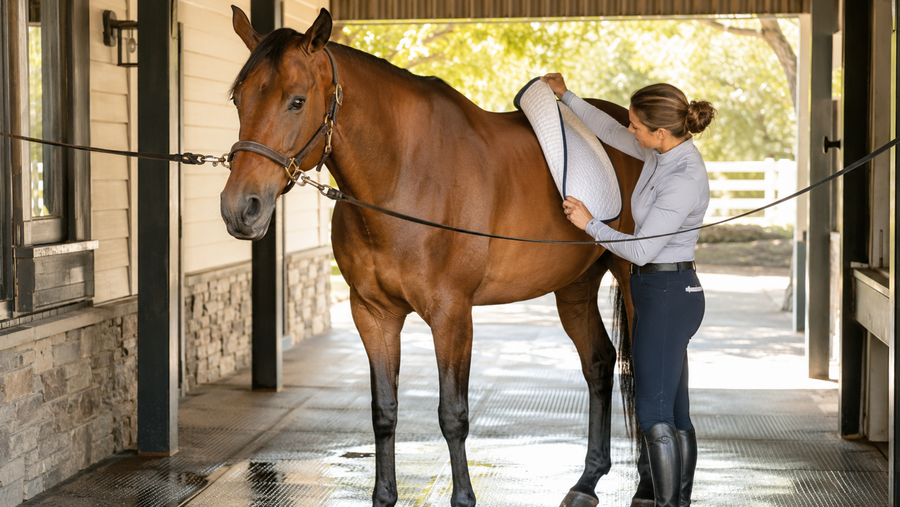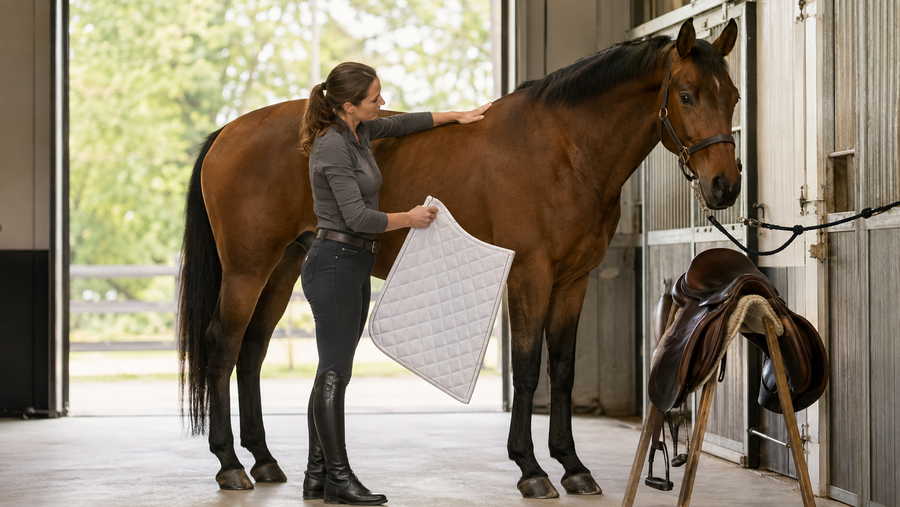
Horse Sensitive After a New Saddle Pad? What Owners Should Check
A practical horse health guide for sensitivity after a new saddle pad: sweat marks, dry spots, pad edges, saddle balance, and when to call for help.
Free U.S. shipping at $50+
No code needed.
Shipping details
Draw It Out® Horse Health
A practical dry-weather routine for checking legs, feet, footing, recovery patterns, and when to give the horse an easier day.
Short answer: Hard ground can make a normal ride feel harder on a horse’s feet, legs, joints, and recovery pattern. After dry weather riding, check heat, filling, digital pulse, foot soreness, movement changes, and how your horse feels the next day.
Dry weather can make arenas, pasture lanes, driveways, and show grounds less forgiving. The same ride that felt ordinary last month can carry more concussion when the ground dries out.
This does not mean every horse needs time off. It means riders need to pay attention sooner. Hard ground does not always announce itself during the ride. Sometimes it shows up later.
A digital pulse can feel stronger when there is irritation or inflammation in the foot. It does not diagnose the problem by itself, but it is information you should not ignore.
If the pulse feels stronger than normal, the hoof feels hot, the horse is lame, or the horse is reluctant to bear weight, call your veterinarian or farrier.
That is not weakness. That is management. A horse that gets listened to early often stays in work longer.
For daily post-ride leg care, Draw It Out® 16oz Liniment Gel gives riders a ready-to-use, stay-put liniment gel that fits a simple clean, dry, thin-coat routine.
For hoof-focused care, SilverHoof EQ Therapy® belongs in the conversation when the concern is hoof condition, not general leg recovery.
For broader planning, use the Draw It Out® Solution Finder, review Prehabilitation, or browse Draw It Out® Equine Performance Bundles.
Call your veterinarian or farrier if your horse shows clear lameness, a strong or bounding digital pulse, hoof heat, swelling, significant pain response, reluctance to bear weight, or a sudden change in movement.
Yes. Hard ground can increase concussion through the feet and legs. Some horses may show shortness, tenderness, filling, or slower recovery after work.
Check for heat, filling, tenderness, changes in stride, hoof sensitivity, debris packed in the feet, and a stronger-than-normal digital pulse.
A liniment gel can fit into a post-ride leg care routine when used as directed on clean skin. It should support observation and recovery care, not cover up lameness.
Pause or reduce work if the footing is very firm, your horse feels short or guarded, or you notice heat, swelling, hoof sensitivity, or a stronger digital pulse after riding.
Where to go next: Use the Solution Finder, review Prehabilitation, and keep the routine tied to the right performance system.
A practical horse health guide for sensitivity after a new saddle pad: sweat marks, dry spots, pad edges, saddle balance, and when to call for help.
A practical horse health guide for fetlock puffiness after deep sand: heat, pain, symmetry, boot marks, footing depth, and vet red flags.
Heat rash under tack can involve sweat, friction, moisture, dirt, pressure, fit, or skin disease. Inspect the area and stop friction before reuse.
!