Draw It Out® Horse Health Care News
Horse Stiff After Turnout? What to Check First
A horse can come in from turnout moving differently after running, slipping, standing in mud, walking hard ground, dealing with herd pressure, or simply spending more time moving than usual. Stiffness after turnout is an observation, not a diagnosis. Check the pattern before assuming the horse only needs to warm up.
Quick answer: If a horse is stiff after turnout, watch the first steps on a straight, level surface, compare both sides, pick the feet, check digital pulse, heat, swelling, wounds, shoes, hydration, and attitude, and review the turnout conditions. Do not ride through one-sided, painful, worsening, or unsafe movement. Contact a veterinarian or farrier when the feet, legs, or overall behavior are abnormal.
Decide what stiff looks like
Use specific words. Is the stride short in all four limbs, or is one leg different? Does the horse hesitate to turn, drag a toe, point a foot, stand camped under, move carefully on hard ground, or look worse after several steps? Does the stiffness improve with quiet walking, stay the same, or worsen?
Watch from the side, front, and behind if it is safe. Keep the horse on a straight, level, nonslip surface. Do not repeatedly circle or flex a horse that already looks abnormal. A short video can help the veterinarian or farrier compare the horse with its usual movement.
Read the turnout conditions
Walk the area before blaming age or attitude. Hard, frozen, rocky, deep, slick, or uneven footing can change how a horse travels. Mud can pack the feet, soften the sole, pull a shoe, or increase skin exposure around the pasterns. Fresh grass, heat, cold, insects, and limited shade or water can change activity and recovery.
Herd behavior matters too. Look for signs of running, kicking, slipping, fence pressure, new horses, resource guarding, or a horse standing away from water and hay. Check gates, high-traffic paths, trough areas, and places where horses turn sharply. The environment may explain the timing, but it does not rule out injury.
Check the feet before the rest of the plan
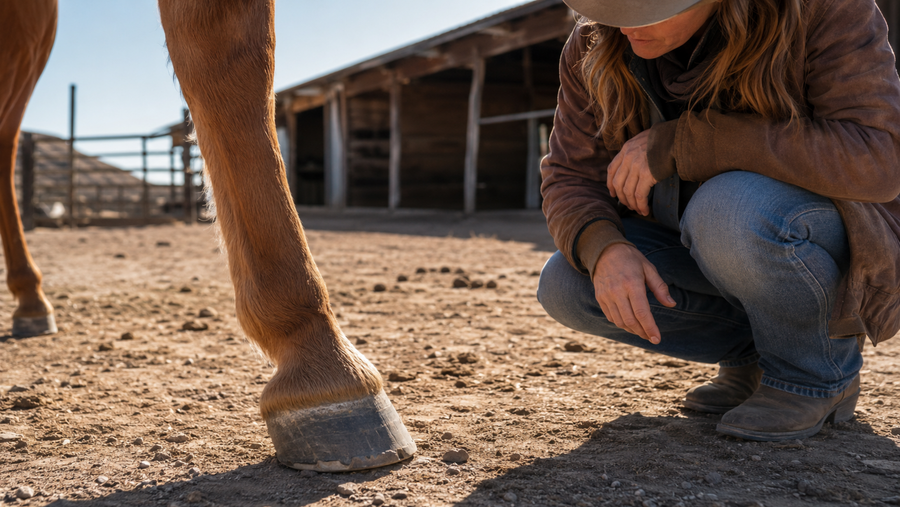
Pick out every foot and inspect the sole, frog, heel, wall, and shoe. Look for packed stones, a shifted or loose shoe, missing clinches, puncture concern, unusual odor with pain, or a foot that feels warmer than its partner. Compare digital pulse rather than relying on memory.
A stronger than normal pulse, marked hoof heat, sudden tenderness, reluctance to bear weight, or a rocked-back stance changes the decision. Contact the veterinarian or farrier. The digital pulse guide explains how to find and compare the pulse, but it cannot identify the cause of an abnormal finding.
Check legs, body, hydration, and recovery
Run clean hands over the legs and compare left with right. Look for cuts, heat, filling, a new lump, tendon-area sensitivity, or swelling around a joint. Check the back, hips, shoulders, and skin for rubs or impact marks. Note appetite, water interest, manure, breathing, sweating, and overall attitude.
Quiet walking may help a normally moving horse settle after ordinary activity, but it should not be used to force a lame or painful horse to look better. Give the horse a few calm minutes, then recheck. If movement improves fully and no red flags are present, record the event and check again later and the next morning. If movement does not normalize, end the routine and seek help.
Choose ride, rest, or professional help
- Ride only when the horse returns to its normal baseline. Begin with an easy warm-up and stop if the pattern returns.
- Choose a quiet day when the horse is even but clearly tired. Monitor rather than adding work to test the horse.
- Call the farrier for a shoe or hoof concern. Do not cover a questionable foot with a body-care routine.
- Call the veterinarian for pain, lameness, swelling, weakness, or a persistent unexplained change.
- Change turnout management when the pattern repeats with the same environmental condition. Address footing, water, herd pressure, or access instead of treating each episode as random.
Where routine topical support fits
When the horse is moving normally, skin is appropriate, and the situation belongs to ordinary post-activity care, a liniment gel may fit label-directed external support. Liniment gel does not diagnose hoof pain, repair an injury, correct unsafe footing, or make a lame horse appropriate to ride.
If the horse is normal but the routine path is unclear, use the Solution Finder. If the horse remains abnormal, skip product selection and involve the relevant professional.
Red flags that change the plan
- Non-weight-bearing movement, clear lameness, weakness, stumbling, or worsening stiffness.
- New heat, rapid swelling, a wound, puncture concern, or significant pain.
- Strong digital pulse, marked hoof heat, rocked-back stance, or sudden foot tenderness.
- Abnormal breathing, depression, appetite loss, colic signs, or not drinking normally.
- A repeated turnout pattern that is becoming more severe or taking longer to resolve.
Frequently asked questions
Why is my horse stiff after turnout but not before?
Turnout changes activity, footing, herd interaction, weather exposure, and time on the feet. Those clues help the assessment but do not identify the cause by themselves.
Should I walk a stiff horse until it loosens up?
Only use quiet walking when the horse is safe and not visibly lame or painful. Do not force movement through worsening stiffness, hoof pain, weakness, or swelling.
Can muddy turnout make a horse stiff?
Mud can change traction, effort, hoof moisture, shoe security, and skin exposure. Check the horse and the field rather than assuming mud is the only cause.
When should I call the farrier instead of the veterinarian?
Call the farrier for loose or shifted shoes and hoof-management concerns. Severe pain, non-weight-bearing movement, puncture concerns, or systemic signs also require veterinary guidance.
Can liniment gel be used after turnout?
Liniment gel may fit normal external post-activity care when the horse is moving normally and the skin is appropriate. It should not be used to cover lameness or hoof pain.
Educational note: This article provides general information and does not replace veterinary diagnosis, farrier care, saddle assessment, nutrition advice, or qualified training help.