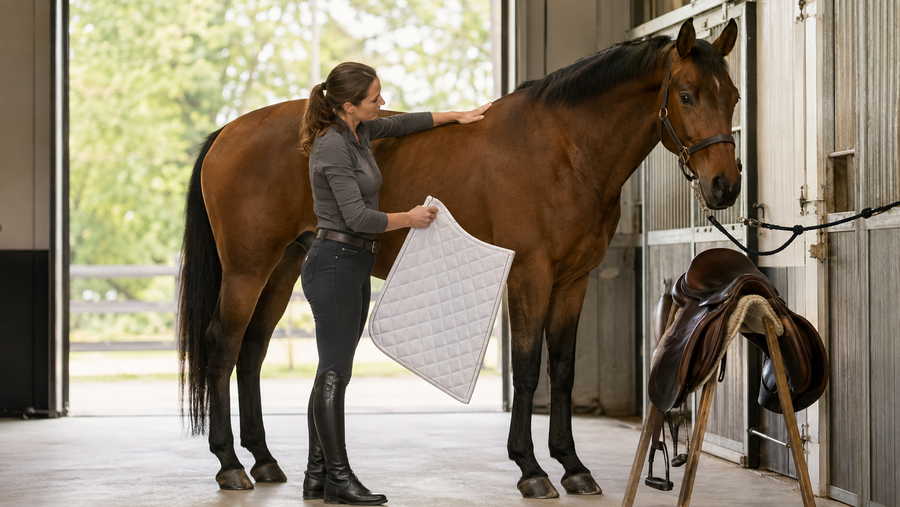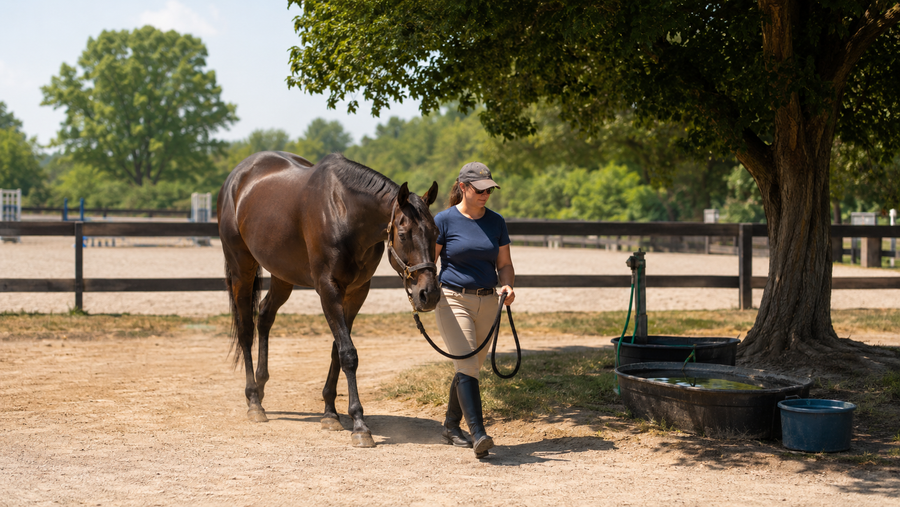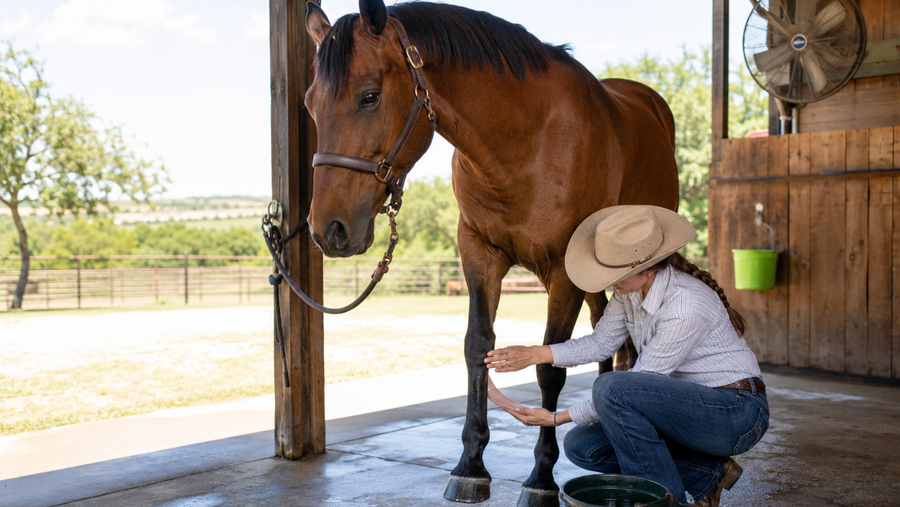
Horse owner monitoring a sweaty horse’s cool-out after humid work

Humidity can make an ordinary cool-out take longer. Sweat releases heat best when it can evaporate. When the air is already heavy with moisture, the horse may stay hot and breathe harder even after the work ends.

Quick Answer

If your horse is slow to cool after humid work, stop the work, move to shade and airflow, remove tack, begin active cooling, offer water, and track breathing, temperature when you can do so safely, sweat, attitude, and recovery time. Call a veterinarian for labored breathing, weakness, stumbling, confusion, collapse, an abnormal temperature, a horse that stops sweating while hot, or recovery that stalls or worsens.

First, Compare the Day With the Horse’s Normal

Recovery time is meaningful only in context. Note the temperature, humidity, direct sun, breeze, footing, duration and intensity of work, travel, and the horse’s starting condition. A short ride in deep footing on a still, humid day can create more heat load than a longer easy ride in cooler air.

Also compare this cool-out with the horse’s usual pattern. Did breathing stay elevated longer? Was the sweat heavier or unusually patchy? Was the horse less interested in water, dull, uncoordinated, or reluctant to move?

What to Track During the Cool-Out

  • Breathing: rate, depth, effort, nostril flare, and whether it steadily settles.
  • Temperature: use a thermometer if you know how to do so safely and follow your veterinarian’s guidance.
  • Sweat: where the horse is sweating, whether sweat continues, and whether the skin begins to cool.
  • Attitude: alertness, coordination, willingness to drink, and response to the handler.
  • Time: record when work stopped, when cooling began, and when the horse returned toward normal.
Barn rule: do not put the horse away because the clock says the ride is over. Put the horse away only after recovery is progressing normally.

A Practical Cooling Response

  1. Stop the workload and get to a safe area with shade and air movement.
  2. Remove tack and equipment that traps heat.
  3. Apply cool water over large muscle groups and repeat as needed. Scraping should not delay repeated cooling.
  4. Use fans when available and safe.
  5. Offer fresh water. Do not withhold water from a hot horse unless a veterinarian gives a specific reason.
  6. Keep monitoring. Gentle walking may be useful, but prolonged walking adds work and should not replace cooling.

Why “He Always Takes a While” Is Not Enough

A consistently slow cool-out deserves discussion with the veterinarian, especially when it is getting worse, occurs during lighter work, or appears with coughing, unusual noise, poor performance, muscle cramping, weakness, or changes in sweating. Fitness, respiratory health, body condition, acclimation, medication, and underlying illness can all affect heat tolerance.

Plan the Next Ride From the Recovery

Record the day instead of relying on memory. If recovery took longer than normal, reduce the next workload, choose a cooler time, improve shade or airflow, and review hydration with the horse’s veterinarian or nutrition professional. A slow recovery is useful information, not something to ride through.

Where Draw It Out® Fits

An external liniment may fit into a familiar post-work grooming routine after the horse is cooling normally and when the product is appropriate for that horse. It does not cool an overheated horse or replace water, shade, airflow, rest, or veterinary care. See the horse liniment collection for label-directed options and the Horse Health Library for more summer-care guidance.

FAQ

Why does humidity slow a horse’s cool-out?

High humidity slows sweat evaporation. The horse can continue producing sweat without releasing heat as efficiently.

Should I scrape water off immediately?

Repeated application of cool water is the priority. Do not let scraping delay ongoing cooling when the horse remains hot.

When should I call the veterinarian?

Call for labored breathing, weakness, stumbling, confusion, collapse, an abnormal temperature, absent sweating while hot, or recovery that is not steadily improving.

Track the Recovery, Not Just the Ride

The cool-out tells you what the work actually cost. Use that evidence to set the next plan.

Leave a comment

Please note, comments need to be approved before they are published.

Start here

Reading first? Here is the clean path.

This article gives you the background. If you are ready to put the idea into a real horse care routine, these are the next places most riders should go.

Daily recovery

Liniment Gels

Explore the Draw It Out® liniment gel lineup for everyday use, post-work routines, and targeted recovery support.

Shop liniment gels
Find the fit

Solution Finder

Match your horse’s workload, age, routine, and care goals to the Draw It Out® products that make the most sense.

Use the finder
Routine first

Prehabilitation

Learn how riders support soundness, comfort, and consistency before little issues become bigger problems.

Read the guide
Simple rule: read the article for context, use the Solution Finder for direction, then build the routine around the product format your horse will actually use consistently.

Real Barn Proof

What this looks like in real barns.

Real riders. Real horses. Real routines. These clips rotate automatically so the proof stays fresh without weighing the page down with a long feed.

Random rider clips

Why this matters: good horse care should make sense outside the ad. These clips show the kind of everyday use that builds trust one barn at a time.

Further Reading

Keep building the routine.

Horse care works better when the next step is clear. These related reads help connect today’s topic to better daily decisions in the barn.

Horse health news

Start with the principle, then build the habit. The right article should make the next barn decision easier, not more complicated.

Next Step

Keep your barn dialed in.

Simple care guides, practical product paths, and rider-trusted tools built for real horses and real routines.

Good care gets easier when the next step is obvious. Read the guide, match the routine, then choose the format that fits how your barn actually works.

Recovery Routine

Build a complete recovery routine.

Want a smarter way to think through post-ride care, heat, swelling, leg support, and daily recovery decisions? Start with the Performance Recovery Hub.

Better recovery starts with a repeatable routine. The hub gives riders a clearer path from workload to product format to aftercare timing.

Rider Favorites

Always in the kit.

Four core Draw It Out® staples riders keep close for daily recovery routines, wash rack use, targeted support, and quick barn-side care.

Core barn staples
Draw It Out® 16oz Liniment Gel | Daily Horse Care

Stay-Put Gel

16oz Liniment Gel

The everyday liniment gel format riders reach for when they want targeted, no-mess application.

View product
Draw It Out® 32oz Horse Liniment Concentrate | Spray, Wrap & Soak

Mix Your Way

32oz Concentrate

A flexible concentrate for riders who want to mix their own routine around workload and barn needs.

View product
Draw It Out® RTU Spray 24oz | Ready-to-Use Liniment Spray

Ready To Use

24oz RTU Spray

A ready-to-use spray format for quick application after work, travel, turnout, or daily care.

View product
CryoSpray® by Draw It Out® 24oz | Cooling Body Brace for Horses

Cooling Brace

CryoSpray

A cooling body brace spray for riders who want a fast, practical option after hard work or hot days.

View product

Format matters. Gel, concentrate, ready-to-use spray, and cooling spray each solve a different barn problem. Pick the one your routine will actually use.

Where To Go Next

Turn the idea into a routine.

If this topic connects to what you are seeing in your horse, these are the three cleanest next steps. Start with direction, then choose the product format that fits the way your barn actually works.

Next steps

Best next move: use the Solution Finder first when the issue is unclear. Go straight to the liniment gel collection when you already know the format you want.