Girthy Horse Behavior: What It Means and What to Do
If your horse pins their ears, bites, swishes their tail, braces, walks away, or tightens through the barrel when you tack up, do not chalk it up to attitude. Girthy behavior is often communication. The job is to slow down, read the horse, and find the discomfort behind the reaction.

Quick answer
A girthy horse reacts negatively when the girth or cinch is handled, tightened, or even anticipated. Common signs include pinned ears, biting, tail swishing, stepping away, bracing, kicking, or anxious movement. The response should not be punishment. Start by checking pain, saddle fit, ulcers, skin sensitivity, back soreness, and the horse’s tack up routine.
What does girthy mean?
A girthy horse shows discomfort, worry, resistance, or defensive behavior around the girth, cinch, saddle area, or barrel. Some horses react only when the girth is tightened. Others start reacting when they see the saddle pad, feel the saddle placed, or sense that the tack up routine is beginning.
That timing matters. A horse that reacts before the girth is even tightened may be anticipating discomfort from past experience. A horse that reacts only at a specific hole on the girth may be responding to pressure, fit, soreness, or sensitivity in that moment.
Common girthy signs
- Pinned ears
- Tail swishing
- Biting at the air, handler, wall, or lead rope
- Backing away or stepping sideways
- Bracing through the neck, back, or barrel
- Cow kicking or threatening to kick
- Trying to lie down when cinched
What not to assume
- Do not assume the horse is being dramatic.
- Do not assume the horse is trying to win.
- Do not assume punishment will fix it.
- Do not assume one quiet day means the issue is gone.
Why horses act girthy
Girthy behavior has more than one possible cause. Sometimes it is physical. Sometimes it is learned. Often it is both. The practical move is to work through the likely causes in order instead of arguing with the symptom.
1. Ulcers or abdominal discomfort
Horses with digestive discomfort may become defensive around pressure near the barrel. If the reaction is new, intense, or paired with appetite changes, poor condition, irritability, or performance changes, involve your veterinarian.
2. Saddle fit problems
A saddle that bridges, pinches, tips, shifts, or concentrates pressure can make the horse associate tacking up with pain. Saddle fit changes as the horse gains muscle, loses topline, changes workload, or moves into a different season.
3. Back, rib, shoulder, or soft tissue soreness
Soreness along the back, ribcage, sternum, girth groove, shoulder, or pectoral area can make normal tack pressure feel unfair. This is where a careful hands on check before tacking can tell you a lot.
4. Skin sensitivity or rubs
Dirt, sweat, fungus, rubs, scurf, bug irritation, clipped skin, or a dirty girth can all make the area reactive. A clean girth and clean skin are not cosmetic. They are part of the routine.
5. Memory of pain
Horses remember patterns. Even after the original discomfort improves, the horse may still brace because the tack up process has become a warning signal.
6. Rushed handling
Fast tightening, no pause, no breathing room, and no release can make a sensitive horse worse. The girth is not a clamp. It is a conversation.
When to call the vet
Call your veterinarian when girthy behavior appears suddenly, escalates quickly, is paired with weight loss, appetite changes, poor performance, lameness, colic signs, extreme sensitivity, swelling, heat, wounds, or a horse that becomes unsafe to handle.
This article is rider education, not a diagnosis. Girthiness can be a clue, but a qualified professional should evaluate serious, persistent, or worsening cases.
How to check a girthy horse before you tack up
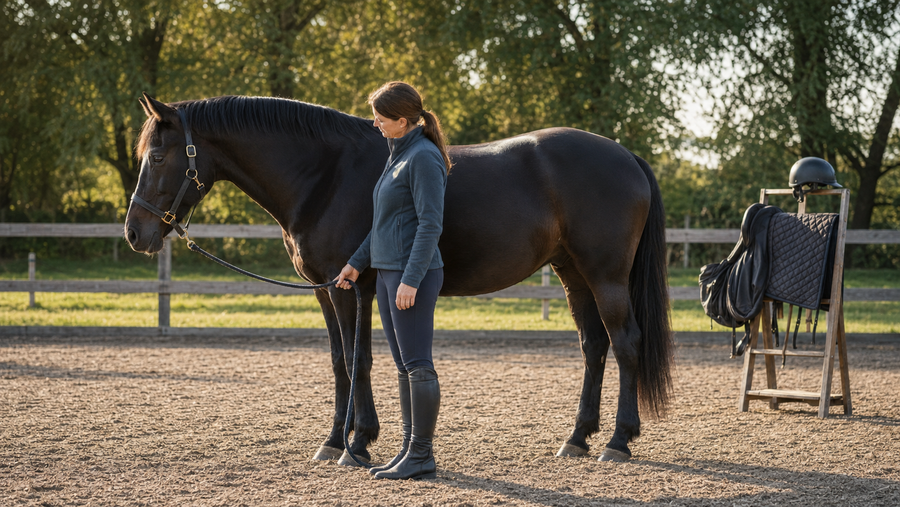
Before reaching for the saddle, take thirty seconds and let the horse tell you what kind of day you are dealing with.
Watch before touching
Look at the horse in the stall or cross ties. Are they relaxed, eating, standing square, breathing normally, and aware without being tense?
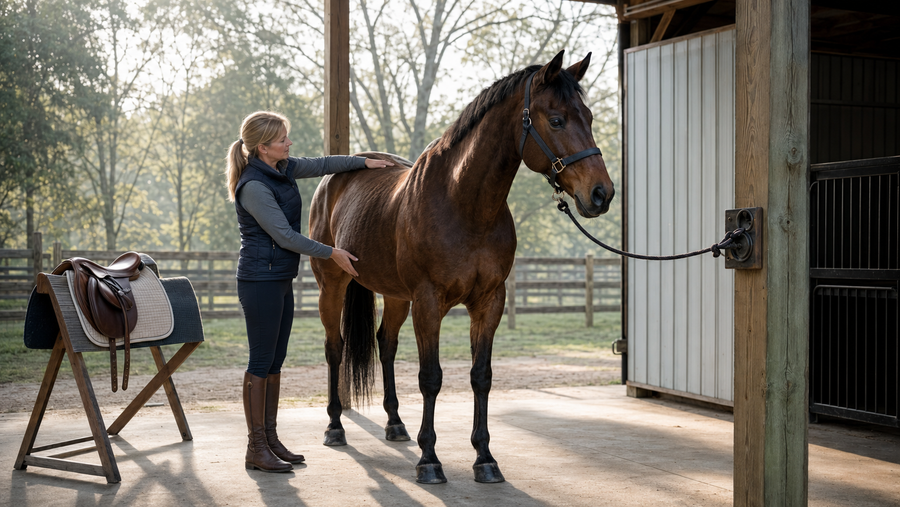
Run your hand lightly along the barrel
Use calm pressure along the girth groove, ribs, sternum, pectorals, shoulders, and back. Watch the eye, nostril, ear, skin twitch, and body posture.
Check the skin and girth
Look for rubs, dirt, dried sweat, swelling, scurf, tender spots, or a dirty girth. Small friction points become big attitude problems when ignored.
Place tack quietly
Do not drop the pad or saddle onto the horse. Place it with intention. A horse that flinches at placement is giving you useful information.
Tighten in stages
Bring the girth up lightly, pause, walk a few steps, tighten another hole, pause again, then recheck before mounting. The slower routine usually costs less time than fighting a worried horse.
A calmer tack up routine for girthy horses
The goal is not to sneak the girth tighter. The goal is to make the horse feel heard while you remove avoidable discomfort from the process.
- Groom the girth area thoroughly. Remove dried sweat, dirt, loose hair, and debris.
- Check for heat, swelling, rubs, or skin irritation. Do not tack over obvious problem areas.
- Apply topical support when it fits the routine. For targeted muscle and soft tissue areas, riders often choose Draw It Out® 16oz High Potency Liniment Gel because it stays where placed and fits pre ride or post ride care.
- Let the horse breathe. Pause before tightening. Reward stillness and soft posture.
- Tighten gradually. Use stages instead of one hard pull.
- Walk before mounting. Give the horse a chance to settle into the tack before asking for work.
Do not apply topical products to broken skin unless the product label allows that use. Always follow label directions and check competition rules that apply to your discipline.
Where Draw It Out® liniment gel fits
Draw It Out® liniment gel is not a replacement for veterinary care, saddle fit, or good horsemanship. It fits best as part of a repeatable comfort routine when riders want targeted, stay put topical support for hard working areas.
Around girthy horses, the bigger win is consistency. Same quiet approach. Same slow girth process. Same hands on check. Same attention to small changes before they become big reactions.
Routine first
For horses that are sensitive through the girth, barrel, back, or shoulder area, start with observation and handling. Then build the support routine around what the horse actually shows you.
Do not punish the warning sign
A girthy reaction is not always polite, but it is still communication. Punishing the warning sign can teach the horse to suppress smaller signals until the reaction becomes bigger, faster, or more dangerous.
Better horsemanship is not softness without standards. It is accuracy. You can require safe manners while still respecting the possibility that the horse is uncomfortable.
Final thought
Girthy behavior is a symptom, not a character flaw. The horse is telling you something about pressure, memory, soreness, handling, or discomfort. When you slow down and treat the reaction as information, you protect the horse, the rider, and the relationship.
That is the real standard. Not a horse that stays quiet because it gave up. A horse that tacks up better because the routine finally makes sense.
Frequently asked questions
Is girthy behavior always caused by pain?
Not always, but pain or discomfort should be ruled out first. Some horses react from anticipation, memory, poor handling, or anxiety, but those patterns often begin with a real discomfort event.
Can ulcers make a horse girthy?
Yes, digestive discomfort can make some horses defensive around the barrel and girth area. A veterinarian should evaluate possible ulcer concerns, especially when behavior changes are paired with appetite, condition, attitude, or performance changes.
Should I tighten the girth all at once?
No. Sensitive horses usually do better when the girth is tightened gradually in stages. Light contact, pause, walk, tighten again, and recheck before mounting.
Can liniment gel help a girthy horse?
Liniment gel can support a comfort routine for hard working muscle and soft tissue areas, but it should not be used to cover up pain or replace veterinary care, saddle fit evaluation, or proper handling.
When should I stop riding a girthy horse?
Stop and reassess when the reaction is sudden, severe, unsafe, paired with lameness, swelling, heat, appetite changes, colic signs, or obvious pain. In those cases, call your veterinarian or another qualified professional.
Where to go next
Not sure whether this is soreness, saddle fit, routine tension, or something deeper? Start with the guided path, then build a simple support routine around what your horse is telling you.