Quick answer: A horse that becomes short-strided after work needs a calm comparison of feet, legs, back, tack areas, footing, workload, recovery, and movement. Do not assume laziness or routine stiffness. Stop and call the veterinarian for lameness, pain, heat, swelling, wounds, neurological signs, or a stride that worsens or does not normalize.
“Short-strided” usually means the steps look or feel smaller than normal. The horse may feel tight, guarded, uneven, reluctant to reach, or less willing to turn. That description is useful, but it does not identify the cause.
Watch When the Change Appears
Did the horse feel normal during the ride and shorten after standing? Was the stride short from the first step? Did it improve with a gentle warm-up, stay the same, or worsen? Does the same pattern follow deep footing, hard ground, jumping, speed work, or hauling?
If the horse becomes more uneven or painful, stop. More laps are not better evidence.
Check the Feet First
Pick out all four feet and look for stones, packed material, a shifted or loose shoe, hoof-wall damage, unusual heat, or a stronger digital pulse than normal. Compare recent trimming or shoeing changes and the surfaces used during the ride.
Foot pain can change the entire body’s movement. Contact the farrier for equipment or hoof-balance concerns, and involve the veterinarian when the horse is lame or painful.
Compare the Legs and Body
- Heat, swelling, wounds, or sensitivity in any leg.
- Different posture or weight shifting.
- Back, wither, shoulder, or girth-area sensitivity.
- Sweat patterns, dry spots, rubs, or tack displacement.
- Breathing, attitude, appetite, and overall recovery.
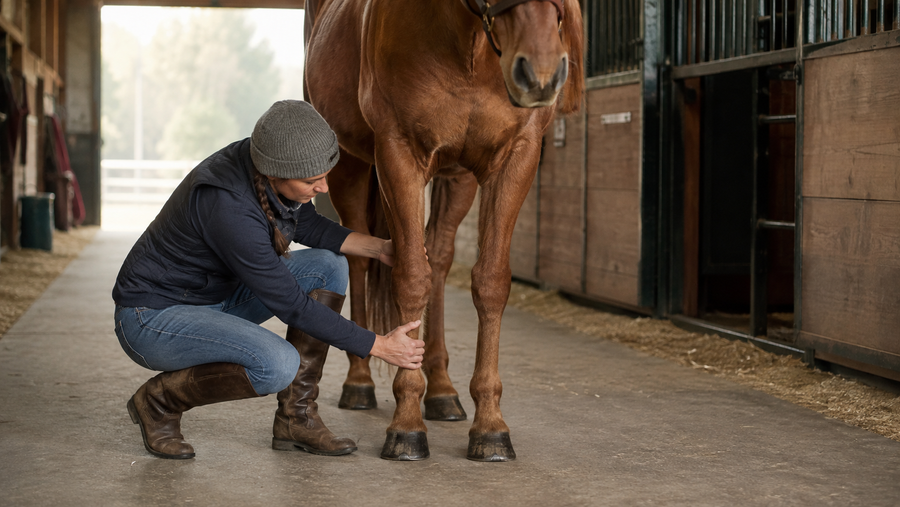
Use light, consistent touch and compare matching areas. Do not force range of motion or apply deep pressure to a painful spot.
Review the Workload and Footing
Count warm-up, schooling, classes, hills, deep or hard footing, and travel. A familiar exercise can cost more when the surface or weather changes. Also review whether the horse had recovered from previous work before today’s session began.
Plan the Next Step
If the horse is uncomfortable or abnormal, stop riding and get professional guidance. If the horse returns fully to normal and no red flags are present, use an easier next session, a deliberate warm-up, and close rechecks. A recurring pattern deserves evaluation even when it seems to “work out” each time.
Write down when it happened, what the horse did, and what conditions were present.
Where Draw It Out® Fits
Draw It Out® 16oz Liniment Gel may fit a familiar, label-directed external post-work routine for an otherwise appropriate horse. It does not diagnose the source of a short stride, mask lameness safely, or replace veterinary, farrier, tack, or training evaluation.
Use the Horse Stiffness and Recovery Help Hub for related education, but treat new pain or lameness as a professional-care question.
FAQ
Can a horse be short-strided from fatigue?
Yes, fatigue can affect stride quality, but feet, pain, tack, footing, and other causes can look similar. Assess the horse rather than assuming.
Should I ride again if the horse looks normal tomorrow?
Base the decision on the complete pattern and the horse’s normal. Use an easier plan and seek help when the change was painful, repeated, unexplained, or paired with another concern.
Can liniment fix a short stride?
No topical product can identify or correct every cause of short movement. Liniment may fit external routine care but does not replace diagnosis or appropriate treatment.
General riding education only. This article does not diagnose a horse and does not replace veterinary care.