Footing and mobility
Hard Ground Makes Horses Talk: What to Check Before You Blame Attitude
A shorter stride or reluctant turn on hard ground is information. Check the horse, the feet, the surface, and the workload before labeling the behavior.
Quick answer: reduce the demand and compare the horse on safer footing. Check for one-sided movement, hoof heat, a stronger digital pulse, limb heat, swelling, stumbling, or worsening discomfort. Hard ground may expose a problem; it does not prove the cause. Lameness or acute change needs a veterinarian or farrier.
Availability note—checked July 10, 2026: Fluid Flex EQ® is listed as Coming Soon, and its active online variants show zero inventory. It is not an available primary recommendation today. Recheck the live listing before treating it as orderable.
Why footing can change the conversation
Dry, packed ground changes concussion, traction, confidence, and how a horse organizes each step. A horse may feel different because the workload is less forgiving, because the feet are sensitive, because conditioning is not matched to the surface, or because an existing issue becomes easier to see. The surface is a clue—not a diagnosis.
Stop trying to ride the horse “through it.” Moving to a softer, level area for a careful in-hand look can help describe the pattern, but it should not become a lameness test that repeatedly stresses a sore horse.
Use this before-work check
Feet
Look for a recent trim or shoeing change, lost shoe, packed sole, tenderness, cracks, unusual heat, or a stronger-than-normal digital pulse. Call the farrier or veterinarian when findings are abnormal.
Movement
Watch straight lines, easy turns, backing, and the first steps after standing. Note whether the change is one-sided, worsens with movement, or improves only briefly.
Surface
Check hardness, rocks, ruts, dust, depth, slope, and traction. Do not assume every part of an arena or trail offers the same footing.
Workload
Review speed, turns, stops, jumps, miles, hauling, recovery time, and the previous day's work. Reduce or skip work when the horse is not moving normally.
Build support around management
Mobility routines begin with soundness, hoof care, suitable footing, progressive conditioning, warm-up, cooldown, turnout, and enough recovery. Feed-through joint products occupy a different lane from topical care, and neither should be used to hide pain or postpone an examination.
Fluid Flex EQ® can be described as a future daily joint-support option, but its current Coming Soon status means it should not be the next-step purchase in this article. For ordinary, non-acute post-work topical care, an available liniment can be considered according to its label after the horse has been assessed and is moving normally.
Available topical lane
What riders commonly use next
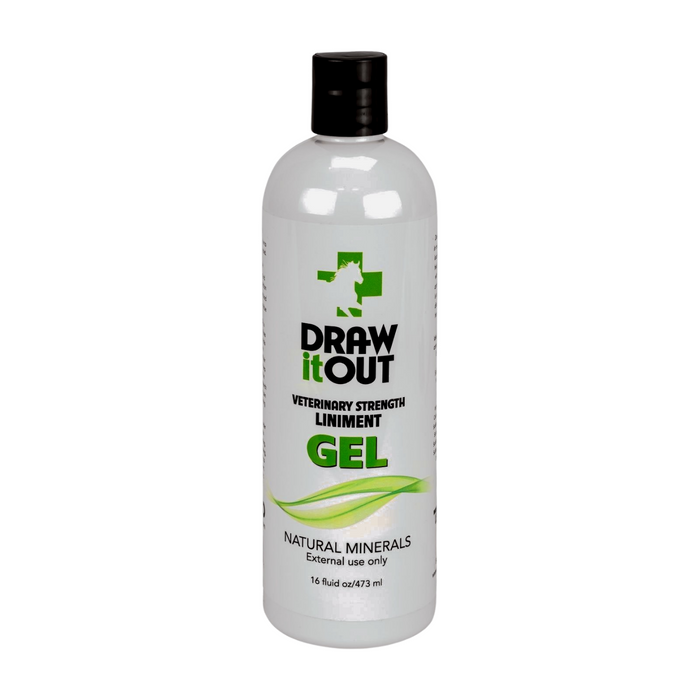
Draw It Out® 16oz Liniment Gel is currently active and in stock for label-directed external post-work care. It is not a treatment for lameness, hoof pain, heat, swelling, or injury, and it does not make unsuitable footing safe.
Use the Solution Finder if you are not sure whether this is a topical-care or professional-care situation.
Call instead of continuing work
- Obvious or worsening lameness, repeated head movement, toe dragging, stumbling, or refusal to bear weight.
- Hoof heat, a strong digital pulse, limb heat, swelling, a wound, or sudden severe tenderness.
- A horse that is markedly different from normal after a fall, hard stop, slip, or recent shoeing change.
FAQ
Can hard ground make a horse look stiff?
It can change how a horse moves, but stiffness on hard ground can also expose hoof sensitivity, soreness, conditioning gaps, or lameness. Do not assume the surface is the only cause.
Is Fluid Flex EQ® available now?
As checked July 10, 2026, its active listing is marked Coming Soon and shows zero inventory. Check the live listing for the latest status.
Can liniment make it safe to ride a lame horse?
No. A topical product does not diagnose or treat lameness and should not be used to mask abnormal movement.
General education only. Sudden or persistent gait change requires veterinary or farrier guidance. Author: Jon Conklin.