Spring Horse Warm-Up Mistakes: Why Your Horse Feels Stiff Early
If your horse feels short, sticky, uneven, or resistant during the first part of spring rides, do not jump straight to attitude. The timing matters. The warm-up may not match what the body needs yet.
Quick answer
If your horse feels stiff early in the ride but improves after ten or fifteen minutes, the problem may be incomplete readiness, reduced tissue elasticity, a seasonal workload jump, tack tension, footing, or low-grade soreness that movement temporarily masks. A better spring warm-up should build circulation, rhythm, and range of motion before asking for precision.
You get on. You pick up the reins. You ask for the normal forward step.
Instead of the horse you expected, you feel a body that is not quite online yet. The stride is short. The back feels guarded. The bend feels braced. The horse may not feel lame, but they do not feel loose either.
Then, ten minutes later, everything starts to improve.
That improvement is useful information. It does not automatically mean everything is fine. It means the first part of the ride is telling you something the rest of the ride can hide.
The first ten minutes tell the truth
Early-ride stiffness is easy to dismiss because many horses loosen up once they move. But that does not make the pattern meaningless.
The beginning of the ride is when the body has not yet built full circulation, heat, rhythm, or joint range. It is also when the horse has not had time to organize balance under a rider. If your first real request arrives before those systems are ready, the answer may feel like resistance.
That is why a horse can feel difficult early and generous later. The horse did not suddenly become more obedient. The body finally caught up to the job.
A horse that improves with a thoughtful warm-up is not necessarily fine. They may be telling you the preparation phase needs more respect.
Why spring makes this worse
Spring is a trap season because riders feel ready before horses are fully adapted.
The days are longer. The footing is improving. Clinics, lessons, hauling, and show plans start filling the calendar. It feels natural to ride more. But your horse’s soft tissue, joints, topline, and recovery rhythm may still be coming out of winter mode.
That creates a mismatch. The calendar says spring. The body may still be operating on a colder, slower, less consistent baseline.
More rides, longer sessions, and sharper asks can arrive before conditioning is rebuilt.
Cold mornings, warm afternoons, wind, rain, and mud can change how the horse feels day to day.
A horse can complete the ride but still need better support before the next one.
The mistake: asking before preparing
Most warm-up mistakes are not dramatic. They are small timing errors repeated every ride.
- Picking up contact before the horse is truly walking forward
- Asking for bend before the rib cage and shoulders are mobile
- Moving into transitions before rhythm is settled
- Assuming last year’s warm-up still fits this year’s body
- Shortening the warm-up because the horse usually improves anyway
The issue is not always the exercise. It is when the exercise shows up.
A circle can be helpful after the horse is moving through the body. The same circle can feel sticky and defensive if the horse is still braced through the back and shoulders. A transition can improve engagement once rhythm exists. The same transition can create tension when the horse is still protecting range of motion.
What stiffness really means
Stiffness is not a diagnosis. It is a signal.
It can come from normal early-ride tightness, a conditioning gap, poor recovery, tension, footing, tack, hoof balance, age, or soreness. The pattern matters more than the label.
Watch the timing.
- Stiff at the start, better later: often points toward readiness, tissue elasticity, circulation, or warm-up structure.
- Fine at the start, worse later: may point toward fatigue, load tolerance, weakness, or discomfort under repeated work.
- Worse each ride: deserves closer attention and may need professional evaluation.
- Uneven, head bobbing, or clearly painful: stop and call your veterinarian.
If your horse is clearly lame, reluctant to bear weight, reactive to touch, unusually swollen, or getting worse instead of better, pause the ride and involve your veterinarian.
A smarter spring warm-up structure
A better warm-up is not just a longer warm-up. It is a better sequence.
The goal is to move from circulation to rhythm, then from rhythm to mobility, then from mobility to the real work. Most riders accidentally skip straight to the work.
Start with forward walk
Let the horse cover ground without micromanaging the frame. You are looking for a walk that starts to swing through the back and step under naturally.
Add gentle changes of line
Use large turns, shallow serpentines, and quiet direction changes before asking for tight circles or stronger bend.
Build rhythm before precision
In trot or jog, prioritize steady tempo and relaxation before collection, lateral work, or repeated transitions.
Ask for bend gradually
Let the neck, shoulders, rib cage, hips, and back come into the conversation one piece at a time.
Check both directions
Spring stiffness often shows up unevenly. Note whether one side needs more time before the horse feels symmetrical.
What improvement should feel like
A good warm-up does not force the horse loose. It gives the horse enough time and structure to become available.
When the warm-up is working, you should feel small changes before big ones. The walk gets freer. The topline stops feeling locked. The horse reaches more honestly into the contact. The turns stop feeling like negotiations. The transitions become less abrupt.
The best sign is not that the horse suddenly performs. The best sign is that the horse stops protecting.
Where topical support fits
Warm-up structure matters first. Product comes second.
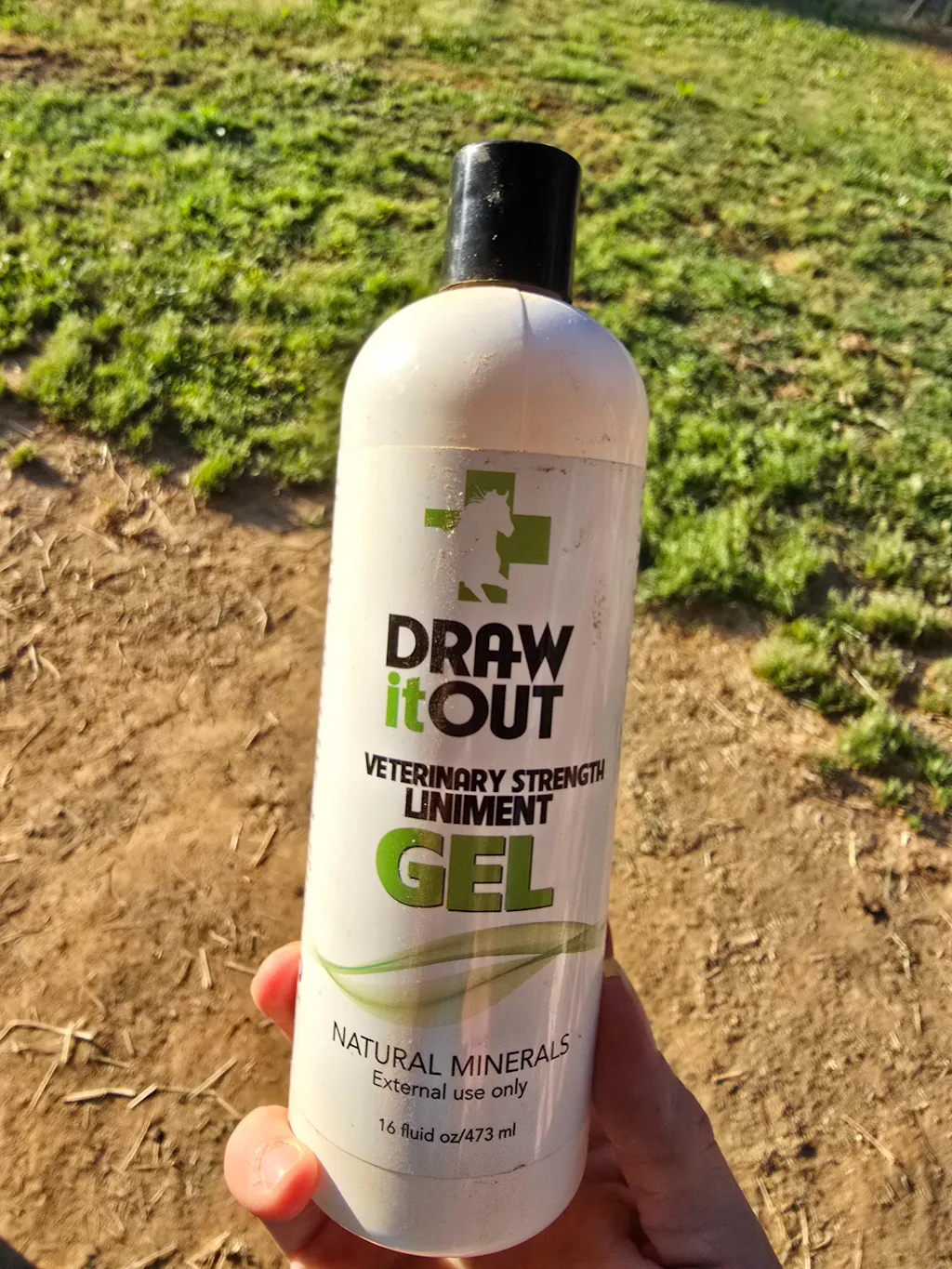
That said, many riders use Draw It Out® liniment gel as part of a spring routine because it fits cleanly into pre-ride and post-ride care without heat, burn, sting, strong odor, or messy residue. It is not a replacement for conditioning, saddle fit, hoof care, veterinary care, or good riding. It is a practical support tool inside a better routine.
For targeted muscle and soft tissue support before or after work, start with the Draw It Out® liniment gel collection. For broader routine planning, use the Solution Finder. If you are trying to build a more durable program around movement, workload, and recovery, read the Prehabilitation guide.
Build the routine before the problem gets louder
Spring stiffness does not always need a bigger response. Sometimes it needs a cleaner one. Start with what you are seeing, match the support to the pattern, and keep the first ten minutes from setting the whole ride against you.
Speakable summary
If your horse feels stiff early in spring rides but improves later, do not assume it is attitude. Early stiffness often means the horse needs better preparation before harder work. Use forward movement, gradual bend, rhythm, and routine-based support before asking for collection or precision.
Spring horse warm-up FAQ
Why is my horse stiff at the beginning of a ride but better later?
That pattern often means the horse needed more time to build circulation, tissue elasticity, range of motion, and rhythm before the harder ask. It can also point to recovery gaps, tack issues, footing, age, or soreness, so watch whether the pattern improves or builds over time.
Is it okay if my horse warms out of stiffness?
Sometimes mild early stiffness improves with movement, but warming out of it does not automatically mean there is no issue. If the stiffness is new, worsening, uneven, painful, or paired with swelling or lameness, stop and involve your veterinarian.
How long should I warm up my horse in spring?
Use the horse in front of you rather than a fixed number. Many horses need more time in spring because workload, weather, footing, and conditioning are changing. Look for freer walk, steadier rhythm, softer turns, and better willingness before moving into harder work.
What is the biggest spring warm-up mistake?
The biggest mistake is asking for precision before the horse is physically ready. Contact, collection, bend, transitions, and smaller circles work better after the horse has established forward movement, rhythm, and basic mobility.
Where does Draw It Out® liniment gel fit in a warm-up routine?
Draw It Out® liniment gel fits as targeted support before or after work as part of a complete routine. It does not replace conditioning, veterinary care, saddle fit, hoof care, or good riding, but many riders use it because it is clean, sensation-free, and easy to apply where support is needed.