Single-Leg Swelling Guide

One Swollen Horse Leg

One swollen horse leg deserves a harder look than ordinary stocking up. A horse that fills in multiple legs after standing still is one pattern. A horse with one leg that is suddenly larger, warmer, tighter, or more painful is another. This guide helps you sort the first few minutes calmly so you can decide whether you are looking at routine support, something that needs close monitoring, or a problem that belongs in your veterinarian’s lane.

Quick answer: One swollen horse leg usually needs more scrutiny than routine filling in multiple legs. Check heat, pain, lameness, wounds, and how suddenly it appeared before treating it like ordinary maintenance.

Why one swollen leg is different

When swelling is limited to one leg, riders stop thinking broadly and start thinking locally. That matters. A single swollen leg often suggests a more specific issue than simple inactivity-related fill. You may be looking at irritation, a knock, a hidden cut, a skin problem, a tendon or ligament concern, or a deeper inflammatory process.

You do not need to diagnose the cause in the aisle. You do need to recognize that one leg swollen is its own category.

Question One swollen horse leg Typical routine fill pattern
How many legs are involved? One leg clearly stands out Often more than one leg looks similarly full
How it feels May feel tighter, warmer, or more reactive Often softer and less dramatic
What it suggests Localized issue deserves a harder look Often routine stall-related filling
What to do Check carefully and escalate faster if red flags show up Support movement and monitor the pattern

What to check in the first five minutes

Start with the obvious before you reach for a product. These checks tell you whether you are still in the routine lane.

Compare both legs.
Look at the same landmarks on each side. Is the swelling actually one-sided or does one side just look worse at first glance?
Feel for heat.
Heat raises the seriousness of the conversation quickly.
Check for pain.
Does the horse react when you press gently or handle the area?
Watch the horse walk.
Obvious lameness moves this out of the “just monitor it” category.
Look for a cause you can see.
Small cuts, rubs, punctures, insect reactions, or interference marks matter.

Good discipline: decide whether you are seeing a leg-care routine issue or a veterinarian issue before you start layering on treatments.

Common patterns riders notice

Sudden lower-leg puffiness

Can be tied to minor trauma, skin irritation, a small wound, or a more serious inflammatory process. Context matters.

Swelling with heat

Heat is one of the fastest clues that the issue deserves more respect than ordinary maintenance.

Swelling with lameness

If the horse is clearly off, stop trying to force this into a simple routine-care box.

Important: there are many possible causes for one swollen horse leg. This page is about sorting urgency and next steps, not naming the exact diagnosis from a distance.

Red flags that change the plan

These signs push one swollen leg out of the routine lane and toward a veterinary conversation.

Call sooner

Noticeable heat, strong pain, obvious lameness, rapid enlargement, a visible wound, drainage, fever, or a horse that seems systemically unwell.

Do not wait on show plans

If this showed up suddenly and is not behaving like your horse’s normal pattern, do not let the competition calendar make the decision for you.

That applies even more if you are tempted to assume it is just “stocking up.” One leg swollen is usually not the same conversation as a horse filling evenly in multiple legs after standing.

What belongs in the routine lane

If the swelling is mild, the horse is comfortable, there is no meaningful heat, and you are looking at ordinary maintenance rather than a red-flag situation, then your job becomes simpler: keep the routine calm, monitor closely, and avoid turning care into panic.

Support the system

Movement, clean routine habits, and consistent observation matter more than aisle improvisation.

Stay inside the routine lane

Use daily topical support for daily support situations. If the leg starts reading like a medical problem, the routine lane ends there.

Best next pages: build the full daily framework on Prehabilitation, and compare topical thinking on Show-Safe Liniment.

Where Draw It Out® fits

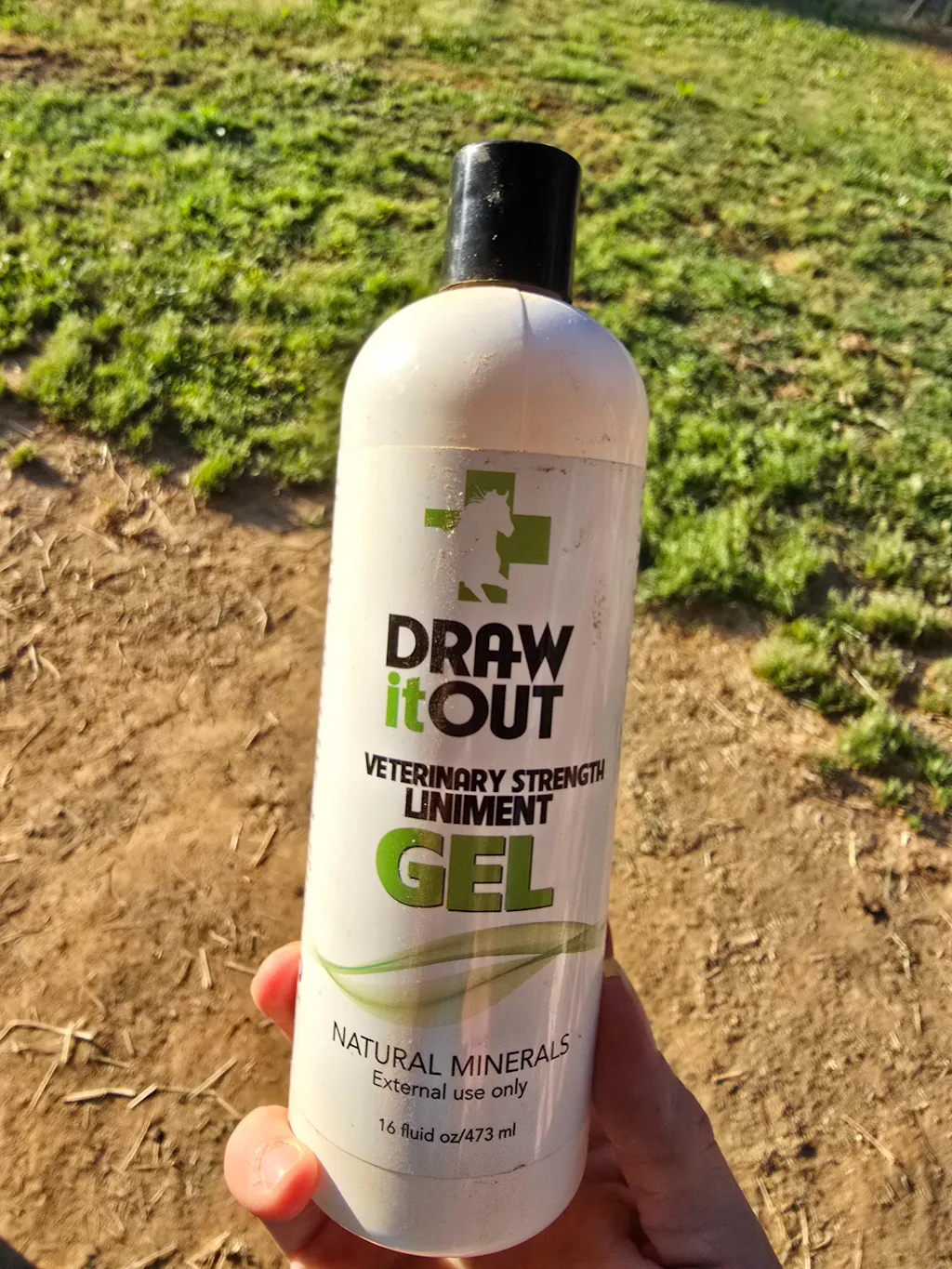
Draw It Out® fits best when the situation is still in the routine lane. That means calm daily support, not pretending a serious leg problem is just another grooming step. If the horse needs ordinary maintenance and you want a liniment gel routine you can actually repeat, start with the Solution Finder and shop the liniment collection.

Where to go next

Horse Leg Swelling Guide

Use this for the broader swelling framework and to compare one-leg swelling with other common patterns.

Show-Safe Horse Care

Use this when the bigger question is how to keep daily care simple and rule-aware around competition.

Show-Safe Liniment

Use this when the question is product style, routine support, and why riders prefer calm liniment gel systems.

Frequently asked questions

Is one swollen horse leg more serious than stocking up?

Often it deserves a harder look. One swollen leg usually points toward a more localized issue than the mild multi-leg filling riders call stocking up.

What should I check first if one horse leg is swollen?

Check heat, pain, lameness, visible wounds, drainage, and how suddenly the swelling appeared. Compare the matching leg on the other side.

Can one swollen horse leg still be mild?

Yes, sometimes. But one-leg swelling should earn more scrutiny before you assume it is routine.

When should I call a veterinarian for one swollen horse leg?

Call faster when the swelling is hot, painful, rapidly enlarging, paired with lameness, linked to a wound, or accompanied by fever or a horse that seems unwell overall.

Where should I start if I want a daily support routine?

Start with Prehabilitation, use the Solution Finder, and shop the liniment collection.

Show-Safe Relief. Naturally.

We build every product for real riders who care as much as we do. No burn, no sting, no nonsense. Just clean, sensation-free relief that’s safe for every horse in every ring.

From barn aisle to show ring, Draw It Out® stands for one simple promise. Modern Performance, Proven Calm.

Shop Relief Built for Real Riders
Start here

Not sure what to do next?

Pick the fastest next step. If you already know what you need, jump straight to the right lane.

Routine first
Built for repeatable routines, not hype.
Real riders
Made for everyday horse people who do the work.
Need help?
If you want a quick pointer, contact us.