Can You Use Horse Liniment in Hot Weather? A Practical Summer Guide
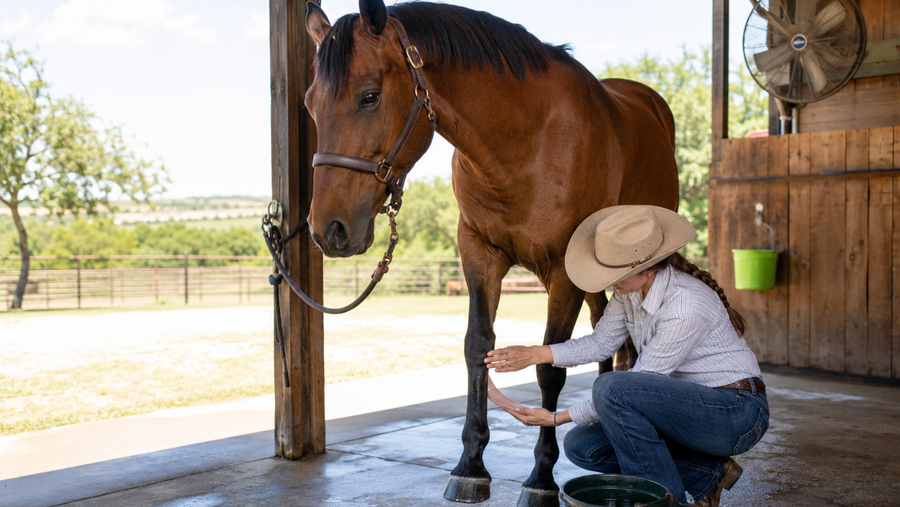
Can you use horse liniment during the heat of the day? Yes, but the horse's temperature, skin condition, and recovery matter more than the clock. Here is the...
Free U.S. shipping at $50+
No code needed.
Shipping details
Heat and hydration guide
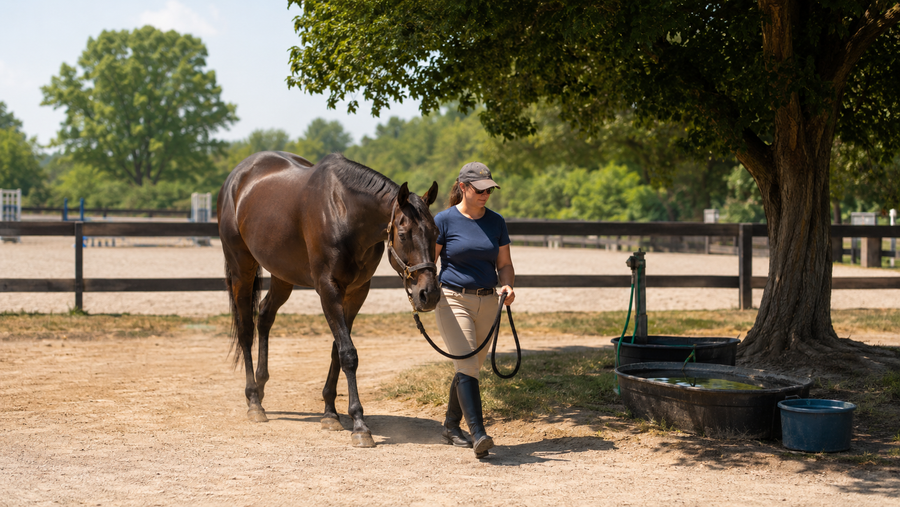
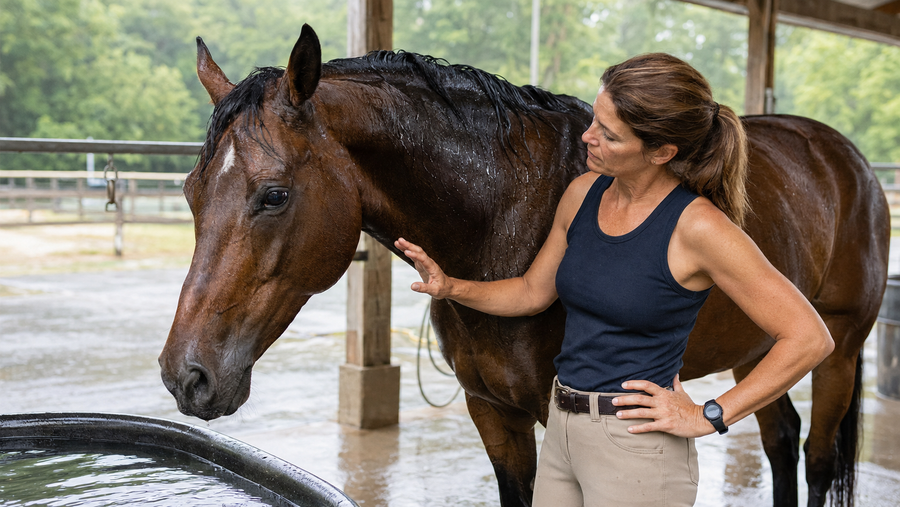
The old rule that a hot horse must be denied water is not a safe default. Horses need access to clean water, and cooling should begin promptly while the rider watches breathing, attitude, sweating, coordination, and recovery.
Quick answer: Offer a hot horse clean water, move to shade and airflow, begin appropriate cooling, and call a veterinarian when the horse is distressed, weak, uncoordinated, colicky, not sweating normally, or failing to recover.
A horse's needs change with temperature, humidity, workload, forage, travel, lactation, acclimation, and health.
Do not spend critical minutes debating a barn myth while the horse remains hot.
Electrolytes do not replace water. They also should not be used blindly in a horse that is not drinking.
Stop work and contact a veterinarian. Severe heat illness is not a topical-product problem.
Products support routine care. Lameness, severe pain, heat, marked swelling, punctures, open wounds, eye concerns, fever, breathing changes, neurologic signs, or a horse that is getting worse need veterinary or farrier guidance.
Most horses can be allowed to drink clean water while cooling. If a veterinarian has given an individual restriction, follow that plan.
No. Begin cooling and offer water while monitoring recovery.
No. Electrolytes support a broader hydration plan but do not replace free access to clean water.
Written by Jon Conklin for Draw It Out® Horse Health Care Solutions. Educational support only. This article does not diagnose, treat, cure, or prevent disease. Follow current product labels and professional guidance.
Can you use horse liniment during the heat of the day? Yes, but the horse's temperature, skin condition, and recovery matter more than the clock. Here is the...
Canterbury Park canceled July 26 racing after projected heat indices above 105°F. Here is what riders and horse-event organizers should build into a heat stop-plan.
Track breathing, sweat, workload, shade, airflow, water interest, and recovery time when a horse is slow to cool after humid work.
!