Can You Use Horse Liniment in Hot Weather? A Practical Summer Guide
Can you use horse liniment during the heat of the day? Yes, but the horse's temperature, skin condition, and recovery matter more than the clock. Here is the...
Free U.S. shipping at $50+
No code needed.
Shipping details
Summer sweat can make a horse's belly louder than usual. Salt, dust, flies, girth pressure, damp hair, and trapped grime can all create sensitivity under the horse before the owner sees a real skin problem.
If your horse is belly sensitive after summer sweat, check the midline, girth path, armpits, sheath or udder area, fly bites, rubs, scabs, heat, swelling, and whether the reaction appears before or after riding. Call your veterinarian for open, painful, swollen, oozing, spreading, or severely itchy skin.
The belly collects more than moisture. It collects arena dust, pasture debris, fly pressure, dried salt, and the rub from girths, sheets, belly bands, and boots. When heat and humidity are added, a minor irritation can turn into a horse that pins ears, kicks at the belly, clamps the tail, or refuses to stand quietly for grooming.
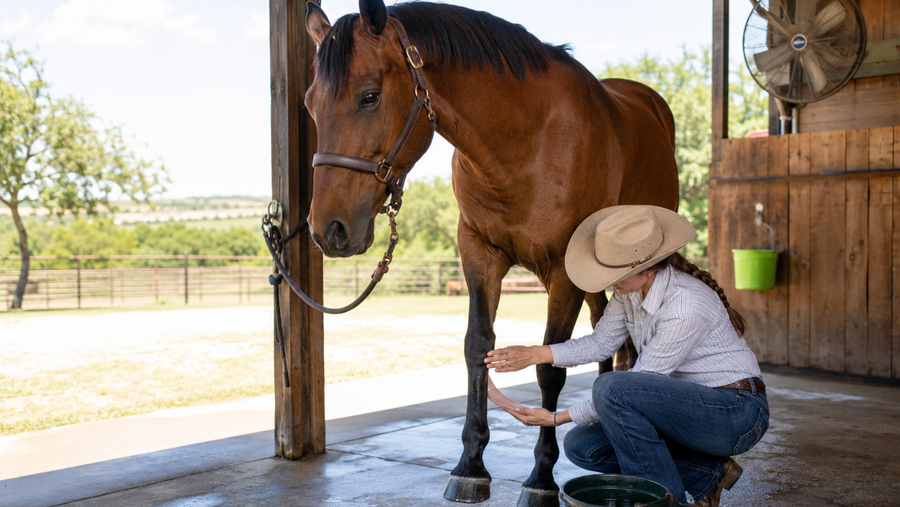
After hot work, rinse or wipe sweat-prone areas as needed and dry the skin before gear goes back on. Groom with your hands, not just your eyes. If the horse keeps reacting in the same spot, write it down and look for a repeating cause: bugs, sweat, tack, bedding, turnout, or workload.
Use the Horse Health Library to sort skin and recovery routines. If you are not sure which direction the care path points, use What Does My Horse Need?. For appropriate external post-ride support, review the active horse liniment collection.
Sweat, flies, dried salt, girth pressure, damp hair, and skin irritation can all make the belly sensitive.
Not until you check the area. Do not tighten a girth over hot, painful, open, or swollen skin.
The belly is a high-friction zone in summer. Look early, clean thoughtfully, and stop guessing when skin gets loud.
Can you use horse liniment during the heat of the day? Yes, but the horse's temperature, skin condition, and recovery matter more than the clock. Here is the...
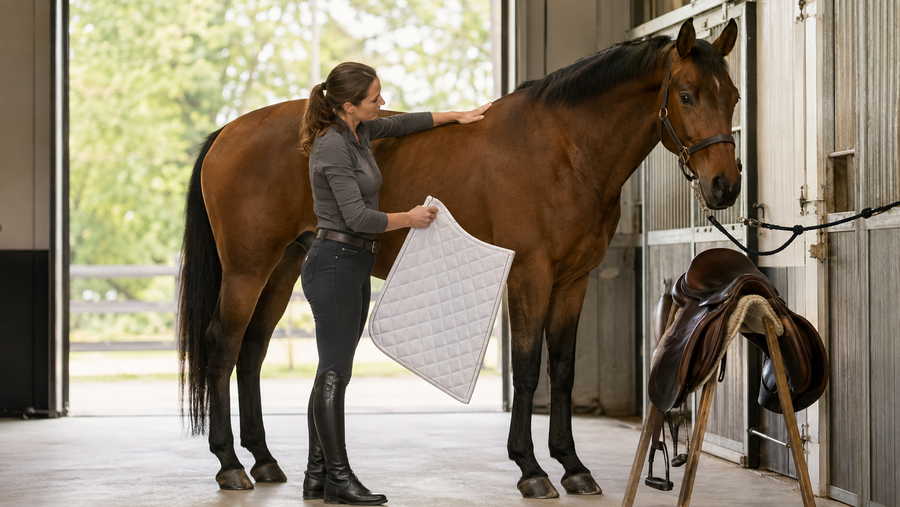
A practical horse health guide for sensitivity after a new saddle pad: sweat marks, dry spots, pad edges, saddle balance, and when to call for help.
Canterbury Park canceled July 26 racing after projected heat indices above 105°F. Here is what riders and horse-event organizers should build into a heat stop-plan.
!