

Does Your Horse Need Hock Injections? Questions to Ask Your Vet
Noticing a change behind? Bring better questions to your veterinarian, understand the decision about hock injections, and leave with a clear aftercare plan.
Free U.S. shipping at $50+
No code needed.
Shipping details
Quick answer: If a horse starts coughing after the barn is closed for cold weather, check the horse first and the barn air second. Stop riding, take a temperature if you can do so safely, watch breathing at rest, and call your veterinarian for repeated coughing, fever, nasal discharge, poor appetite, or increased breathing effort. Then inspect ventilation, dust, ammonia, hay, bedding, and cleaning habits. A warmer barn is not automatically a healthier barn.
One cough while eating can happen. A new pattern that appears after doors and windows stay shut is information worth acting on, not something to cover up before the next ride.
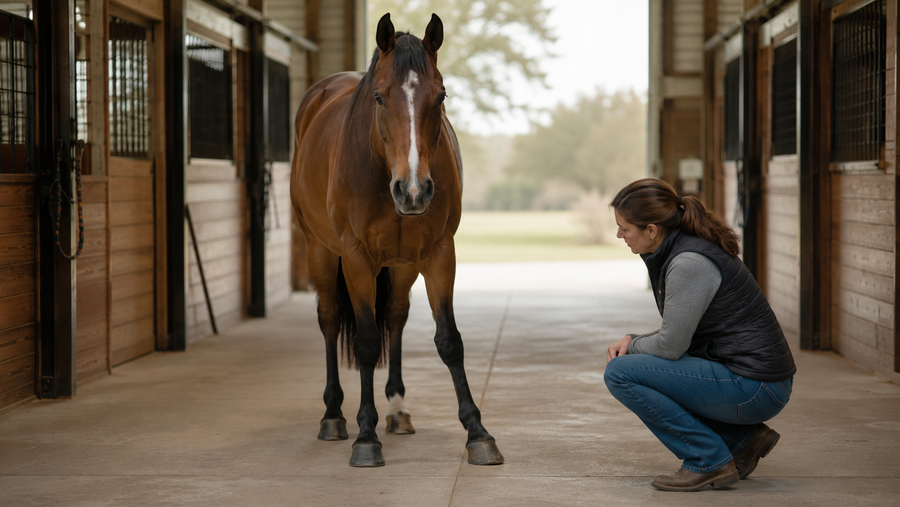
People experience the aisle from five or six feet up. Horses spend hours with their noses closer to bedding, manure, hay, and stall dust. Crouch near the stall entrance and pay attention to what you smell and see.
Tufts Equine Center notes that history and environment matter in respiratory evaluation, including hay, dust, ammonia, traffic, cleaning methods, and ventilation. Their equine respiratory diagnosis guide explains why a horse may look normal between episodes and still need a veterinary workup.
Ventilation is fresh-air exchange without a direct draft on the horse. Opening one door may not fix dead-air pockets, and aiming a strong fan at a stall is not the same as designing safe airflow.
Call your veterinarian promptly for:
Keep a coughing horse away from shared water, nose-to-nose contact, and common equipment until your veterinarian advises otherwise. Do not work the horse to see whether the cough clears.
Write down when the cough started, the time spent indoors, stall location, hay and bedding changes, barn-cleaning schedule, temperature, discharge, breathing pattern, and whether other horses are affected. A short video or audio clip can help if it can be captured without provoking coughing.
Cold outdoor air creates a different set of questions. Our winter horse breathing guide covers ride planning once the horse is healthy and cleared for work.
Breathe to Run® by Draw It Out® is an external-use topical salve for a pre-ride routine. It is not a respiratory treatment and should never be used to hide coughing, fever, discharge, labored breathing, illness, or poor performance. Keep it away from eyes, nose, mouth, wounds, and irritated skin, follow the current label, and check the live product page for availability. Competitors should confirm the current governing-body rulebook and event guidance before use.
Closing a barn can trap dust, ammonia, moisture, and stale air, which may contribute to respiratory irritation. A cough can also come from infection or other disease, so environment checks do not replace a veterinary assessment.
Not automatically. The goal is steady fresh-air exchange without a harsh direct draft on the horse. Use the building's designed vents and ask a qualified professional if the barn stays damp, dusty, or strong-smelling.
A one-time cough is different from a new pattern, but do not assume it is harmless. Stop and speak with your veterinarian when coughing repeats, occurs with exercise, or comes with another abnormal sign.
No. An external salve does not diagnose or treat respiratory disease. Coughing and breathing changes belong in the veterinary lane.
Noticing a change behind? Bring better questions to your veterinarian, understand the decision about hock injections, and leave with a clear aftercare plan.
A new grooming flinch is information, not attitude. Use this calm checklist to separate skin irritation, pressure sensitivity, tack clues, and veterinary red flags.
A horse that repeatedly points one front foot is giving you useful information. Compare stance, hoof heat, digital pulse, movement, and red flags before you ride or apply...
!