Can You Use Horse Liniment in Hot Weather? A Practical Summer Guide
Can you use horse liniment during the heat of the day? Yes, but the horse's temperature, skin condition, and recovery matter more than the clock. Here is the...
Free U.S. shipping at $50+
No code needed.
Shipping details
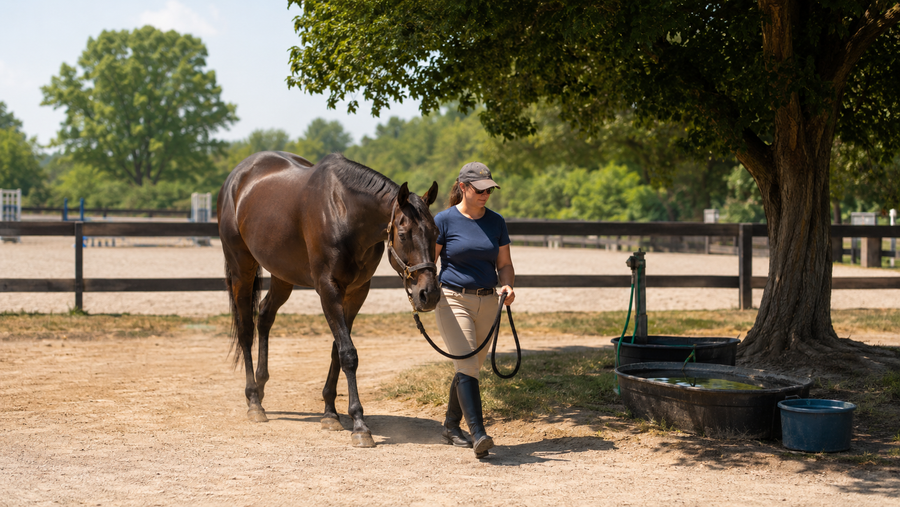
More drinking in summer can be normal. It can also be a clue. Heat, sweat, workload, hay, salt, turnout, travel, and health changes all affect water intake.
If your horse is drinking more than normal in summer, first compare against the horse’s baseline, weather, sweat level, feed, salt access, workload, urine, manure, and attitude. Call your veterinarian if water intake changes suddenly, is extreme, or comes with weight loss, dullness, abnormal urination, diarrhea, colic signs, fever, or poor performance.
Horse owners often worry when a horse drinks less, but drinking more can matter too. A hot week, harder work, more dry hay, or better salt access may explain it. A sudden or unexplained increase should not be waved off without looking at the whole horse.
Mark water buckets. Check morning and evening. Write down heat, work, feed, salt, and turnout. Look at manure and attitude in the same note. If the pattern is explained by weather and workload, keep watching. If it is sudden, extreme, or paired with other symptoms, call the vet.
Draw It Out® helps owners build better observation habits through education and product routines. Start with the Horse Health Library and What Does My Horse Need? guide when a horse’s routine changes. For external post-ride support, use the active horse liniment collection when appropriate.
Call your veterinarian if the horse drinks dramatically more, urinates abnormally, loses weight, acts dull, stops eating, has abnormal manure, shows colic signs, or the change cannot be explained by heat, sweat, feed, salt, or workload.
Yes, many horses drink more in heat or after sweating, but sudden or extreme changes should be checked.
Measure actual intake and compare it to the horse’s usual pattern, workload, feed, salt, weather, urine, manure, and attitude.
Water tells a story. Write it down, compare it to normal, and call the vet when the story stops making sense.
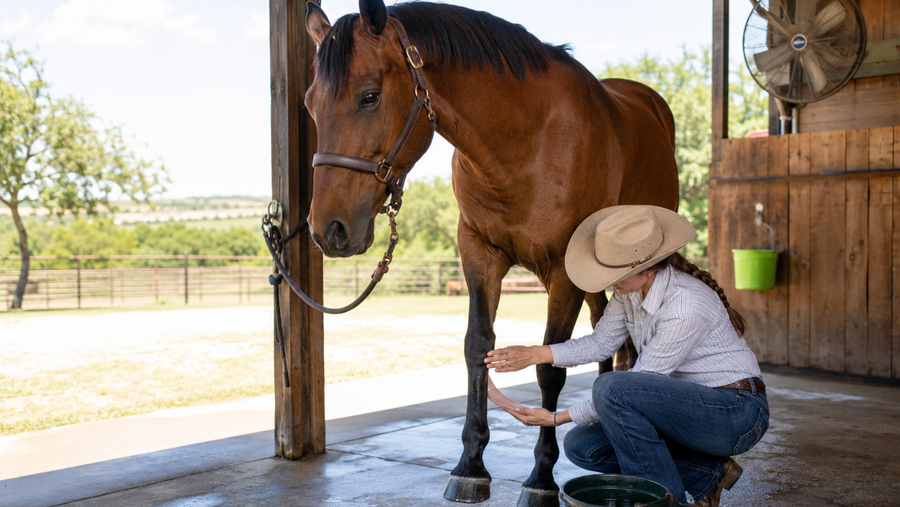
Can you use horse liniment during the heat of the day? Yes, but the horse's temperature, skin condition, and recovery matter more than the clock. Here is the...
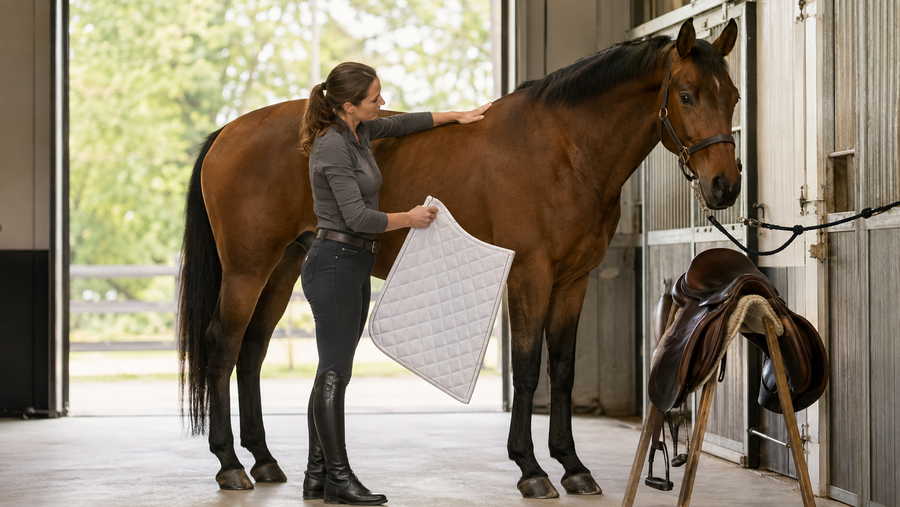
A practical horse health guide for sensitivity after a new saddle pad: sweat marks, dry spots, pad edges, saddle balance, and when to call for help.
Canterbury Park canceled July 26 racing after projected heat indices above 105°F. Here is what riders and horse-event organizers should build into a heat stop-plan.
!