How Long Does a 16oz Horse Liniment Gel Bottle Last?
There is no universal application count. Use this seven-day bottle-life test to choose between 16oz single, two-pack, four-pack, and 64oz Gel.
Free U.S. shipping at $50+
No code needed.
Shipping details
Draw It Out® Horse Health Care News
By Jon Conklin · July 31, 2026
The worst time to hunt for a clean towel, thermometer, hoof pick, or veterinarian's number is when the horse is already asking for your full attention. A horse recovery station puts ordinary post-work supplies in one repeatable place so the rider can observe first, act deliberately, and know when routine care is no longer enough.
A useful horse recovery station has five lanes: observation, cooling and drying, hoof and leg checks, routine external care, and emergency contacts. Keep a full station in the barn and a smaller duplicate in the trailer. Store supplies clean and ready, check expiration dates monthly, and keep veterinary first aid separate from routine recovery products.
It is not a fancy cabinet and it is not a substitute for a veterinarian. It is a clearly marked shelf, rolling cart, tack-room zone, or trailer tote that holds the ordinary tools used after riding, hauling, standing, bathing, or hard barn days.
The real value is consistency. When the same tools live in the same place, riders are more likely to compare legs, check feet, record what changed, cool the horse correctly, and notice when today's recovery does not look like yesterday's.
| Lane | Keep Ready | What It Helps You Do |
|---|---|---|
| Observe and record | Equine thermometer, watch or timer, flashlight, notebook, pen, phone contact card | Track temperature when appropriate, cool-out time, water, appetite, swelling, movement, and patterns across days. |
| Cool and dry | Hose access, clean buckets, sponge, sweat scraper, clean towels, drinking water | Cool and dry deliberately without grabbing dirty shared supplies or guessing how long recovery took. |
| Feet and lower legs | Hoof pick, soft brush, clean boots, clean standing wraps and bandages only for trained use | Remove packed footing, compare matching legs, inspect skin, and use equipment only when fit and technique are sound. |
| Routine external care | Current-label horse products, disposable gloves when useful, clean application tools if required | Keep species-correct products available without transferring them to mystery containers or mixing routines. |
| Emergency readiness | Veterinarian, farrier, trainer, hauling contact, directions to the nearest clinic, separate first-aid kit | Move quickly when heat, pain, lameness, wounds, abnormal breathing, or rapidly changing swelling makes the situation bigger than routine care. |
The barn version can hold full-size supplies and backups. Put it near clean water and good light, but away from direct sun, freezing temperatures, feed dust, and curious animals. Label shelves by purpose instead of by brand so a helper can find observation, cooling, leg, hoof, and emergency supplies without guessing.
The trailer version should be smaller and harder to forget. Keep a flashlight, thermometer, hoof pick, towels, contact card, clean water plan, basic cooling tools, and the horse products already used in your normal routine. Restock it when you get home, not ten minutes before the next haul.
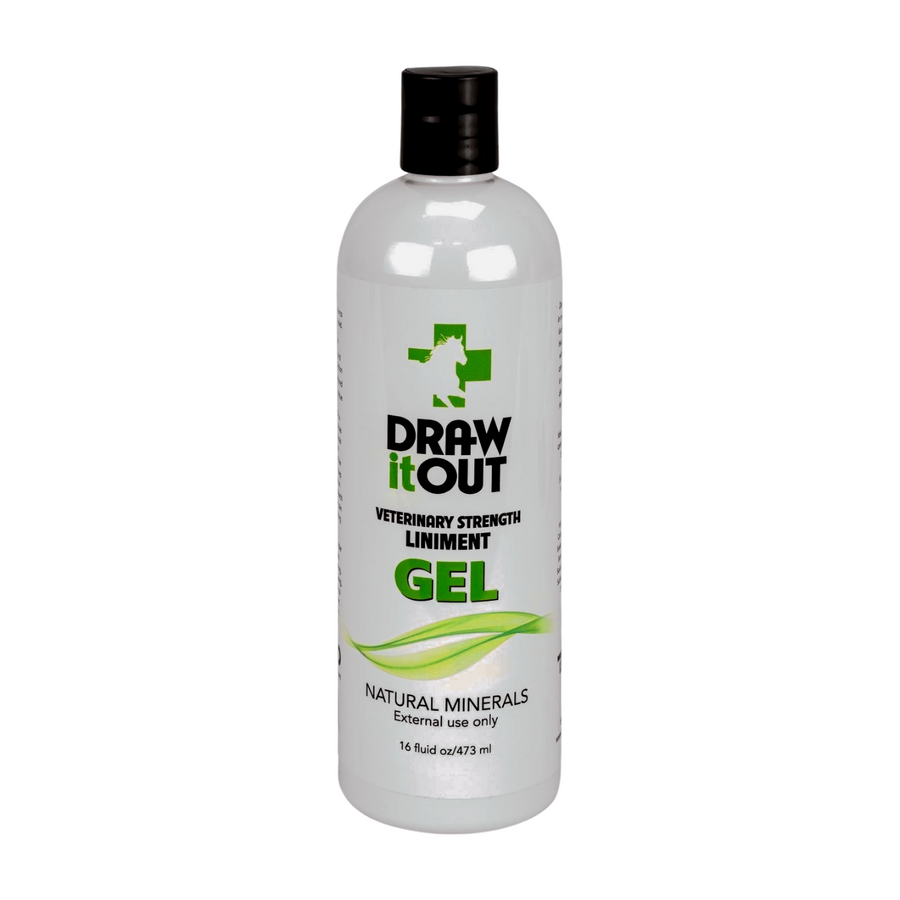
Draw It Out® Liniment Gel is the ready-to-use, stay-put horse-care lane for appropriate pre-work, post-work, hauling, and everyday routines. It is odorless and colorless and is made without menthol, camphor, capsaicin, alcohol, or witch hazel. It can be used beneath properly fitted pads, boots, and wraps when used according to the current label and normal equipment practices.
Choose the 16oz Liniment Gel for a first bottle, one-horse setup, or trailer station. Choose the 64oz Barn Size Liniment Gel when a multi-horse barn already uses the routine consistently. More product is not a substitute for checking the horse.
Use the Draw It Out® Solution Finder to sort body, skin, hoof, travel, and uncertainty before filling the shelf with products that do not match the job.
Use the Solution FinderA recovery station becomes valuable when it turns scattered care into a repeatable system. The shelf is not the strategy. The habit is.
Keep observation tools, clean cooling and drying supplies, hoof and leg-check basics, a written contact list, a separate first-aid kit, and the routine products you actually use. Store everything clean, labeled, and easy to reach.
No. A recovery station supports ordinary post-work checks and care. A first-aid kit is for injuries and veterinary-directed response. Keep both organized, but do not let routine care delay an emergency call.
Yes when possible. A small trailer kit prevents the main barn station from being stripped before every trip and keeps essential observation, cooling, cleaning, and contact information close to the horse.
The 16oz Gel fits one-horse, trailer, and first-bottle routines. The 64oz Gel fits multi-horse barns and riders who use the same routine consistently. Follow the current label and choose by real usage, not shelf appearance.
There is no universal application count. Use this seven-day bottle-life test to choose between 16oz single, two-pack, four-pack, and 64oz Gel.
See the 32oz horse liniment concentrate math, cost per prepared ounce, mixing discipline, and the exact barn routines where concentrate earns its space.
Meet Courtney Sabral of Chico, California, an experienced barrel racer and gymkhana rider whose care routine for Diamond and 26-year-old Ricky is built around consistency.
!