Rider checking a bay horse after hill conditioning work in the mountains

Quick answer: A horse that feels a little tighter the day after hill work may simply be responding to a workload that asked for more push, balance, and stabilization than usual. But new stiffness should still be checked, not assumed. Compare both sides, watch the horse walk on level ground, feel for unusual heat or swelling, inspect the feet and skin, and pay attention to whether the horse improves with gentle movement or becomes more uncomfortable.

Hill work is useful because it recruits the horse differently than flat work. Uphill efforts ask for more drive from the hindquarters. Downhill work asks for more control and balance. Uneven footing adds stabilization demands through the whole body. That can make the next-day check more valuable than the ride itself.

Start with the horse, not the product

Before you reach for liniment, answer one question: Does this look like normal post-work stiffness, or does something look wrong?

Routine lane: The horse is bright, weight-bearing, moving evenly for that horse, eating normally, and the stiffness eases as the horse walks.

Evaluation lane: There is obvious lameness, one-sided swelling, unusual heat, reluctance to bear weight, marked pain, weakness, stumbling, or worsening movement.

A next-morning hill-work check that takes five minutes

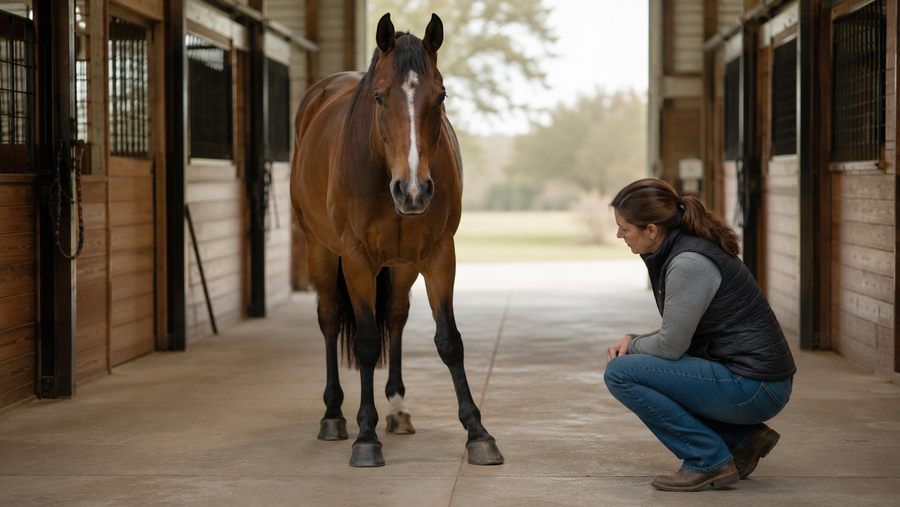
  1. Watch the horse leave the stall or pen. The first few steps can tell you more than a hard palpation ever will. Look for a shorter stride, uneven hip motion, toe dragging, or hesitation.
  2. Walk on level, firm footing. Hills can hide or exaggerate things. Level ground gives you a cleaner comparison.
  3. Compare left to right. Use a flat hand over the major muscle groups and lower limbs. You are looking for meaningful asymmetry, not trying to make the horse react.
  4. Check the feet. A horse that feels stiff after hill work may actually be reacting to a stone bruise, packed debris, a loose shoe, or a hoof issue.
  5. Look at the skin. Sweat, rubs, bites, scratches, or clipped areas can change what belongs on the horse.

Why hill work can create a different kind of fatigue

Riders often think of conditioning as lungs and heart rate, but hills also change how the horse distributes force. A horse can be aerobically comfortable and still be muscularly tired. That is especially true when the horse is new to hills, the grade is steeper than normal, footing is deep or uneven, or the ride includes repeated climbs and descents.

The practical takeaway is simple: progress hill work by repetition and duration, not by bravado. One productive climb done well is worth more than turning the last half of the ride into a fatigue test.

What to do when the horse is in the routine lane

For a horse that is moving normally and simply feels worked, the next-day routine can stay uncomplicated:

  • Give the horse a few minutes of relaxed hand-walking.
  • Recheck the horse after movement instead of judging only the first step out.
  • Keep the next session easier if the workload was new.
  • Use a horse-labeled topical only on clean, dry, intact skin and according to the current label.
  • Write down the hill distance, footing, speed, and next-day response so you can build the workload instead of guessing.

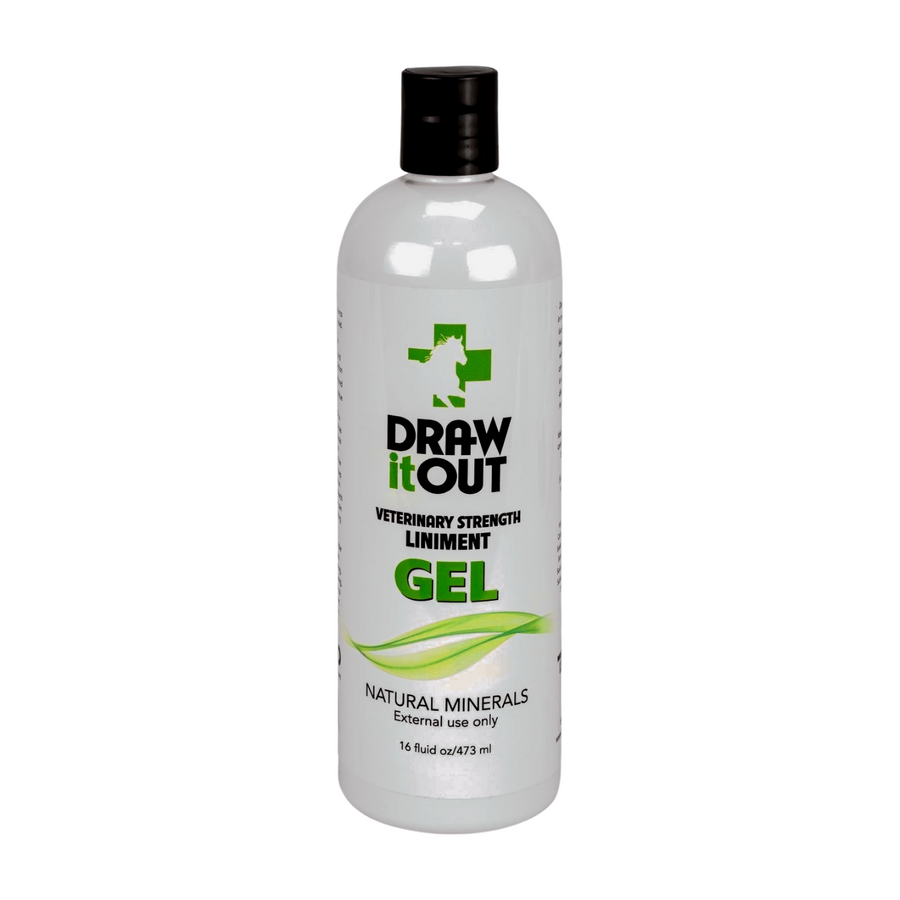
For targeted post-work care, Draw It Out® 16oz Liniment Gel is a ready-to-use option for clean, intact skin. It is odorless and colorless and is formulated without menthol, camphor, capsaicin, alcohol, or witch hazel, so the routine does not depend on a dramatic hot or cold sensation.

Shop Draw It Out® 16oz Liniment Gel

Should you ride again the next day?

If the horse loosens up quickly, stays even, and shows no red flags, an easy flat session or relaxed turnout may make more sense than another hard hill day. If the horse remains unusually tight, changes gait, or becomes less willing to move, skip the training question and move into the evaluation lane.

A useful rule is to compare the horse to its own baseline. Some horses walk out of the barn loose every morning. Others take a few steps to organize themselves. The change from normal matters more than a generic definition of stiffness.

When the answer is veterinarian, not recovery routine

Call your veterinarian for sudden or marked lameness, inability or reluctance to bear weight, significant swelling, unusual heat, severe tenderness, neurologic-looking movement, worsening signs, or a horse that does not improve as expected. The same applies after a slip, fall, kick, trailer incident, or other meaningful trauma.

Frequently asked questions

Is it normal for a horse to be stiff after hill work?

Mild next-day tightness can occur after a new or harder workload, but it should not be used to explain away obvious lameness, swelling, heat, or worsening movement.

Should I walk a stiff horse?

Gentle hand-walking can be useful when the horse is comfortable, weight-bearing, and otherwise in the routine lane. Stop if movement becomes worse or the horse appears painful.

How often should I use hills for conditioning?

There is no universal schedule. Build frequency and duration around the horse's current fitness, footing, grade, discipline, and next-day response.

Can liniment replace rest after hard work?

No. A topical is one part of a routine. Workload management, hydration, nutrition, footing, turnout, sleep, and veterinary care when needed still matter.

Educational horse-care information only. Follow the current product label. This article does not replace veterinary diagnosis or treatment.

Leave a comment

Please note, comments need to be approved before they are published.

Start here

Reading first? Here is the clean path.

This article gives you the background. If you are ready to put the idea into a real horse care routine, these are the next places most riders should go.

Daily recovery

Liniment Gels

Explore the Draw It Out® liniment gel lineup for everyday use, post-work routines, and targeted recovery support.

Shop liniment gels
Find the fit

Solution Finder

Match your horse’s workload, age, routine, and care goals to the Draw It Out® products that make the most sense.

Use the finder
Routine first

Prehabilitation

Learn how riders support soundness, comfort, and consistency before little issues become bigger problems.

Read the guide
Simple rule: read the article for context, use the Solution Finder for direction, then build the routine around the product format your horse will actually use consistently.

Real Barn Proof

What this looks like in real barns.

Real riders. Real horses. Real routines. These clips rotate automatically so the proof stays fresh without weighing the page down with a long feed.

Random rider clips

Why this matters: good horse care should make sense outside the ad. These clips show the kind of everyday use that builds trust one barn at a time.

Further Reading

Keep building the routine.

Horse care works better when the next step is clear. These related reads help connect today’s topic to better daily decisions in the barn.

Horse health news

Start with the principle, then build the habit. The right article should make the next barn decision easier, not more complicated.

Next Step

Keep your barn dialed in.

Simple care guides, practical product paths, and rider-trusted tools built for real horses and real routines.

Good care gets easier when the next step is obvious. Read the guide, match the routine, then choose the format that fits how your barn actually works.

Recovery Routine

Build a complete recovery routine.

Want a smarter way to think through post-ride care, heat, swelling, leg support, and daily recovery decisions? Start with the Performance Recovery Hub.

Better recovery starts with a repeatable routine. The hub gives riders a clearer path from workload to product format to aftercare timing.

Rider Favorites

Always in the kit.

Four core Draw It Out® staples riders keep close for daily recovery routines, wash rack use, targeted support, and quick barn-side care.

Core barn staples
Draw It Out® 16oz Liniment Gel | Daily Horse Care

Stay-Put Gel

16oz Liniment Gel

The everyday liniment gel format riders reach for when they want targeted, no-mess application.

View product
Draw It Out® 32oz Horse Liniment Concentrate | Spray, Wrap & Soak

Mix Your Way

32oz Concentrate

A flexible concentrate for riders who want to mix their own routine around workload and barn needs.

View product
Draw It Out® RTU Spray 24oz | Ready-to-Use Liniment Spray

Ready To Use

24oz RTU Spray

A ready-to-use spray format for quick application after work, travel, turnout, or daily care.

View product
CryoSpray® by Draw It Out® 24oz | Cooling Body Brace for Horses

Cooling Brace

CryoSpray

A cooling body brace spray for riders who want a fast, practical option after hard work or hot days.

View product

Format matters. Gel, concentrate, ready-to-use spray, and cooling spray each solve a different barn problem. Pick the one your routine will actually use.

Where To Go Next

Turn the idea into a routine.

If this topic connects to what you are seeing in your horse, these are the three cleanest next steps. Start with direction, then choose the product format that fits the way your barn actually works.

Next steps

Best next move: use the Solution Finder first when the issue is unclear. Go straight to the liniment gel collection when you already know the format you want.