
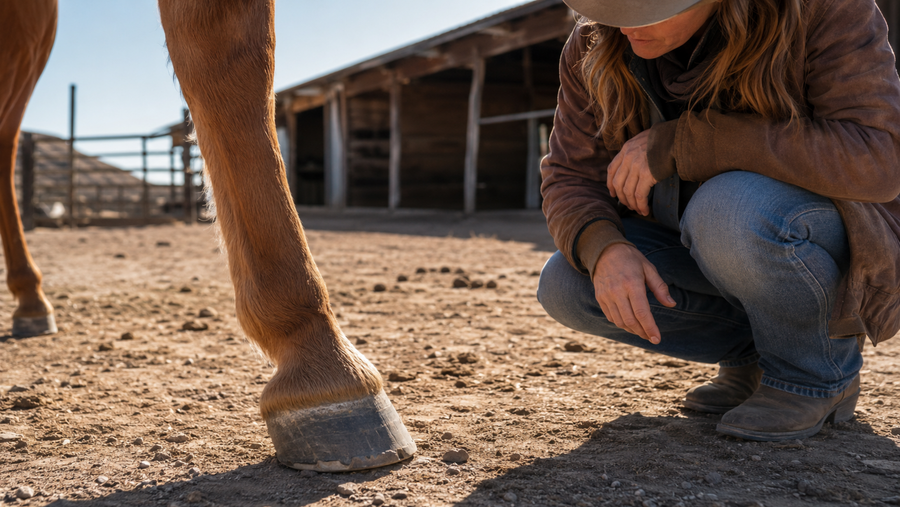
Farrier and rider inspecting a horse hoof for stone bruise concerns

Hoof pain decision guide

Stone Bruises in Horses: Hoof Checks, Digital Pulse and Farrier Support

A stone bruise is one possible reason a horse becomes tender after hard, rocky, or uneven footing. The same signs can also appear with an abscess, puncture, shoe pressure, thin soles, laminitis, a fracture, or another hoof problem.

Quick answer: Pick the hoof, look for a puncture or foreign object, compare heat and digital pulse with the opposite foot, limit work, and call the farrier or veterinarian when the horse is lame, painful, hot, strongly pulsing, or getting worse.

What riders may notice

No single sign proves a stone bruise. Treat sudden hoof pain as a diagnostic question, not an invitation to dig aggressively into the sole.

  • Shortened stride or reluctance on firm footing.
  • Sensitivity after riding on rocks, frozen ground, hard tracks, or rough turnout.
  • A stronger digital pulse or increased hoof warmth.
  • A discolored area that becomes visible when the sole is cleaned or later pared by a professional.
  • A horse that shifts weight, points a foot, or resists turning.

First steps at the barn

If an object is embedded in the foot, contact a veterinarian before removing it unless immediate safety requires otherwise. Its position may matter for diagnosis.

  • Stop work and move the horse to safe, level footing.
  • Pick and inspect the hoof without cutting or probing the sole.
  • Look for a nail, puncture, loose shoe, shifted shoe, crack, drainage, or trapped debris.
  • Compare both front feet or both hind feet for heat and pulse.
  • Write down when the change began and what footing the horse encountered.

Farrier and veterinary roles

The goal is not merely to make the horse appear more comfortable for the next ride. It is to understand why the foot hurts and reduce the chance of repeating the problem.

  • A farrier can assess shoe fit, sole depth, balance, and protective options.
  • A veterinarian can localize pain and evaluate deeper structures when needed.
  • Imaging may be appropriate when lameness is severe, persistent, recurrent, or not clearly explained.
  • A coordinated plan is especially important for thin-soled horses or repeated bruising.

Where routine hoof products fit

Use the label as written and keep the farrier informed about recurring odor, separation, cracks, tenderness, or changes in the frog and heel.

  • Daily picking and clean footing come first.
  • Silver Hoof EQ Therapy® can fit ordinary hoof, frog, heel, and wet-weather hygiene after urgent causes are ruled out.
  • A topical hoof-care product does not diagnose a bruise or replace farrier protection.
  • Do not apply product into a puncture or open tract unless a veterinarian directs the plan.

Professional care comes first

Products support routine care. Lameness, severe pain, heat, marked swelling, punctures, open wounds, eye concerns, fever, breathing changes, neurologic signs, or a horse that is getting worse need veterinary or farrier guidance.

Frequently asked questions

Should I ride a horse with a suspected stone bruise?

No. Stop work until the source and severity of the hoof pain are understood.

Can I dig out the bruise myself?

Do not cut or probe the sole. Let a farrier or veterinarian decide whether and how the foot should be pared or opened.

Can Silver Hoof EQ Therapy® treat a stone bruise?

No. It fits routine hoof hygiene. Lameness and suspected bruising require farrier or veterinary evaluation.

Written by Jon Conklin for Draw It Out® Horse Health Care Solutions. Educational support only. This article does not diagnose, treat, cure, or prevent disease. Follow current product labels and professional guidance.

Leave a comment

Please note, comments need to be approved before they are published.

Start here

Reading first? Here is the clean path.

This article gives you the background. If you are ready to put the idea into a real horse care routine, these are the next places most riders should go.

Daily recovery

Liniment Gels

Explore the Draw It Out® liniment gel lineup for everyday use, post-work routines, and targeted recovery support.

Shop liniment gels
Find the fit

Solution Finder

Match your horse’s workload, age, routine, and care goals to the Draw It Out® products that make the most sense.

Use the finder
Routine first

Prehabilitation

Learn how riders support soundness, comfort, and consistency before little issues become bigger problems.

Read the guide
Simple rule: read the article for context, use the Solution Finder for direction, then build the routine around the product format your horse will actually use consistently.

Real Barn Proof

What this looks like in real barns.

Real riders. Real horses. Real routines. These clips rotate automatically so the proof stays fresh without weighing the page down with a long feed.

Random rider clips

Why this matters: good horse care should make sense outside the ad. These clips show the kind of everyday use that builds trust one barn at a time.

Further Reading

Keep building the routine.

Horse care works better when the next step is clear. These related reads help connect today’s topic to better daily decisions in the barn.

Horse health news

Start with the principle, then build the habit. The right article should make the next barn decision easier, not more complicated.

Next Step

Keep your barn dialed in.

Simple care guides, practical product paths, and rider-trusted tools built for real horses and real routines.

Good care gets easier when the next step is obvious. Read the guide, match the routine, then choose the format that fits how your barn actually works.

Recovery Routine

Build a complete recovery routine.

Want a smarter way to think through post-ride care, heat, swelling, leg support, and daily recovery decisions? Start with the Performance Recovery Hub.

Better recovery starts with a repeatable routine. The hub gives riders a clearer path from workload to product format to aftercare timing.

Rider Favorites

Always in the kit.

Four core Draw It Out® staples riders keep close for daily recovery routines, wash rack use, targeted support, and quick barn-side care.

Core barn staples
Draw It Out® 16oz Liniment Gel | Daily Horse Care

Stay-Put Gel

16oz Liniment Gel

The everyday liniment gel format riders reach for when they want targeted, no-mess application.

View product
Draw It Out® 32oz Horse Liniment Concentrate | Spray, Wrap & Soak

Mix Your Way

32oz Concentrate

A flexible concentrate for riders who want to mix their own routine around workload and barn needs.

View product
Draw It Out® RTU Spray 24oz | Ready-to-Use Liniment Spray

Ready To Use

24oz RTU Spray

A ready-to-use spray format for quick application after work, travel, turnout, or daily care.

View product
CryoSpray® by Draw It Out® 24oz | Cooling Body Brace for Horses

Cooling Brace

CryoSpray

A cooling body brace spray for riders who want a fast, practical option after hard work or hot days.

View product

Format matters. Gel, concentrate, ready-to-use spray, and cooling spray each solve a different barn problem. Pick the one your routine will actually use.

Where To Go Next

Turn the idea into a routine.

If this topic connects to what you are seeing in your horse, these are the three cleanest next steps. Start with direction, then choose the product format that fits the way your barn actually works.

Next steps

Best next move: use the Solution Finder first when the issue is unclear. Go straight to the liniment gel collection when you already know the format you want.