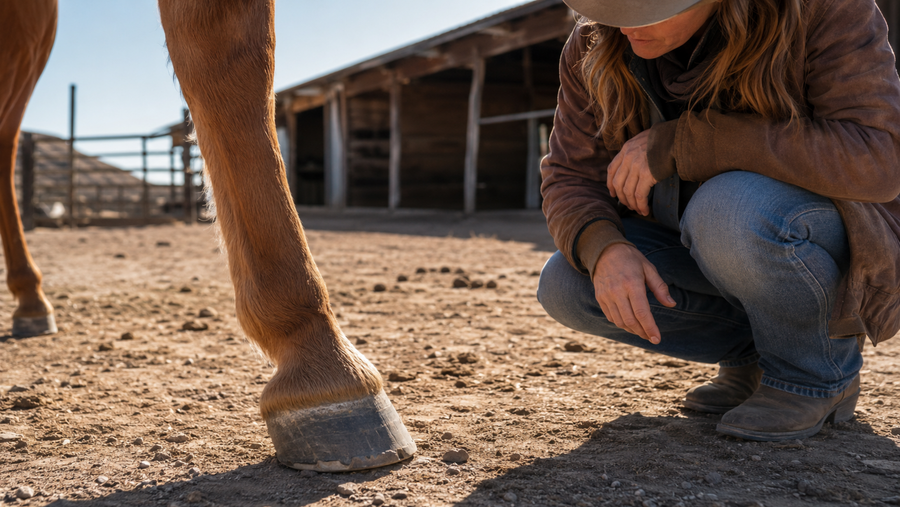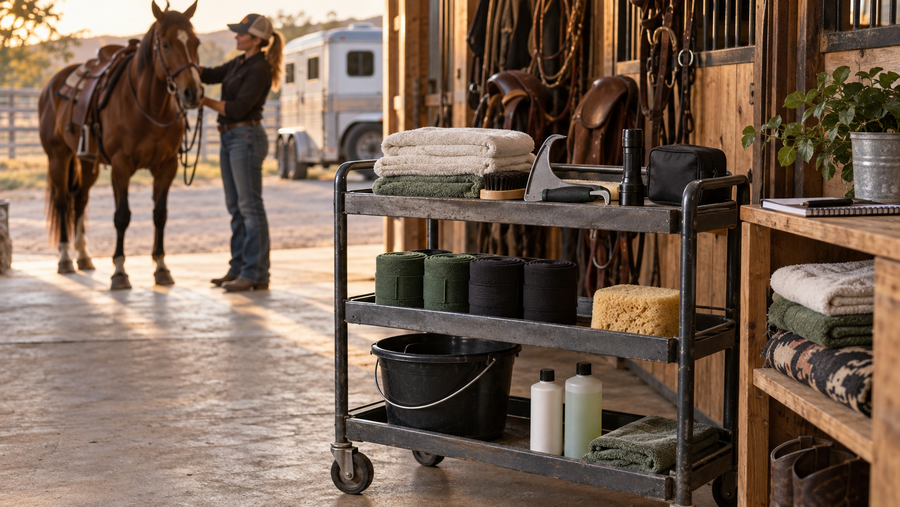
Horse walking across inspected winter turnout footing

Horse Health Care News

Winter Horse Turnout Footing: Daily Safety Guide

Winter footing can change between breakfast and afternoon turnout. Frozen ruts, glazed ice, packed tracks, crusted snow, and saturated gateways each create a different problem. A safe plan starts with the route the horse will actually use, not a general glance across the field.

Quick answer: Walk the gate, lane, water area, shelter entrance, feeding area, and high-traffic corners before turnout. Close or reroute around ice, holes, frozen ruts, unstable mud, and damaged fencing. Improve drainage and surface maintenance for the next cycle, then check hooves, legs, skin, and movement when the horse comes in.

Inspect the whole turnout route

The most dangerous patch may be a few feet wide. Horses bunch at gates, pivot around water, and accelerate toward herd mates. Walk high-traffic areas when the horse will use them because sun, shade, runoff, and refreezing change traction.

  1. Check the approach from barn to gate.
  2. Test gate swing, latch access, and handler footing.
  3. Inspect water, hay, shelter, and narrow passages.
  4. Look along fences for drifting snow, washed soil, limbs, or hidden wire.
  5. Choose a safe return route before dark.

Do not test slick ground while leading a horse across it. If the route is questionable on foot, select a safer area, delay turnout, or use another management option.

Frozen ground needs its own decision

Frozen ground is not simply firm footing. Mud becomes sharp ruts and ridges, hoof prints become holes, packed snow polishes into tracks, and crust can break under the hoof. A horse may shorten its stride, brace through turns, or avoid parts of the field without obvious lameness.

Keep frozen-ground management distinct from mud control. Do not groom a surface that is too hard for safe, useful work or assume loose material makes ice stable. Reduce crowding at gates and keep water, hay, and shelter reachable without repeated travel over the worst section.

Manage water before it becomes ice

Watch where roof runoff, snowmelt, trough overflow, and uphill water enter the turnout. Keep permitted ditches and outlets clear, direct downspouts away from gates, and repair leaks. For grading, drains, geotextile, a new base, or erosion work, use a qualified local contractor.

Do not bury deep mud under loose material without correcting the base and water path. The top may look improved while a horse still punches into unstable ground. Mats fit selected high-traffic areas only when flat, drained, secured, and free of hoof-catching edges.

Groom and repair when the surface is workable

Remove manure, hay waste, and debris that hold moisture or hide holes. Smooth ruts before they freeze when equipment and soil allow. At arenas and dry lots, follow the footing supplier's depth and grooming guidance.

No single mix fits every climate, soil, and program. Sand, stone, wood, rubber, and synthetic components change when wet, compacted, frozen, or contaminated. Evaluate the base, drainage, and top layer together. Be cautious with deicers and improvised traction materials where horses may ingest them or runoff may spread them.

The horse prehabilitation guide helps match warm-up and daily movement work to the conditions without confusing footing maintenance with body care.

Check the horse after winter turnout

Watch the horse walk before grooming. Compare stride, turns, backing, and weight bearing with normal. Pick out each hoof and check for packed snow, stones, a loose shoe, cracks, sensitivity, heat, and a changed digital pulse. Ask the farrier about winter shoeing or traction for that horse and surface.

Run hands down both legs. Note filling, heat, wounds, pastern mud, and sensitivity. Groom the back, hips, and shoulders while checking for guarding. Dry wet hair and inspect the skin instead of covering mud under a blanket or bandage.

If the horse looks different, use the horse stiff after turnout guide to organize the observation and professional call.

Build a weather-triggered routine

Assign one person to record the footing decision and communicate closed areas. Recheck after rain, snow, thawing, rapid temperature drops, plowing, equipment traffic, or a water leak. Photograph problem locations from the same angle so the barn can see whether drainage and repairs are working.

When the horse is moving normally and the skin check is complete, grooming and label-directed liniment gel care may fit the regular post-turnout routine. Liniment gel cannot make unsafe ground safe or explain hoof pain, lameness, swelling, or stiffness. The horse hydration and mobility checklist adds a consistent next-day comparison.

Red flags that change the turnout plan

  • Glazed ice, hidden holes, frozen ruts, sharp debris, broken fencing, or a gate area the handler cannot cross safely.
  • A horse that slips, falls, refuses to move, cannot bear weight normally, or becomes suddenly short-strided.
  • Hoof heat, a strong digital pulse, puncture concern, packed material that cannot be safely removed, or a loose shoe.
  • New leg heat, swelling, a wound, marked pain, weakness, or repeated stumbling.
  • A horse that is shivering, dull, not eating or drinking normally, or showing other illness signs.

Contact the veterinarian or farrier according to the finding. Do not ride or force exercise to see whether a painful horse loosens up.

Winter turnout footing FAQ

Is frozen ground safe for horse turnout?

It depends on evenness, traction, herd behavior, the route, and the individual horse. Frozen ruts, holes, glaze, and hard-packed tracks may make a field unsafe even when it looks dry.

Can I put sand over ice for traction?

Grit may provide temporary surface texture in a selected area, but it does not stabilize underlying ice. Reroute, close, or fully repair hazardous sections rather than relying on a thin cover.

How can I reduce muddy winter gateways?

Control incoming water, repair leaks, protect the base, manage traffic, and use a properly designed surface. Deep mud usually needs more than another loose top layer.

Should my horse wear added traction in winter?

Ask the farrier who knows the horse, hoof, shoeing plan, workload, and surfaces. Added traction changes forces and is not a universal answer.

Can liniment gel help after winter turnout?

Liniment gel may fit label-directed routine care when the horse is moving normally and the skin is appropriate. It does not replace footing repair or evaluation of pain and swelling.

Educational note: This guide provides general horse and facility-care information. Local soil, drainage, environmental, veterinary, and farrier professionals should guide site-specific decisions.

Leave a comment

Please note, comments need to be approved before they are published.

Start here

Reading first? Here is the clean path.

This article gives you the background. If you are ready to put the idea into a real horse care routine, these are the next places most riders should go.

Daily recovery

Liniment Gels

Explore the Draw It Out® liniment gel lineup for everyday use, post-work routines, and targeted recovery support.

Shop liniment gels
Find the fit

Solution Finder

Match your horse’s workload, age, routine, and care goals to the Draw It Out® products that make the most sense.

Use the finder
Routine first

Prehabilitation

Learn how riders support soundness, comfort, and consistency before little issues become bigger problems.

Read the guide
Simple rule: read the article for context, use the Solution Finder for direction, then build the routine around the product format your horse will actually use consistently.

Real Barn Proof

What this looks like in real barns.

Real riders. Real horses. Real routines. These clips rotate automatically so the proof stays fresh without weighing the page down with a long feed.

Random rider clips

Why this matters: good horse care should make sense outside the ad. These clips show the kind of everyday use that builds trust one barn at a time.

Further Reading

Keep building the routine.

Horse care works better when the next step is clear. These related reads help connect today’s topic to better daily decisions in the barn.

Horse health news

Start with the principle, then build the habit. The right article should make the next barn decision easier, not more complicated.

Next Step

Keep your barn dialed in.

Simple care guides, practical product paths, and rider-trusted tools built for real horses and real routines.

Good care gets easier when the next step is obvious. Read the guide, match the routine, then choose the format that fits how your barn actually works.

Recovery Routine

Build a complete recovery routine.

Want a smarter way to think through post-ride care, heat, swelling, leg support, and daily recovery decisions? Start with the Performance Recovery Hub.

Better recovery starts with a repeatable routine. The hub gives riders a clearer path from workload to product format to aftercare timing.

Rider Favorites

Always in the kit.

Four core Draw It Out® staples riders keep close for daily recovery routines, wash rack use, targeted support, and quick barn-side care.

Core barn staples
Draw It Out® 16oz Liniment Gel | Daily Horse Care

Stay-Put Gel

16oz Liniment Gel

The everyday liniment gel format riders reach for when they want targeted, no-mess application.

View product
Draw It Out® 32oz Horse Liniment Concentrate | Spray, Wrap & Soak

Mix Your Way

32oz Concentrate

A flexible concentrate for riders who want to mix their own routine around workload and barn needs.

View product
Draw It Out® RTU Spray 24oz | Ready-to-Use Liniment Spray

Ready To Use

24oz RTU Spray

A ready-to-use spray format for quick application after work, travel, turnout, or daily care.

View product
CryoSpray® by Draw It Out® 24oz | Cooling Body Brace for Horses

Cooling Brace

CryoSpray

A cooling body brace spray for riders who want a fast, practical option after hard work or hot days.

View product

Format matters. Gel, concentrate, ready-to-use spray, and cooling spray each solve a different barn problem. Pick the one your routine will actually use.

Where To Go Next

Turn the idea into a routine.

If this topic connects to what you are seeing in your horse, these are the three cleanest next steps. Start with direction, then choose the product format that fits the way your barn actually works.

Next steps

Best next move: use the Solution Finder first when the issue is unclear. Go straight to the liniment gel collection when you already know the format you want.