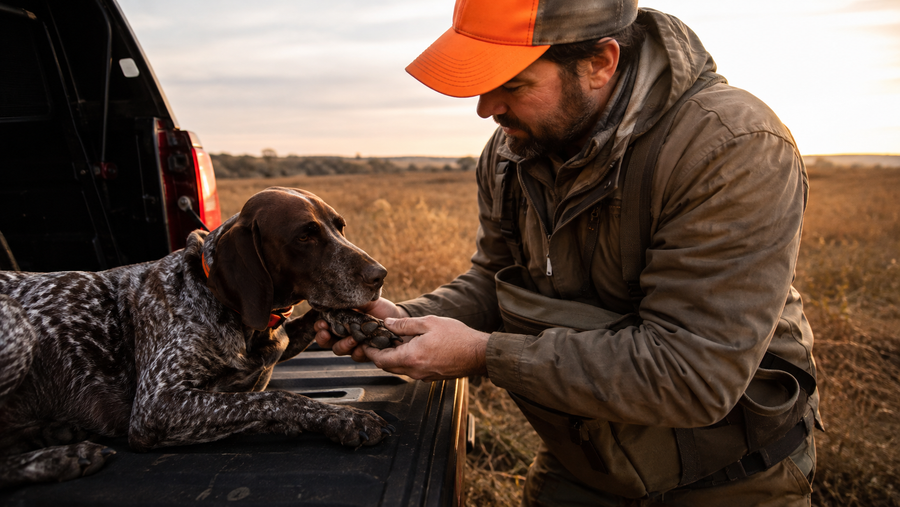
The leash comes off. Your dog gets a drink. You reach for the next job.
Before the day moves on, take a moment to notice the dog who just spent part of it beside you. An ordinary after-walk routine does not need to become a production. It needs to be familiar enough that you recognize when something is different.
What should you do for your dog after a walk?
Offer fresh water and a comfortable place to settle, check the paws and coat if your dog tolerates handling, and notice movement and behavior. A dog-labeled topical may fit normal external body care when used as directed. Limping, pain, wounds, or unusual breathing call for veterinary guidance rather than a new spray routine.
Start by watching, not reaching for a bottle
Notice how your dog comes through the doorway and settles down. Are they moving as they normally do? Are they comfortable with their usual gentle handling? Is there a change you have not seen before?
You do not need to turn observation into a diagnosis. Knowing the ordinary pattern gives you useful information to share with your veterinarian when the pattern changes.
A practical after-walk checklist
- Make water available. Keep a clean bowl where your dog can reach it.
- Check what came home with them. Look over paws and coat for mud, loose debris, or anything unfamiliar. Keep handling gentle and stop if it causes discomfort.
- Clean up simply. Keep a dedicated dog towel near the door so ordinary cleanup does not become a search through the laundry.
- Allow a quiet pause. Give the dog room to settle instead of immediately adding another round of play.
- Use products deliberately. Choose a dog-labeled product only when it fits the routine, then follow its current directions.
Where K9 Advanced™ Relief Spray fits
K9 Advanced™ by Draw It Out® Relief Spray is a ready-to-use, non-tingling dog liniment for normal external body-care routines after walks, work, training, travel, and play.
It fits the dog who is cool, breathing normally, and acting like themselves. It does not tell you why a dog is limping, replace veterinary evaluation, or make every change in movement an ordinary after-walk issue.
Read the dog-specific label before application and follow its directions for placement, amount, frequency, and precautions. Do not assume that instructions from a horse product or a human topical apply. Keep the original bottle so every caregiver can identify what they are using.
Pick the size that fits your routine
The 8oz bottle is a compact first purchase or an option for a travel bag. The 16oz bottle suits regular home or barn use. Start with where the bottle will live and how often you expect to use it, rather than building a shelf full of products at once.
When a walk ends with a concern
Contact your veterinarian for limping, pain, heat, swelling, wounds, or sudden behavior changes. Breathing difficulty or collapse needs urgent veterinary attention. Avoid forcing an examination or trying to work through a painful response.
Cornell’s canine-health guidance explains why limping deserves veterinary attention. A short video of a change in movement can help your veterinarian understand what you observed at home.
Quick questions
Does every dog need liniment after every walk?
No. Water, observation, ordinary cleanup, and a comfortable place to settle come first. A topical is optional and should fit the dog’s care plan and its label.
Can I use horse liniment on my dog?
Do not assume a horse topical is appropriate for dogs. Choose a dog-labeled product and follow its current directions.
What if my dog starts limping?
Contact your veterinarian. A topical does not identify the cause, and a limp should not be treated as proof that your dog simply needs an after-walk spray.
Care for the dog who goes where you go.
A familiar routine makes room for both everyday care and the changes that deserve attention. When a dog-specific spray fits that routine, start with the K9 Advanced™ size that fits your life.
Further reading: AVMA pet first-aid guidance. Educational content does not replace your veterinarian’s advice.