Dog First-Aid Kit vs After-Activity Care Kit: What Belongs in Each?
Separate emergency supplies from normal after-activity care for hunting, barn, trail, and working dogs, then know when the veterinarian comes first.
Free U.S. shipping at $50+
No code needed.
Shipping details
Fairgrounds are not clean places for dogs. Rodeo grounds, horse shows, parking lots, livestock barns, wash racks, concession areas, and dusty walkways all end up on the dog before the ride home.
Before the ride home from fairgrounds or rodeo grounds, check your dog’s paws, belly, coat, collar, water bowl, heat level, fatigue, and skin under gear. Remove debris, offer water, keep the truck cool, and call your veterinarian for limping, overheating signs, wounds, vomiting, or abnormal behavior.
A dog at the fairgrounds is exposed to more than dirt. There may be manure, spilled feed, gravel, hot pavement, strange dogs, livestock, stress, loudspeakers, and hours on leash. That combination can show up as dirty skin, sore paws, fatigue, or belly trouble.
Wipe or rinse paws. Remove visible debris. Offer clean water. Give the dog a calm minute away from noise. If the coat is dusty or damp, plan a proper cleanup when you get home. If the dog is overheated, sick, injured, or acting wrong, handle that before the road.
The K9 Complete Care Pair is made for dogs that tag along to real events and come home with proof. For deeper coat cleanup, K9 TheraMud™ can fit the skin-and-coat routine.
Call your veterinarian for heat distress, repeated vomiting, diarrhea, limping, wounds, swollen paws, abnormal breathing, or a dog that seems disoriented after the event.
Some dogs handle it well and some do not. Know your dog and check them before, during, and after.
Paws, belly, collar line, and any area that touched the ground or gear.
They can expose dogs to contaminated surfaces, dropped food, heat, and stress. Call your vet if symptoms appear.
If the dog goes where the horses, trucks, and people go, the dog needs a shelf-ready routine when the day ends.
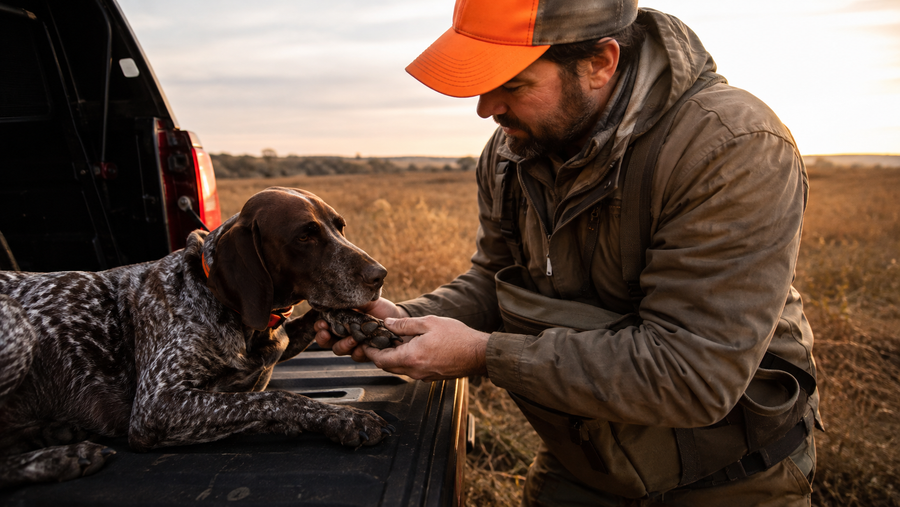
Separate emergency supplies from normal after-activity care for hunting, barn, trail, and working dogs, then know when the veterinarian comes first.
Use this three-minute tailgate paw check after every hunt to catch worn pads, burrs, torn nails, swelling, and gait changes before the next field.
A paw-to-back check for hunting dogs after the first hard weekend, including next-morning decisions, conditioning fixes, veterinary red flags, and dog-specific care.
!