Quick answer: If your dog moves with shorter steps after a hill walk, stop the harder exercise and compare paws, nails, legs, shoulders, back, hips, attitude, and movement with the dog’s normal. Keep the next outing easy. Call your veterinarian for limping, pain, swelling, weakness, dragging toes, trouble rising, or a change that persists or worsens.
Hills change the job. Climbing asks more from the rear end, while descending requires control through the shoulders, elbows, wrists, paws, and trunk. A route that feels moderate to the person holding the leash can be a substantial strength and balance session for the dog.
Watch the First Steps After Rest
Some dogs look normal while they are excited and moving, then show a shorter stride after a car ride or nap. Watch the first ten to twenty steps after the dog rises. Compare those steps with the dog’s usual movement on a level, non-slip surface.
- Is one leg different from the others?
- Does the dog hesitate before stairs, jumping, or turning?
- Is the back rounded or the head carried differently?
- Does the movement loosen quickly, stay the same, or get worse?
A dog may still chase a ball or rush to the door while protecting a sore area.
Check the Paws and Nails
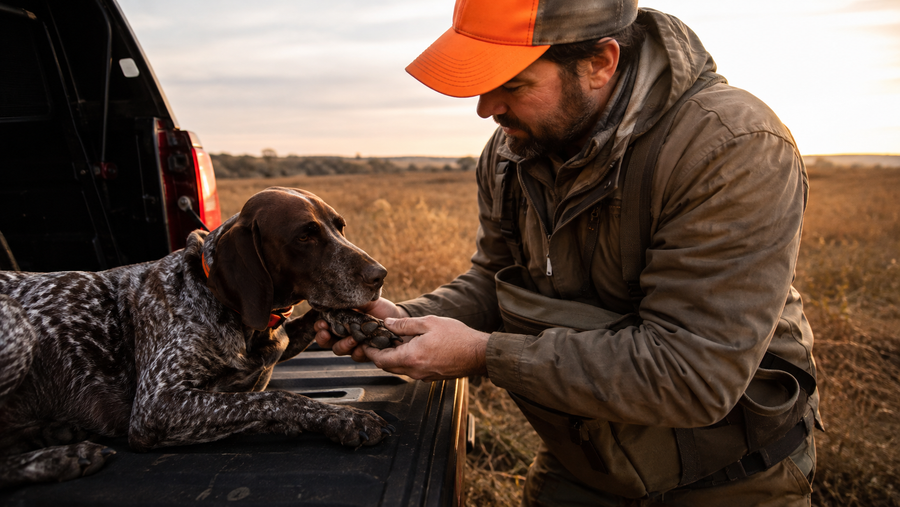
Look between the toes and around every pad. Check for abrasions, cracks, thorns, foxtails, packed debris, broken nails, and worn nail tips. Downhill travel can create repeated braking forces, especially on rock, gravel, hot ground, or loose dirt.
If a paw is painful, swollen, bleeding, or contains an embedded object, stop the walk. Do not dig deeply for debris or force the dog to keep moving.
Compare the Front and Back Ends
Short steps can come from several places. Gently look and feel for obvious swelling, heat, sensitivity, or an unusual posture, but do not force a joint through its range of motion. Notice whether the dog avoids sitting squarely, shifts weight forward, resists lowering the head, or struggles to rise.
Distance, incline, surface, speed, temperature, leash pulling, off-leash running, and recovery time help your veterinarian understand the pattern.
Set the Next Outing From Today’s Recovery
Choose level ground, a shorter duration, and a comfortable pace until the dog is moving normally. Avoid testing the same hill again just to see whether the problem returns. Repeatedly provoking a change does not clarify whether the dog is safe to continue.
Dogs build hill fitness gradually. Change one variable at a time, such as distance or incline, and add recovery days based on the individual dog’s age, condition, footing experience, and health history.
Where K9 Advanced™ Fits
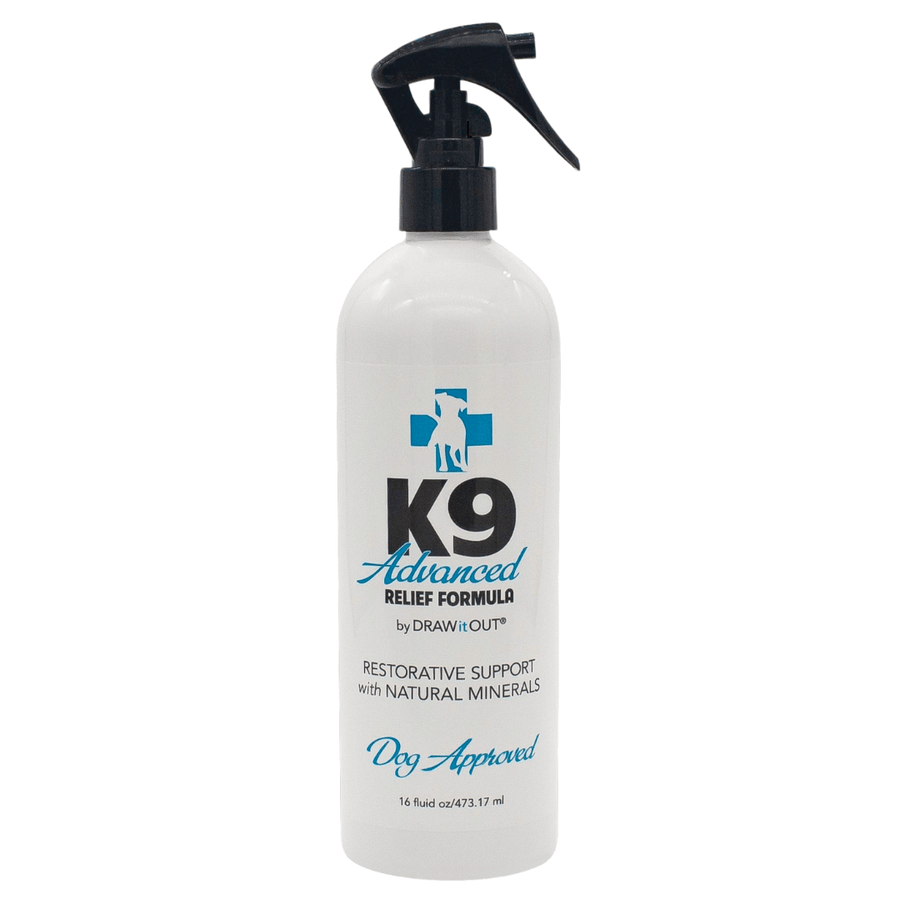
Draw It Out® K9 Advanced Relief Spray can fit into a label-directed external post-activity routine for an appropriate dog. It does not diagnose the cause of short movement or replace rest, paw care, rehabilitation, or veterinary evaluation. Keep topical products away from eyes and mucous membranes, and prevent licking as directed on the current label.
When to Call the Veterinarian
Call promptly for non-weight-bearing lameness, weakness, collapse, dragging toes, marked pain, significant swelling, a suspected fracture, a deep paw injury, or trouble breathing. Arrange an exam for recurring short movement, a change that lasts after rest, or a dog that is no longer comfortable doing normal daily activities.
FAQ
Can hills make a dog sore even after a short walk?
Yes. Incline, decline, surface, speed, fitness, and leash tension can make a short route more demanding than its distance suggests.
Should I massage a dog that is moving short?
Not until you understand the situation. Avoid deep pressure over a painful, swollen, or injured area and ask the veterinarian when the cause is unclear.
When can we try hills again?
Wait until the dog is moving normally and follow veterinary or rehabilitation guidance when the change was painful, persistent, or recurring.
General dog-care education only. This article does not diagnose or treat an animal and does not replace veterinary advice.