Quick answer: After swimming, let your dog shake outside, towel the coat in sections, dry between the toes and under the collar or harness, then let the coat finish air-drying in a clean, ventilated place. Do not push towels or swabs into the ear canal. If the dog develops persistent odor, redness, pain, head-shaking, limping, or irritated skin, call your veterinarian.
The goal is not to make a wet dog bone-dry in sixty seconds. It is to remove enough moisture and debris that the ride home does not trap water against the skin, paws, collar, or harness.
1. Let the first shake happen outside
Give your dog a moment to shake before reaching for the towel. That first shake removes a surprising amount of surface water and keeps the truck, house, and clean towels from doing all the work.
2. Towel in sections instead of scrubbing
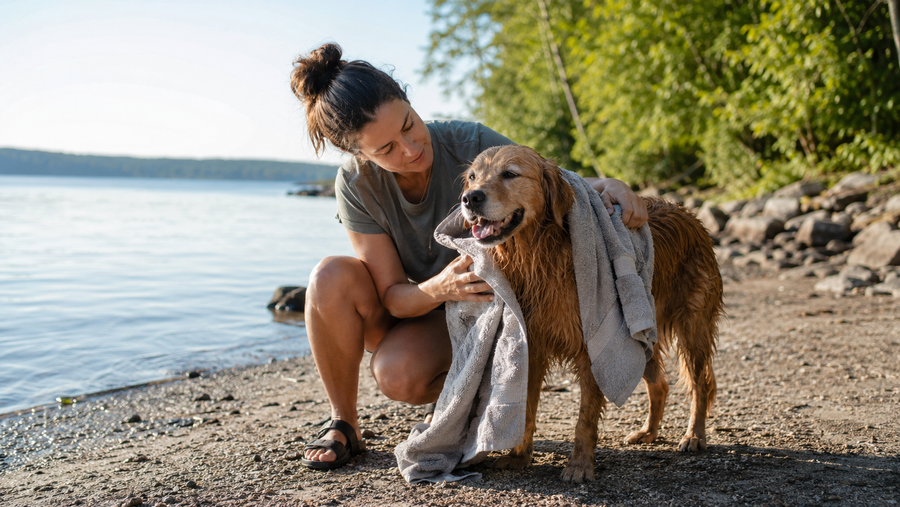
Press and blot through the coat, especially on the chest, belly, neck, tail base, and feathering. Aggressive rubbing can tangle longer coats and make it harder to inspect the skin underneath.
For thick or double-coated dogs, use one towel to remove the first heavy layer of water and a second dry towel for the finishing pass.
3. Dry the paws and between the toes
Wet paws can hold grit, sand, mud, or plant debris. Lift each foot, wipe the pads, and dry between the toes. Check for cuts, burrs, cracked pads, tenderness, or anything lodged between the digits.
If your dog starts licking one foot repeatedly, limps, or reacts when you touch a paw, stop treating it like a simple drying job and take a closer look.
4. Remove wet collars and harnesses
Do not leave soaked gear pressed against the neck, chest, or armpits for the drive home. Wet straps can hold moisture and debris against the skin and may rub differently once saturated.
Take the harness or collar off when safe to do so, towel the underlying coat, and let the gear dry separately. Keep a spare dry leash in the truck so you are not forced to reuse soaked equipment immediately.
5. Be careful with ears
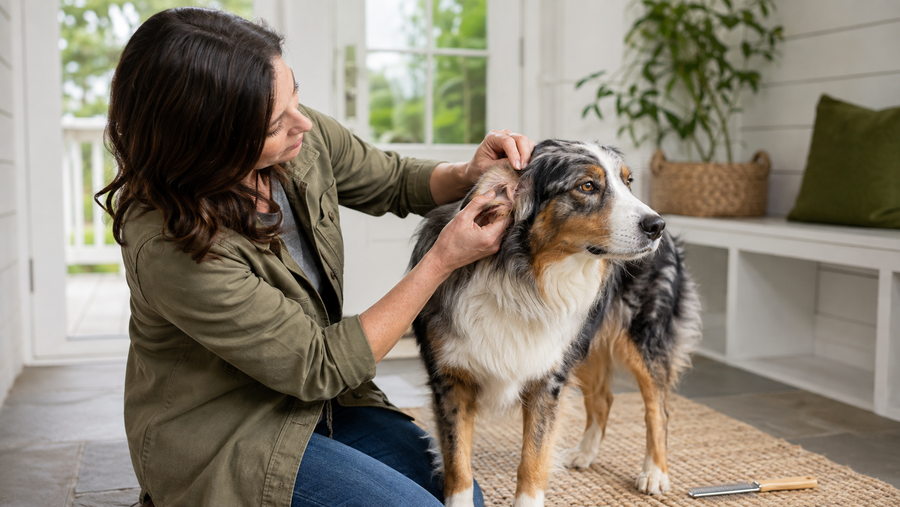
Dry the outer ear leather and the fur around the ear opening with a clean towel. Do not insert cotton swabs, towel corners, or fingers deep into the ear canal.
Persistent head-shaking, scratching, odor, discharge, redness, or pain after swimming deserves veterinary attention. Those signs are different from a dog simply being wet.
6. Decide whether the dog needs a bath
Not every swim requires shampoo. Clean water plus a good rinse and dry may be enough. A full bath makes more sense when the coat carries mud, algae, strong odor, oily residue, or something you do not want drying into the hair and skin.
For bath timing after lakes, pools, or creeks, use the dog bath timing guide. If a wash is appropriate, the current in-stock dog-specific option is Draw It Out® Soothing Lavender Dog Shampoo 16oz. Use it only according to the current label.
7. Finish drying where air can move
Once the heavy water is off, let the coat finish drying in a clean, ventilated environment. Avoid putting a still-soaked dog straight into a tight blanket, closed crate with poor airflow, or wet harness for an extended period.
Long-coated and double-coated dogs may stay damp close to the skin after the surface looks dry, so run your fingers through the coat before calling the job done.
A simple after-swim checklist
- Shake outside.
- Blot coat with towel one.
- Dry chest, belly, legs, tail base, and feathering.
- Dry paws and between toes.
- Remove and dry wet collar or harness.
- Wipe only the outer ear and surrounding fur.
- Check skin and paws for debris or irritation.
- Decide whether a rinse or full bath is actually needed.
- Let the coat finish drying with airflow.
Related K9 guides
Keep the whole routine organized with the creek-day cleanup kit, review what to check when ears smell after swimming, and use the K9 Start Here hub when the concern is not clearly just water and mud.
Frequently asked questions
Should I use a hair dryer on my dog after swimming?
Only if your dog tolerates it and the dryer is used safely at a comfortable setting and distance. Avoid excessive heat and do not force a fearful dog through the process.
Can I leave a wet harness on for the drive home?
It is better to remove saturated gear when safe, dry the underlying coat, and use a dry leash or restraint setup that still keeps the dog secure.
How do I know whether the ears are just wet or becoming a problem?
Simple moisture should improve as the dog dries. Persistent head-shaking, pain, odor, redness, discharge, or repeated scratching warrants veterinary evaluation.
Does every creek swim require shampoo?
No. Use shampoo when the coat actually needs a wash. Many swims only require a rinse, towel dry, paw check, and time to dry fully.