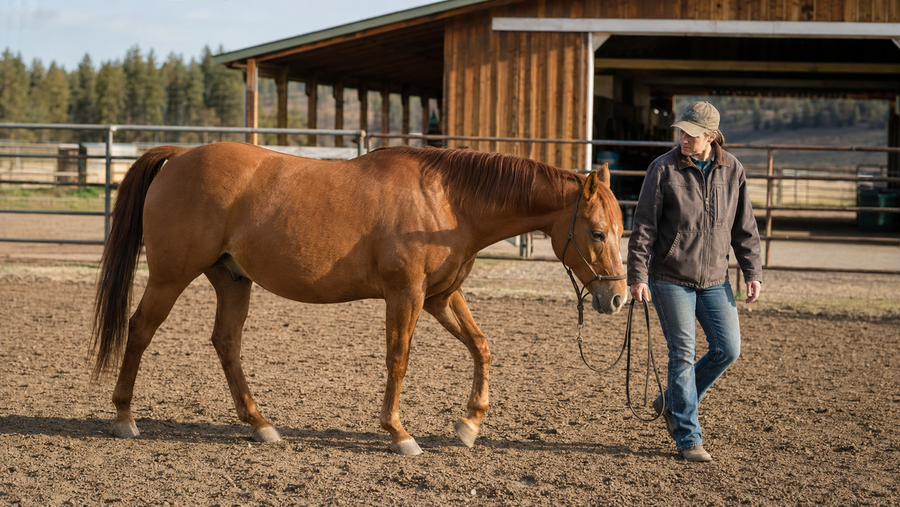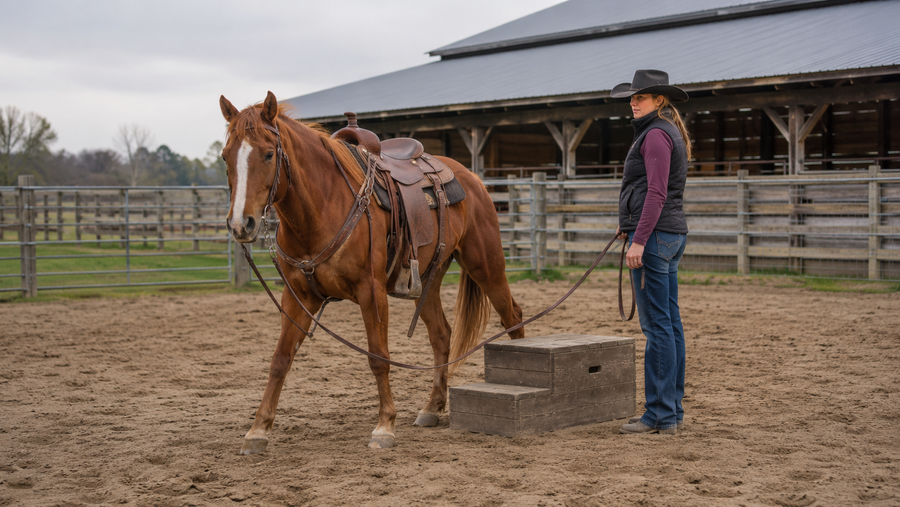
Horse Moves Away at the Mounting Block? Check This First
If a horse suddenly steps away from the mounting block, check comfort, tack, footing, rider technique, and the exact pattern before calling it disobedience.
Free U.S. shipping at $50+
No code needed.
Shipping details
Real Rider Resource
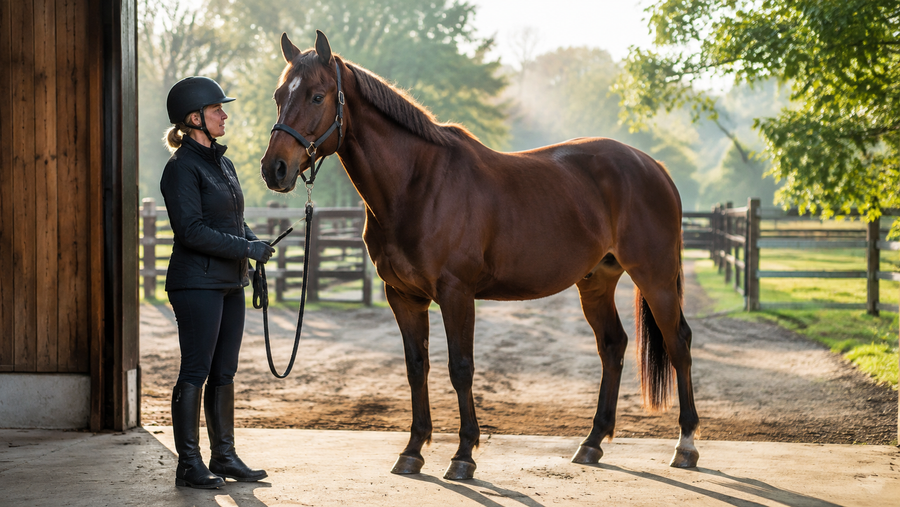
Head tilting can be a training issue, but it can also point to teeth, bit fit, bridle pressure, poll soreness, neck stiffness, ear discomfort, vision issues, balance, or rider contact.
Quick answer: A horse tilting its head under saddle needs a comfort check before correction. Look at teeth, bit, bridle, poll, neck, ears, eyes, saddle fit, rider hands, and whether it happens one direction or all the time.
Educational support only. Head tilting can be dental, tack, neurologic, pain, or training related. Rule out discomfort first.
If a horse suddenly steps away from the mounting block, check comfort, tack, footing, rider technique, and the exact pattern before calling it disobedience.
Use this safety-first rider check to separate possible soreness, fatigue, poor conditioning, confusion, and training resistance before adding pressure.
A practical rider checklist for a horse that is not acting normal, covering baseline behavior, appetite, water, manure, movement, legs, feet, tack, workload, and veterinary red flags.
!