May 20, 2026
Horse Loses Rhythm at the Canter? What Real Riders Should Check First
A Real Rider Resource guide for checking rider timing, footing, tack, fatigue, balance, and recovery clues when a horse loses rhythm at t...

Real Rider Resource
A practical rider-awareness guide for horses that lean, fall in, or drop a shoulder through turns, circles, barrels, corners, and pattern work.
Short answer: When a horse drops a shoulder in turns, do not start by blaming attitude. Check direction patterns, footing, rider balance, tack fit, hoof balance, fatigue, soreness, and whether the horse improves after a proper warm up.
If the pattern is sudden, painful, worsening, or paired with lameness, heat, swelling, reluctance, or behavior changes, involve your vet, farrier, trainer, or bodywork professional.
A dropped shoulder can show up quietly. One direction feels heavier. The inside rein suddenly feels like a handle. The horse falls through a circle, leans into the barrel, drifts through a corner, loses shape on a rollback, or cuts across the turn instead of carrying himself through it.
Sometimes it is training. Sometimes it is rider balance. Sometimes it is fatigue. Sometimes it is a small body clue that deserves more attention before it becomes a louder problem.
A horse dropping a shoulder means the horse is falling inward or loading one side instead of staying balanced through the turn. It often feels like the horse is leaning into the inside shoulder, ignoring the outside aids, or steering with the front end instead of carrying through the body.
Those details matter. The pattern tells you where to look first.
If the shoulder drop happens equally both ways, look hard at rider position, footing, general fatigue, tack fit, and conditioning. If it happens mainly one direction, the horse may be weaker, tighter, less coordinated, or less comfortable on that side.
That does not automatically mean injury. Horses, like people, have stronger and weaker sides. But a one-sided pattern that appears suddenly or keeps getting worse deserves attention.
If the horse starts heavy, then improves after walking, bending, and gradual work, you may be looking at normal stiffness, cold-start tension, or lack of engagement early in the ride. If the horse gets worse as the ride goes on, fatigue may be part of the picture.
If the horse never improves, resists more each ride, or begins showing other signs such as shortened stride, tail swishing, pinned ears, tripping, unevenness, or reluctance to canter, do not keep drilling the turn.
This one is not always fun to hear, but it matters. A rider who tips inside, collapses a hip, pulls the inside rein, looks down, or braces through one stirrup can teach the horse to fall in.
Ask a simple question: does the same horse do it with another balanced rider? Does the same rider feel it on multiple horses? Video helps because the feeling in the saddle is not always the truth.
Turns reveal footing problems fast. Deep footing can make a horse struggle to lift and carry. Slick footing can make a horse protect himself by leaning or cutting the turn. Uneven footing can make one direction feel different than the other.
Before assuming the horse is being difficult, check the ground. Circles, corners, barrels, gates, rollbacks, and small arena patterns all load the horse differently.
A saddle that pinches, slips, bridges, or sits differently from one season to the next can change how a horse uses his shoulders and back. Girth pressure, pad thickness, wither clearance, and rider weight distribution all matter.
Also check the horse’s body with your hands after work. Compare left to right through the neck, shoulder, girth area, back, loin, hip, and legs. Look for heat, swelling, flinching, tightness, or a reaction that is not normal for that horse.
Do not punish the shoulder drop as your first move. Do not pull harder on the inside rein. Do not keep drilling tight circles if the horse is getting worse. Do not assume “lazy” when the horse may be tired, sore, unbalanced, worried, or working on poor footing.
A better move is to slow the problem down. Make the circle bigger. Walk. Rebuild straightness. Check your own body. Check the horse after work. Then decide whether this is a training issue, a conditioning issue, a tack issue, or a professional-call issue.
Then follow with a normal post ride check. If your horse worked harder than usual, compare the body left to right and use the recovery routine that fits the day. The Draw It Out® Solution Finder can help riders choose the right care path without guessing.
Topical care does not fix training, shoeing, saddle fit, or pain. But a consistent post work routine can help riders pay closer attention to the horse’s body after demanding rides, repeated turns, hauling, hard ground, or show weekends.
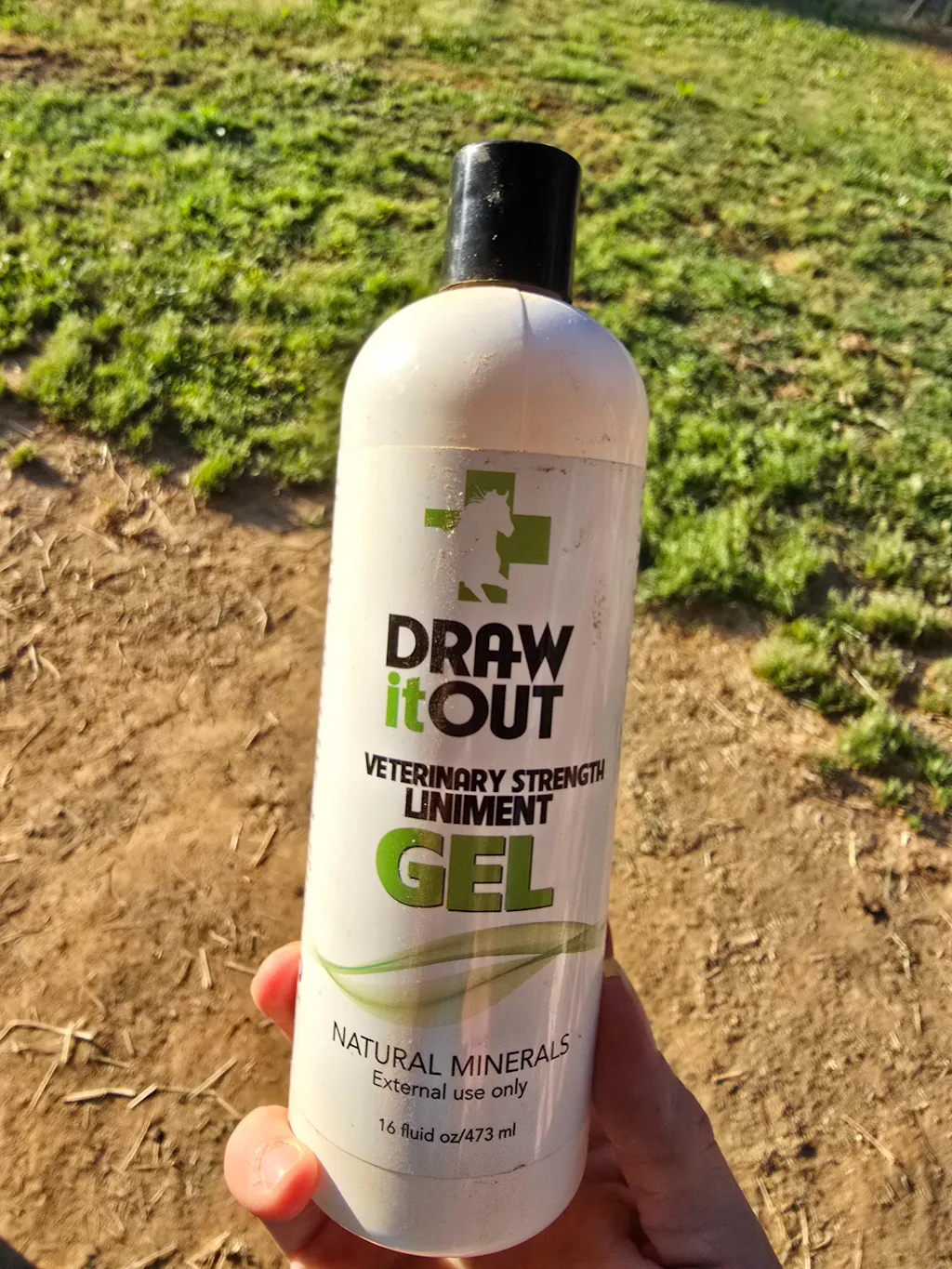
For everyday post ride checks, many barns start with Draw It Out® 16oz Liniment Gel. For riders comparing broader options, the Cooling Recovery collection is a better fit when heat, sweat, and summer workload are the bigger concerns.
Ask for professional help if the shoulder drop is sudden, worsening, one-sided, paired with lameness, linked to behavior changes, or does not improve with a simpler ride. Your trainer can help separate balance and rider mechanics from resistance. Your farrier can evaluate hoof balance and shoeing changes. Your veterinarian can evaluate pain, lameness, or medical concerns.
The right answer is rarely “just ride harder.” Good riders notice the pattern, reduce the noise, and make a cleaner decision.
A horse may drop a shoulder because of rider balance, weak engagement, fatigue, footing, tack fit, hoof balance, discomfort, or training gaps. The pattern matters most.
Not always. It can be a training or balance issue. But if it is sudden, one-sided, worsening, or paired with uneven movement, heat, swelling, or resistance, it deserves professional evaluation.
No. Pulling the inside rein often makes the horse fall more onto the inside shoulder. Use a bigger turn, more forward rhythm, better rider balance, and outside aids.
Yes. Poor saddle fit, girth discomfort, pad changes, or seasonal body changes can affect how a horse uses the shoulders and back.
Check legs, shoulders, back, girth area, hoof comfort, heat, swelling, sensitivity, and whether the horse feels different from his normal baseline.
Where to go next: Use the Solution Finder for product fit, review the Safety Guide for smart topical use, or compare recovery options in Cooling Recovery.
I write about these topics because they come directly from conversations with real riders. The goal is clarity, fewer assumptions, and better outcomes for the horse.
A Real Rider Resource guide for checking rider timing, footing, tack, fatigue, balance, and recovery clues when a horse loses rhythm at t...

A practical Real Rider Resource guide for horses that rush after upward or downward transitions. Learn what to notice first, what to chec...

A practical five-minute pre-ride barn check for real riders who want to notice small changes before they become bigger problems.
Want a smarter way to handle soreness, heat, swelling, and post-ride leg care? Visit our Performance Recovery Hub for clear routines and product guidance.
Visit the Recovery Hub!