Fluid Flex EQ horse joint support for a travel and show-barn feeding routine

Quick answer: Keep a horse's joint-supplement routine boring when traveling. Pack the original labeled container, use the correct dedicated measure, log each serving, protect the product from heat and moisture, and avoid changing several feeds or supplements at the show. If a serving is missed, follow the current label or ask the veterinarian or nutrition professional. Do not double the next serving unless specifically directed.

Home routines fail away from home for ordinary reasons. The scoop is in another trailer. The person feeding assumes somebody else did it. A bag gets damp. A horse refuses an unfamiliar meal. By the time everyone compares notes, nobody is certain what the horse received.

A good travel system removes guesswork before the truck leaves.

The joint-supplement travel kit

Original labeled container

Keep the product identity, directions, lot information, and warnings with the supplement. An unmarked plastic bag is not a useful system.

Dedicated measure

Use the measure specified for that product. Do not borrow a coffee scoop, feed cup, or another supplement's scoop.

Written feed card

List the horse, product, label-directed amount, normal feed, contact person, and any veterinary instructions.

Serving log

Record date, time, initials, feed acceptance, and anything unusual. A checkmark prevents duplicate servings better than memory.

Dry storage

Keep the container sealed, upright, and protected from moisture, contamination, and temperature extremes according to the label.

Backup plan

Decide who feeds if the primary person is riding, delayed, sick, or at another arena. The handoff should be written, not assumed.

Before the horse leaves home

  1. Confirm the product is already accepted. A show is not the place to introduce several new ingredients, flavors, or feed changes.
  2. Read the current label. Check the serving amount, schedule, storage, and warnings.
  3. Count the trip honestly. Include the travel day, early arrival, weather delays, and one extra day when practical.
  4. Photograph the label and lot information. Keep the original container too. The photo is a backup, not a replacement.
  5. Check current competition rules. Governing-body rules and prohibited-substance guidance can change. Verify the current rulebook and ask the veterinarian when there is any doubt.
  6. Set the log beside the feed. If the record lives in a phone nobody else can unlock, it is not a barn system.

A simple show-barn feeding log

Date and time Person Label serving given Feed accepted? Notes
Arrival evening Initials Yes / No All / Some / Refused Water, manure, attitude, travel observations
Competition morning Initials Yes / No All / Some / Refused Movement baseline, appetite, workload plan
Competition evening Initials Yes / No All / Some / Refused Recovery, legs, feet, next-day plan

The log is not busywork. It separates “I think he got it” from a record the whole team can trust.

If the horse refuses the feed

Do not keep adding new flavors and products until the meal becomes unrecognizable. First check the feed itself, water access, travel stress, heat, dental issues, illness, medication, and whether the horse is eating anything else.

  • Offer the horse's normal feed in the normal format when possible.
  • Check the tub for residue, contamination, moisture, or a strong new smell.
  • Do not hide medication or supplements in a way that destroys the horse's willingness to eat the base meal.
  • Call the veterinarian promptly for persistent refusal, reduced water intake, abnormal manure, fever, pain, colic signs, depression, or another meaningful change.

If a serving is missed

Record it. Then use the current label or ask the veterinarian or equine nutrition professional what comes next. Do not automatically double the next serving. A missed box on the log is useful information. A guessed correction creates a second uncertainty.

Where Fluid Flex EQ® fits

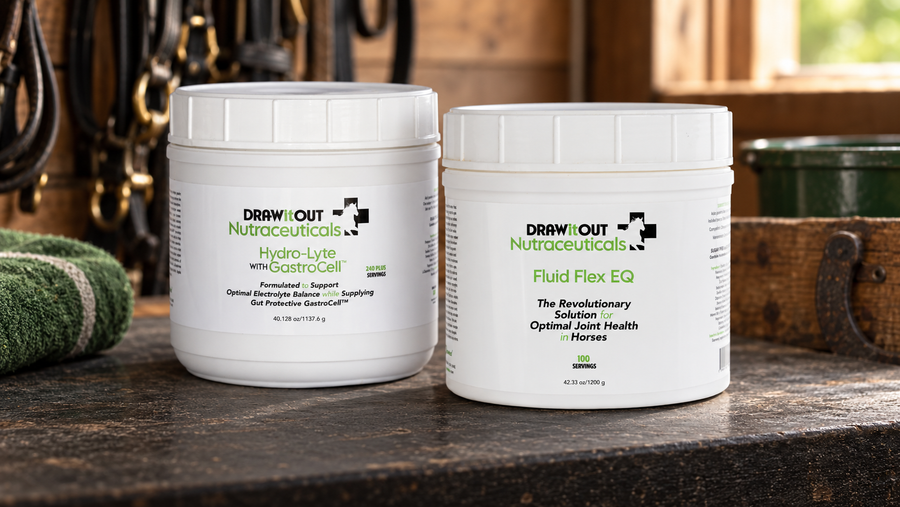
Fluid Flex EQ® is a granulated, feed-through horse joint and mobility supplement that supplies 100 mg of sodium hyaluronate per label serving.

  • The 100 Servings size fits one horse or a first Fluid Flex EQ® routine.
  • The 2 Pack supplies 200 total label servings and fits established or multi-horse routines.
  • Feed consistently according to the current label.
  • Track acceptance, workload, movement, and next-day response without changing several variables at once.

A supplement is not the answer to a new problem

New or worsening lameness, heat, swelling, hoof pain, non-weight-bearing behavior, stumbling, neurologic-looking changes, severe soreness, fever, or sudden reluctance to move needs professional evaluation. A travel routine can preserve consistency. It cannot diagnose the horse.

Frequently asked questions

Can I pre-portion a horse supplement for travel?

Use the original labeled container whenever possible. Pre-portion only when the product label, storage needs, event rules, and barn controls make it appropriate, and keep every portion clearly identified and protected from moisture and contamination.

Should I start a joint supplement at the show?

Generally, avoid introducing a new supplement during a high-change travel period unless the veterinarian or nutrition professional has directed the plan.

What if two people may feed the horse?

Use one visible serving log and require initials immediately after feeding. The system should make a duplicate serving difficult.

Does Fluid Flex EQ® need a loading dose?

Use the amount and schedule on the current Fluid Flex EQ® label. Do not add a loading phase unless that label or a qualified professional specifically directs one.

Build the routine before the next trip

Fluid Flex EQ® gives the barn a clear serving-based format. The real advantage comes from pairing the product with a routine that survives trailers, early mornings, staff handoffs, and busy show days.

View Fluid Flex EQ®

Then use the Fluid Flex EQ® Feeding Routine and the cost-per-day guide to finish the plan.

Feed according to the current label. This article is general education and does not replace veterinary diagnosis, treatment, nutrition planning, or current competition rules.

Leave a comment

Please note, comments need to be approved before they are published.

Start here

Reading first? Here is the clean path.

This article gives you the background. If you are ready to put the idea into a real horse care routine, these are the next places most riders should go.

Daily recovery

Liniment Gels

Explore the Draw It Out® liniment gel lineup for everyday use, post-work routines, and targeted recovery support.

Shop liniment gels
Find the fit

Solution Finder

Match your horse’s workload, age, routine, and care goals to the Draw It Out® products that make the most sense.

Use the finder
Routine first

Prehabilitation

Learn how riders support soundness, comfort, and consistency before little issues become bigger problems.

Read the guide
Simple rule: read the article for context, use the Solution Finder for direction, then build the routine around the product format your horse will actually use consistently.

Real Barn Proof

What this looks like in real barns.

Real riders. Real horses. Real routines. These clips rotate automatically so the proof stays fresh without weighing the page down with a long feed.

Random rider clips

Why this matters: good horse care should make sense outside the ad. These clips show the kind of everyday use that builds trust one barn at a time.

Further Reading

Keep building the routine.

Horse care works better when the next step is clear. These related reads help connect today’s topic to better daily decisions in the barn.

Horse health news

Start with the principle, then build the habit. The right article should make the next barn decision easier, not more complicated.

Next Step

Keep your barn dialed in.

Simple care guides, practical product paths, and rider-trusted tools built for real horses and real routines.

Good care gets easier when the next step is obvious. Read the guide, match the routine, then choose the format that fits how your barn actually works.

Recovery Routine

Build a complete recovery routine.

Want a smarter way to think through post-ride care, heat, swelling, leg support, and daily recovery decisions? Start with the Performance Recovery Hub.

Better recovery starts with a repeatable routine. The hub gives riders a clearer path from workload to product format to aftercare timing.

Rider Favorites

Always in the kit.

Four core Draw It Out® staples riders keep close for daily recovery routines, wash rack use, targeted support, and quick barn-side care.

Core barn staples
Draw It Out® 16oz Liniment Gel | Daily Horse Care

Stay-Put Gel

16oz Liniment Gel

The everyday liniment gel format riders reach for when they want targeted, no-mess application.

View product
Draw It Out® 32oz Horse Liniment Concentrate | Spray, Wrap & Soak

Mix Your Way

32oz Concentrate

A flexible concentrate for riders who want to mix their own routine around workload and barn needs.

View product
Draw It Out® RTU Spray 24oz | Ready-to-Use Liniment Spray

Ready To Use

24oz RTU Spray

A ready-to-use spray format for quick application after work, travel, turnout, or daily care.

View product
CryoSpray® by Draw It Out® 24oz | Cooling Body Brace for Horses

Cooling Brace

CryoSpray

A cooling body brace spray for riders who want a fast, practical option after hard work or hot days.

View product

Format matters. Gel, concentrate, ready-to-use spray, and cooling spray each solve a different barn problem. Pick the one your routine will actually use.

Where To Go Next

Turn the idea into a routine.

If this topic connects to what you are seeing in your horse, these are the three cleanest next steps. Start with direction, then choose the product format that fits the way your barn actually works.

Next steps

Best next move: use the Solution Finder first when the issue is unclear. Go straight to the liniment gel collection when you already know the format you want.