Quick answer: If a horse seems sore after hauling, stop before the next ride and check feet, legs, back, withers, girth area, shipping-gear rubs, hydration, appetite, manure, attitude, and movement. Call the veterinarian for significant or persistent pain, lameness, swelling, wounds, fever, colic signs, weakness, or abnormal breathing.
Hauling is work. The horse balances through acceleration, braking, curves, vibration, road camber, and every shift in the trailer. Add heat, unfamiliar water, standing, and travel stress, and the trip can cost more than its mileage suggests.
Watch the Horse Unload
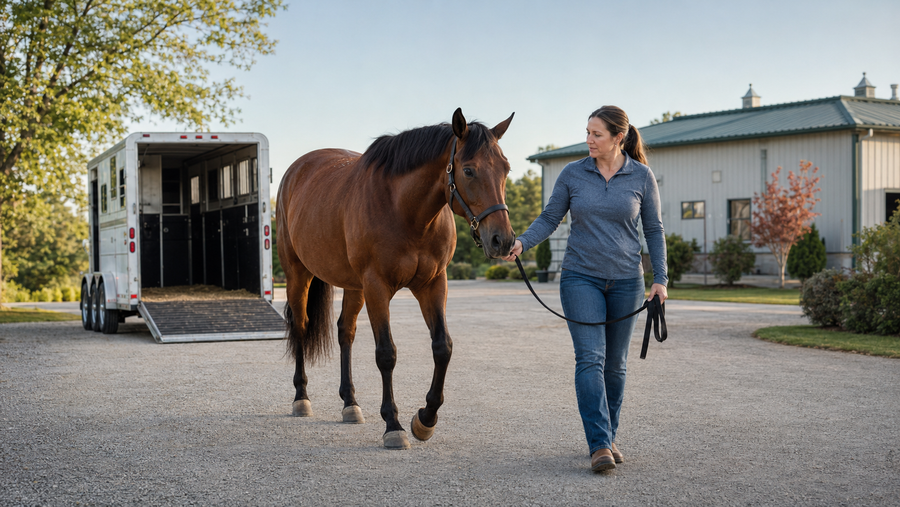
Notice the first steps, posture, willingness to turn, and how the horse lowers the head. A quiet unload can still include guarded movement, stumbling, uneven weight bearing, or a horse that stands differently once off the trailer.
Give yourself time to see the horse before warm-up changes the picture.
Run a Head-to-Hoof Check
- Halter, poll, face, and chest for rubs or impact marks.
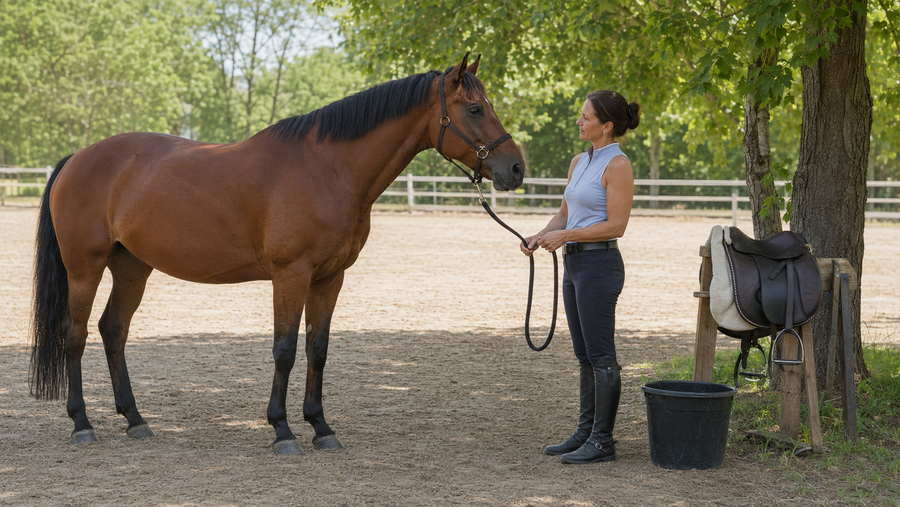
- Shoulders, withers, back, and girth area for sensitivity or swelling.
- Legs for heat, filling, wounds, and shipping-boot or wrap pressure.
- Feet for loose shoes, packed material, hoof damage, heat, and digital pulses.
- Appetite, water, manure, breathing, temperature when indicated, and attitude.
Compare both sides with light, consistent touch. Do not force stretching or massage a painful area before it is assessed.
Read the Trailer
Look at disturbed bedding, manure placement, scuff marks, damaged partitions, shifted mats, and how the horse stood. Review ventilation, temperature, travel duration, stops, road conditions, and water offered. This can help explain the workload and improve the next trip.
Set the Next Ride From Recovery
When the horse is fully normal, a quiet walk and easy return may be reasonable. If soreness, stiffness, or abnormal movement remains, skip the planned ride and get professional guidance. Do not let the show schedule decide readiness.
For back-specific sensitivity, read Horse Back Sensitive After a Long Haul?
Where Draw It Out® Fits
Draw It Out® 16oz Liniment Gel may fit a familiar, label-directed external post-haul routine for an appropriate horse after red flags have been addressed. It does not diagnose soreness, treat an injury, or replace veterinary, farrier, tack, or trailer evaluation.
FAQ
Can a horse be sore from hauling without being ridden?
Yes. Balancing and standing during transport can fatigue the body, but persistent or painful soreness needs assessment.
How long should a horse rest after hauling?
There is no universal number. Trip length, conditions, the horse, and recovery all matter.
When should I call the veterinarian?
Call for significant or persistent pain, lameness, swelling, wounds, fever, colic signs, weakness, abnormal breathing, or a horse that is not returning toward normal.
General riding education only. This article does not diagnose or treat a horse and does not replace veterinary advice.