When a Horse Needs an Easy Day, Not a Day Off
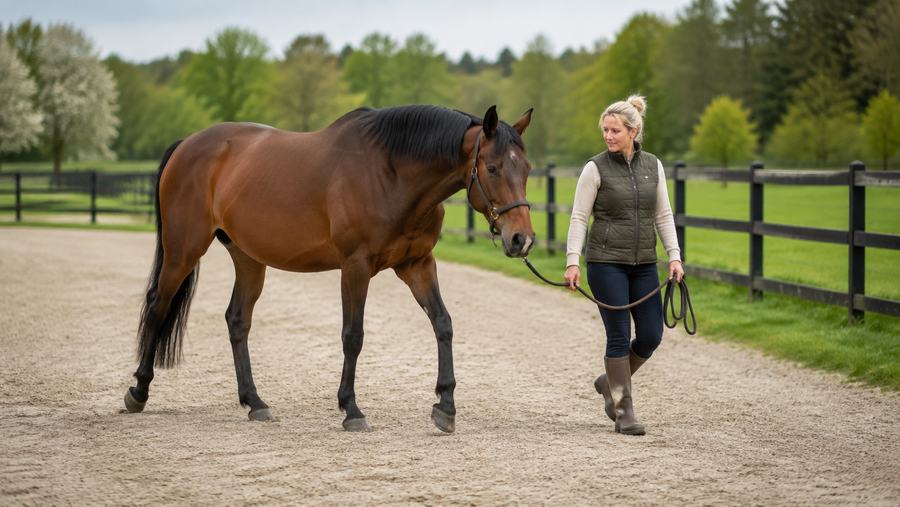
An easy day may suit a sound horse that benefits from low-stress movement. Learn when to choose walking, turnout, light work, rest, or veterinary help.
Free U.S. shipping at $50+
No code needed.
Shipping details
Some rides tell you early they are not going to be the ride you planned. The horse comes out tight, distracted, resistant, dull, spooky, heavy, or behind the leg. That is not the time for ego.
When a ride starts wrong, real riders slow down, check the horse, simplify the work, and look for the first fair thing they can improve. The goal is not to force the original plan. The goal is to leave the horse better than he started.
A bad start can come from body discomfort, heat, footing, tack, rider tension, distraction, or a training hole. Pushing through blindly can turn a small problem into a bigger habit.
Find a smaller win. Walk well. Breathe. Soften one side. Stand quietly. Make one clean transition. Then decide whether to build or end. Ending early with a better horse is not quitting. It is horsemanship.
Use the Horse Health Library and What Does My Horse Need? guide when the wrong start points toward recovery, stiffness, hoof, skin, or travel clues.
Not automatically. Simplify first and look for a fair improvement. End if continuing would be unsafe or unfair.
Track when it happens, what changed, how the horse moves, and whether it repeats. Get qualified help when needed.
The ride you planned matters less than the horse you actually saddled.
An easy day may suit a sound horse that benefits from low-stress movement. Learn when to choose walking, turnout, light work, rest, or veterinary help.
Before changing bits, check dental and mouth comfort, current fit, rider hands, tack, training clarity, body comfort, and when resistance appears.
Before adding speed, confirm steering, rate, rhythm, balance, footing, fitness, confidence, soundness, and recovery at the slower version.
!