Real Rider Resource
SI Joint Pain in Horses: Signs Are Not a Diagnosis
Weakness behind, canter trouble, back sensitivity, reluctance, and uneven push can involve the sacroiliac region, but they can also come from hooves, hocks, stifles, back, tack, conditioning, footing, or neurologic disease. Start with assessment, not a label.
Quick answer: Stop work for sudden weakness, pain, lameness, stumbling, falling, toe dragging, marked asymmetry, or unsafe movement. For a repeated performance change, record when it appears, compare both directions and first steps, review tack, hoof balance, footing, travel, and workload, then involve your veterinarian. Liniment gel can support normal cleared body care, but it cannot diagnose or repair an SI problem.
Red flags beyond a routine support question
Seek prompt veterinary guidance for sudden or severe lameness, weakness, falling out behind, repeated stumbling, neurologic signs, fever, trauma, inability to rise, loss of bladder or bowel control, marked back or pelvic pain, one hot swollen limb, or a horse that cannot move safely. Do not lunge, ride, back, or circle harder to make the problem easier to see.
What riders often feel
Possible clues include reduced push from behind, difficulty striking or holding a canter, lead-change trouble, cross-cantering, bunny hopping, reluctance to collect, a back or loin reaction, uneven muscle development, trouble on hills, or a horse that feels different in one direction. These observations help describe the pattern. They do not locate the source.
Some signs appear only under a rider or at a particular speed. Others show after hauling, on deep footing, later in the session, or the next morning. Note the timing instead of testing repeatedly. Improvement after warming up does not prove that the horse is sound.
A rider's six-step information check
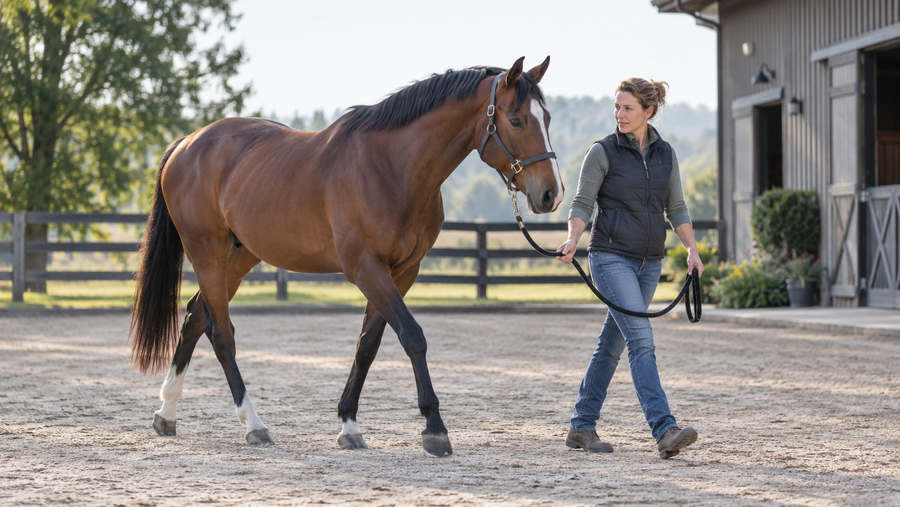
- Start before grooming. Watch the horse stand, walk out, turn, and back only if safe. Note weight shifting, toe dragging, shortened steps, or guarding.
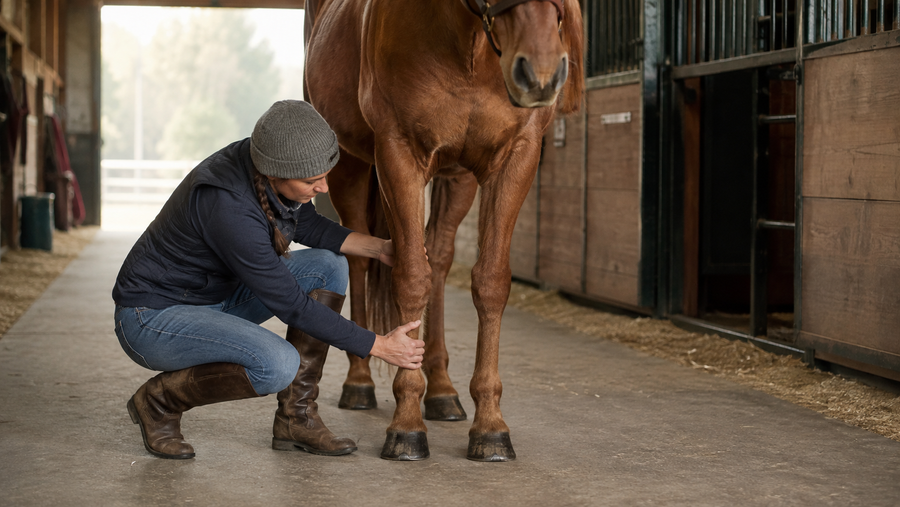
- Check hooves and legs. Look for stones, shoe changes, cracks, heat, swelling, digital pulse, wounds, and sensitivity. A hoof problem can change the entire hind-end pattern.
- Review the last two weeks. Include workload, footing, hills, speed, jumps, cattle work, hauling, turnout, slips, farrier changes, and rest.
- Inspect tack. Note saddle movement, uneven sweat, pad buildup, girth pressure, and whether the response changes with rider or equipment.
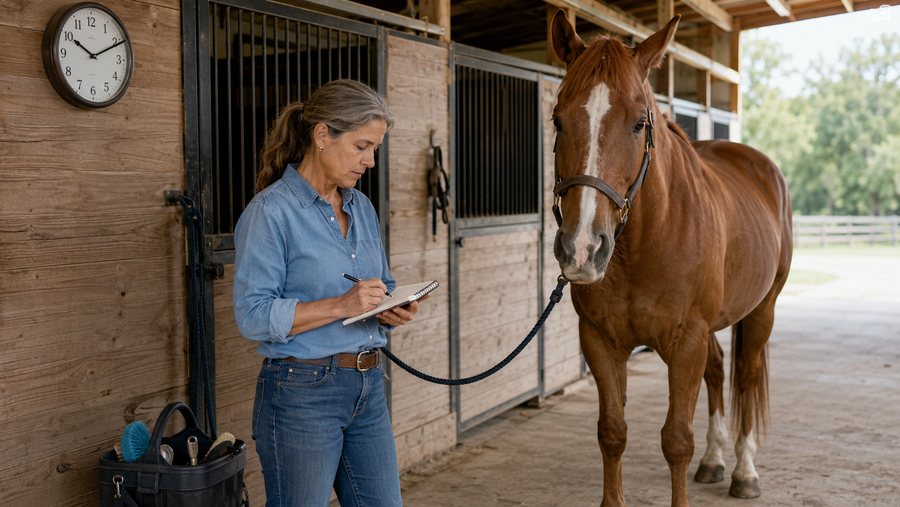
- Record the movement pattern. Direction, lead, gait, circle size, straight line, fatigue, transitions, and recovery are more useful than “SI sore.”
- Choose professional help. A veterinarian leads diagnosis. Farrier, saddle fitter, trainer, and rehabilitation professional contribute within that plan.
Why diagnosis can be difficult
The SI region is deep and works with the pelvis, lumbar back, hips, and hind limbs. Pain can be referred or secondary to another problem. A veterinarian may combine palpation, movement assessment, neurologic and lameness examination, diagnostic anesthesia when appropriate, imaging, and response to a structured plan. No single rider test confirms SI pain.
Imaging and examination options depend on the horse, location, equipment, and suspected problem. The correct question is not “Which test proves SI?” but “Which findings help rule in, rule out, or prioritize the possible sources for this horse?”
Questions for the tack, hoof, and workload review
Tack
Does the saddle bridge, rock, slip, or concentrate pressure? Did fit change with topline, weight, pad, rider, or discipline? Use a qualified saddle fitter within the wider evaluation.
Hooves
Are trim and shoe cycles consistent? Is one hoof sore, imbalanced, or landing differently? Coordinate veterinarian and farrier observations instead of treating the pelvis in isolation.
Workload
Did duration, speed, terrain, circles, collection, stops, jumping, hauling, or footing change together? One large workload jump can obscure which demand the horse did not handle.
Build rehabilitation around milestones
Rest, controlled walking, strengthening, straight lines, hills, poles, circles, speed, and discipline work are separate rehabilitation decisions. Follow the veterinarian's milestones and the qualified rehabilitation plan. Calendar time alone does not prove readiness. Track heat, swelling, comfort, movement, attitude, and next-day recovery as workload returns.
If the horse worsens after a progression, report it. Do not simply remove one day and restart at the same level. The plan may need examination, imaging, tack, hoof, footing, or exercise changes.
Where liniment gel fits
After the horse is evaluated, cleared for the intended work, and cleared for normal external body care, a label-directed liniment routine may support ordinary post-work care. It does not diagnose the SI region, repair injured tissue, or replace tack, hoof, workload, or rehabilitation decisions.
Only after evaluation and clearance
Use the ready-to-apply 16oz Gel for the routine body-care step.
Draw It Out® 16oz Liniment Gel is the simplest targeted format for ordinary post-work application to appropriate external areas. It is not an SI treatment and should never be used to decide whether a horse can continue working.
One bottle — $25.99 • Two Pack — $52 with free U.S. shipping
Read the Horse Liniment Guide
Not sure? Use the Solution Finder
Common mistakes
- Calling every weak-behind horse an SI case.
- Testing harder with circles, backing, hills, or collection.
- Skipping hoof, tack, and neurologic questions.
- Using liniment gel to decide whether work can continue.
- Progressing by calendar instead of veterinary milestones.
SI region FAQ
What are common signs linked to the SI region in horses?
Riders may notice weak push behind, canter difficulty, lead problems, back or pelvic sensitivity, reduced performance, reluctance in transitions, or uneven movement. None of these signs proves an SI diagnosis.
How is an SI problem diagnosed?
A veterinarian combines history, palpation, movement evaluation, neurologic and lameness assessment, diagnostic anesthesia when appropriate, and selected imaging or other tests. The SI region can be difficult to evaluate.
Can saddle fit or hoof balance look like SI pain?
They can contribute to similar performance patterns or change how the horse loads the body. Tack, hoof balance, footing, conditioning, and other lameness sources should be assessed instead of assuming one region.
Should I keep riding while waiting for an SI evaluation?
Ask the veterinarian. Stop immediately for severe pain, lameness, weakness, stumbling, falling, neurologic signs, or unsafe movement. Do not use harder work to make the problem more obvious.
Can liniment gel treat an SI injury?
No. Liniment gel cannot diagnose or repair an SI problem. After the horse is cleared, it may fit a normal label-directed body-care routine, but it does not replace evaluation, tack or hoof changes, or rehabilitation.
Educational note: This article does not diagnose SI pain or prescribe rehabilitation. Movement change, weakness, pain, lameness, or neurologic signs require veterinary guidance.