Hands Numb After Horse Riding? What to Do Next
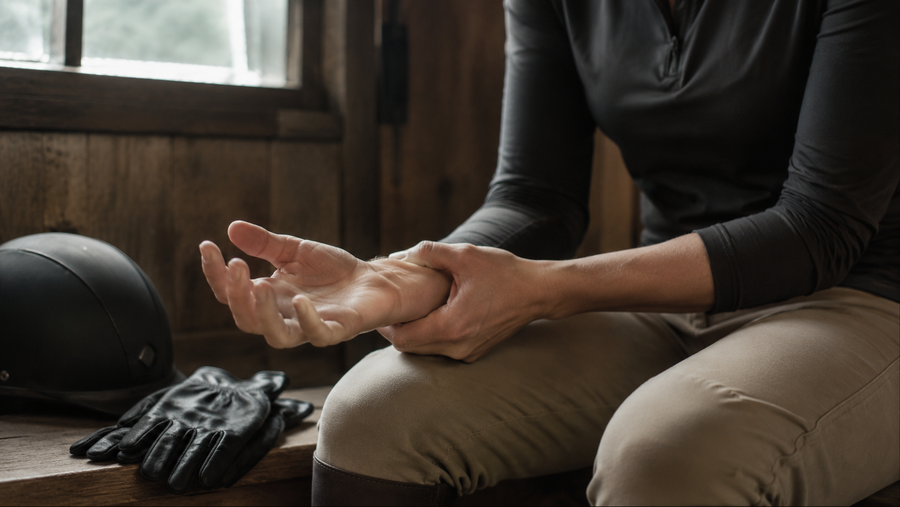
Numbness or tingling after riding is a nerve symptom, not ordinary muscle tightness. Use this rider-first checklist to know when to stop, track, and seek care.
Free U.S. shipping at $50+
No code needed.
Shipping details
Quick answer: Tight calves after riding often point to more work than the lower leg was ready for, a toe-down brace, gripping, stirrups that do not suit the rider, stiff boots, or a jump in saddle time. Start by checking whether the tightness is on both sides, when it began, and what changed in the ride. Do not aggressively stretch or massage a calf that is suddenly swollen, warm, red, sharply painful, or larger than the other side. Those signs need medical evaluation.
Feeling tight does not tell you which structure is involved. Treat it as a clue and work through the simple variables first.
Change one variable at a time so you can learn from the result:
If you finish the same barn job with one side consistently tighter, use the same approach away from the saddle. Our one-sided barn-work audit shows how to find repeated carrying, twisting, and reaching patterns.
For ordinary, symmetrical post-exercise tightness without red flags, stop the aggravating activity, walk easily if comfortable, cool down, drink normally, and give the area time. Gentle ankle motion may feel better than forcing a deep calf stretch. If pain is sharp, movement is limited, bruising develops, or symptoms persist, speak with a healthcare professional.
A topical gel can support a comfort routine, but it cannot tell the difference between muscle fatigue, tendon injury, nerve symptoms, or a blood clot.
Seek prompt medical care for new one-sided calf pain with swelling, warmth, redness or discoloration, marked tenderness, or a calf that looks larger than the other. Deep vein thrombosis can cause calf pain or cramping, swelling, skin-color change, and warmth. Mayo Clinic's DVT guidance explains the warning signs.
Call 911 for sudden shortness of breath, chest pain, fainting, a rapid pulse, rapid breathing, or coughing up blood. Those can be signs of a pulmonary embolism and require emergency care.
Also get medical advice for:
For normal external comfort after routine activity, ReJüv™ Gel 8oz EZ Squeeze is a menthol-free, capsaicin-free, low-odor topical gel for people. Use it as labeled on intact skin. It is not appropriate for unexplained one-sided swelling, suspected injury, or possible clot symptoms, and it does not replace medical care.
You may be forcing the ankle or bracing against the stirrup instead of letting weight travel through a balanced leg. An instructor can check stirrup length, seat stability, and whether you are gripping for security.
Gentle movement may be reasonable for routine, symmetrical tightness, but a forceful stretch is not the right first move for sharp pain, swelling, bruising, weakness, or one-sided warmth. Get medical guidance for those signs.
Fluid loss and heat can contribute to exercise cramps, but they do not explain every case. Do not use dehydration as the default explanation for persistent or one-sided symptoms.
Change it when a qualified instructor sees that the current length disrupts your balance or joint alignment, or when a controlled trial shows a clear improvement. Avoid making several tack and position changes at once.
Numbness or tingling after riding is a nerve symptom, not ordinary muscle tightness. Use this rider-first checklist to know when to stop, track, and seek care.
What menthol-free topical gel means, who may prefer the low-sensory format, what to compare before buying, and where ReJüv™ Gel fits.
Give tired feet and ankles a practical seven-minute reset after a long horse show day, plus learn the warning signs that need medical care.
!