Real Rider Resource
Horse Tight Through the Shoulders? What to Check
Shoulder tightness is a rider description, not a diagnosis. A horse may show shorter reach, guarded turns, a choppy warm-up, reluctance to go forward, or one-sided stiffness. Those patterns can involve tack, feet, neck, rider balance, fatigue, conditioning, footing, or discomfort. Name the movement change before choosing a recovery step.
Quick answer: When a horse feels tight through the shoulders, watch straight-line reach and both turns, compare left with right, check feet and legs, inspect saddle and pad placement, feel the neck, withers, back, and girth area, and review workload and footing. Stop and seek professional help for lameness, pain, swelling, weakness, stumbling, or a sudden persistent change.
Describe the movement, not just the area
The shoulder does not work alone. The neck, withers, back, rib cage, front limbs, feet, and rider all affect how the front end reaches. Note whether the horse takes a shorter step, lands differently, drifts, resists a turn, changes head position, or becomes heavier in the contact.
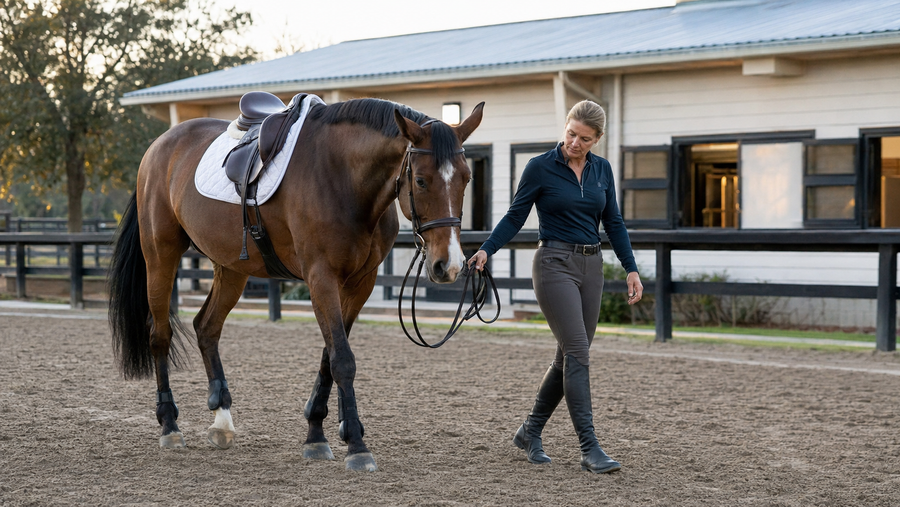
Compare the first steps with the horse's usual baseline. Watch on a straight, level surface from the side and front. Check both directions without drilling small circles. Record whether the horse improves fully with easy movement, remains guarded, or becomes worse.
Check the tack path from front to back
Look at saddle placement behind the shoulder blade, tree and panel contact, pad position, girth location, breast collar, and anything that may restrict movement. A saddle that has always worked can fit differently after weight, muscle, coat, pad, or workload changes. Uneven sweat or dry spots can be clues, but they are not a diagnosis by themselves.
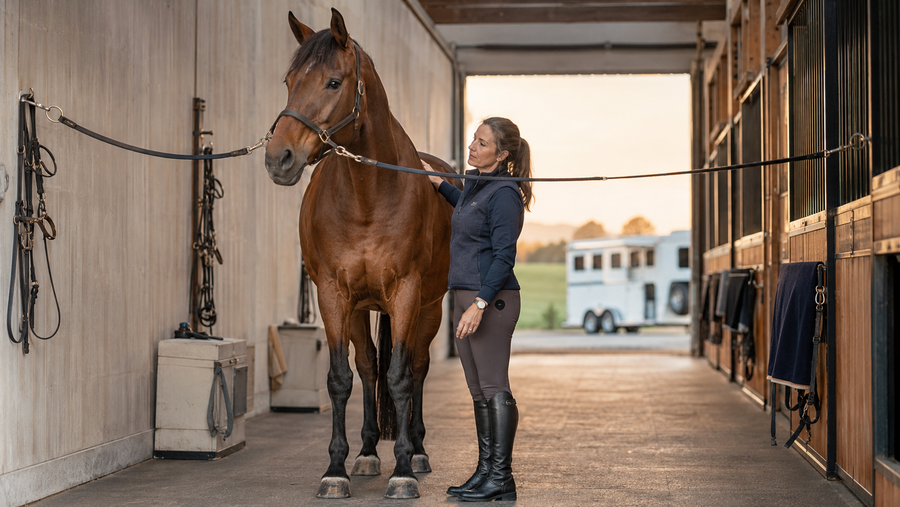
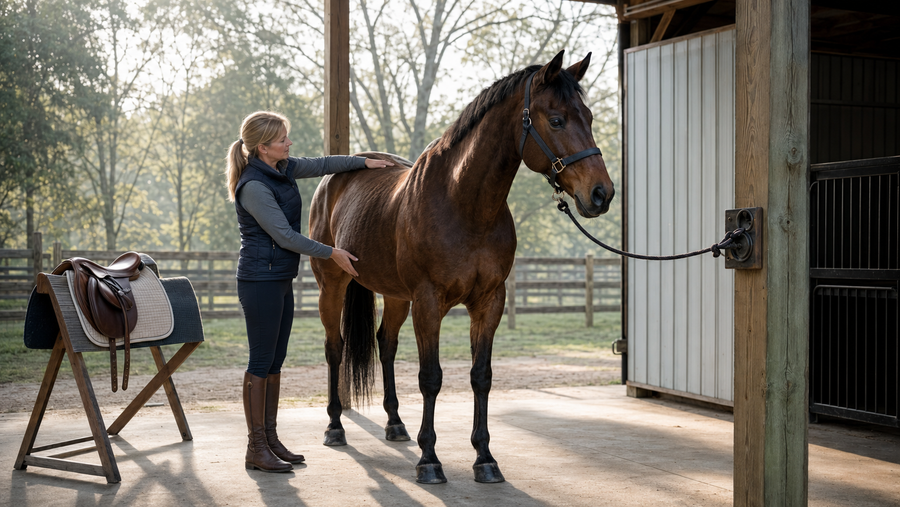
Feel the skin and muscles around the withers, shoulder, back, and girth area. Watch for flinching, heat, swelling, rubs, hair changes, or a response that differs from the other side. The horse saddle soreness guide provides a deeper tack-area checklist. A qualified saddle fitter and veterinarian should assess repeatable pain or pressure concerns.
Do not skip feet, legs, and the neck
A horse protecting a foot or lower limb may shorten the front stride and feel tight higher up. Pick out the feet, check shoes, compare digital pulse, and inspect legs for heat, filling, wounds, or tenderness. Watch the horse turn and back only if safe.
Neck stiffness, dental or bridle concerns, and restricted head position can also change front-end movement. Note whether the horse can comfortably lower, raise, and turn the head during ordinary handling. Do not force stretches or manipulate a painful horse. Match the finding to a veterinarian, farrier, dental professional, or other qualified practitioner.
Review workload, footing, and rider balance
Hill work, deep footing, repeated turns, jumping, hauling, a long rest, or a sudden increase in work can change fatigue and next-day movement. Record what the horse did, not only what the training plan called it. Check whether the tightness appears at the beginning, after a particular exercise, or the next morning.
A rider who tips, grips, blocks with the hand, or carries uneven weight can alter the horse's shoulder freedom. Have a qualified trainer observe without assuming blame. Change one variable at a time when the horse is otherwise normal, and stop if the movement becomes asymmetric or painful.
Use a safe return-to-work sequence
- Confirm the horse walks evenly on a straight line.
- Use a longer, quiet walk with large changes of direction.
- Add a few simple transitions without demanding collection.
- Recheck reach, rhythm, steering, and comfort.
- End early if quality fades or the original pattern returns.
- Check again after cooling and the next morning.
Progress should be judged by normal movement, not by how much work the horse tolerates before objecting. Persistent tightness deserves assessment rather than a harder warm-up.
Where routine recovery support fits
When the horse is moving normally, the skin is appropriate, and the situation fits ordinary post-work care, liniment gel may be applied externally according to label directions. Liniment gel does not correct saddle fit, hoof pain, lameness, neck restriction, or rider imbalance.
If the horse is normal but the care path is unclear, use the Solution Finder. If shoulder tightness is one-sided, painful, sudden, or recurring, involve the appropriate professional before returning to normal work.
Red flags that change the plan
- Clear lameness, one-sided shortening, weakness, stumbling, or toe dragging.
- Heat, swelling, wounds, hoof pain, strong digital pulse, or a loose or shifted shoe.
- Pain over the shoulder, neck, withers, back, or girth area.
- A sudden change after a fall, slip, hard effort, haul, tack change, or shoeing change.
- Dangerous resistance or a horse that cannot safely perform ordinary walk and turn movements.
Frequently asked questions
What does shoulder tightness look like in a horse?
It may appear as shorter reach, guarded turns, choppy steps, reluctance to go forward, altered contact, or one side moving differently. Those signs do not identify the cause.
Can a saddle make a horse tight through the shoulders?
Tack placement or fit can restrict movement, but feet, legs, neck, workload, footing, rider balance, and discomfort can create similar patterns. Use qualified assessment.
Should I stretch a horse with tight shoulders?
Do not force stretches or manipulate a painful horse. Gentle movement may fit a normal horse, but lameness, pain, weakness, or a sudden change requires professional guidance.
Can I ride until the shoulders loosen up?
Do not ride through abnormal or worsening movement. Use a quiet baseline check and stop if the horse is asymmetric, painful, unsafe, or fails to return to normal.
Where does liniment gel fit?
Liniment gel may fit label-directed external post-work care when the horse is moving normally and the skin is appropriate. It does not replace assessment or correct the cause.
Educational note: This article provides general information and does not replace veterinary diagnosis, farrier care, saddle assessment, nutrition advice, or qualified training help.