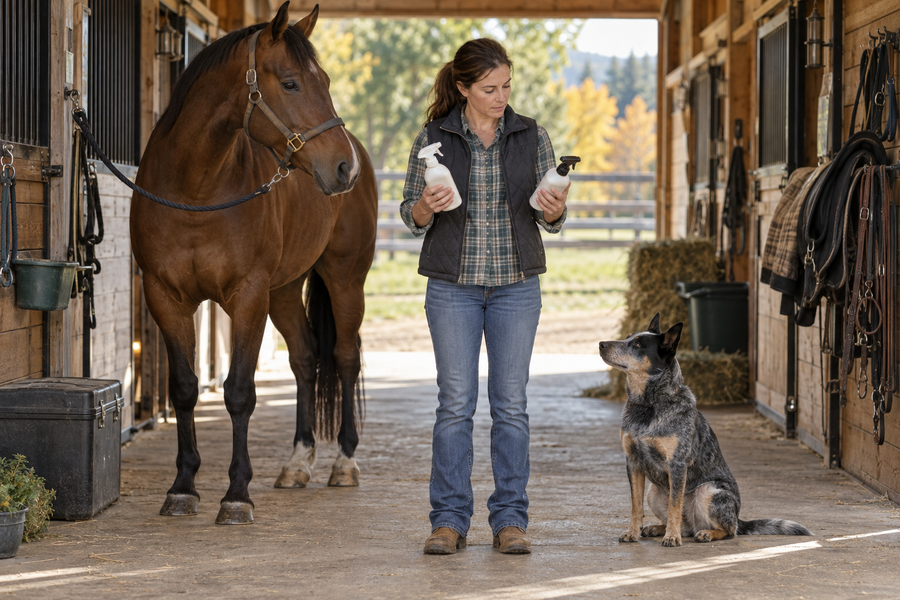
The real difference is texture and control.
Horse gel and liquid liniment are often discussed like they are completely different product categories. In practical barn terms, the difference is usually texture, coverage, and how much control the rider wants during application.
A gel is thicker. It is easier to put in one spot and keep there. A liquid format is thinner. It can move faster over a bigger area, but it may be less precise.
| Format |
Best fit |
Routine watch-out |
| Gel |
Controlled placement by hand |
Do not overapply or use on questionable skin |
| RTU spray |
Fast broader coverage |
Avoid spraying over dirty, broken, or irritated areas |
| Concentrate |
Mix-as-directed barn routines |
Do not guess dilution or use outside label directions |
| No product |
Lameness, heat, swelling, wounds, fever, abnormal behavior |
Stop and get professional guidance |
Clean frame: Gel controls placement. Liquid covers space. The horse decides whether either belongs.
When horse gel makes more sense
Horse gel makes sense when you want controlled placement, a cleaner hand-applied routine, and less product movement. For Draw It Out®, the 16oz liniment gel is the stay-put format for riders who want a simple bottle in the grooming tote, trailer, or tack trunk.
Gel may fit when:
- You want to apply by hand
- You want targeted placement
- You want less runoff than a liquid
- You are checking the horse while applying
- The area is clean, dry, and intact
Gel does not fit when:
- The horse is lame, hot, swollen, sharply painful, feverish, or not acting normal
- The skin is broken, irritated, wet, dirty, or draining
- You are trying to use product instead of rest, cooling, farrier care, veterinary care, or workload adjustment
- You are applying it under wraps without knowing whether that use is appropriate
When liquid liniment formats make more sense
Liquid formats are about coverage and speed. A ready-to-use spray can help when the rider wants fast broader application. Concentrate fits the mix-as-directed lane for barns that need prepared bottles or larger routines.
Spray may fit when:
- You want fast broader coverage
- You do not want to mix anything
- The area is clean and appropriate
- You want a quick road, barn, or post-work format
Concentrate may fit when:
- You want a mix-as-directed routine
- You manage multiple horses
- You use prepared bottles or wash-rack routines
- You follow label directions instead of guessing dilution
Wraps are not automatic with gel or liquid.
The old shortcut is “gel stays put, so use it under wraps.” That is not enough. Wraps require clean legs, correct materials, even pressure, label-supported product use, and scheduled removal and recheck.
Before wrapping, ask:
- Are the legs clean and dry?
- Is the skin intact?
- Is there any heat, swelling, wound, sharp pain, or unexplained change?
- Do I know why I am wrapping?
- Can I remove and recheck on schedule?
- Does the product label support the use?
Wrap rule: If you are guessing, do not wrap. Ask a qualified professional to show you.
When to skip both gel and liquid liniment
Good product use starts with knowing when product is not the answer. Gel and liquid formats should not be used to cover up warning signs.
Skip product and call for help when you see:
- Lameness or sudden movement change
- Heat, swelling, sharp pain, or one-sided fill
- Fever, dullness, weakness, abnormal breathing, or poor appetite
- Open wounds, punctures, drainage, or broken skin
- Hoof pain, digital pulse concern, or sudden foot soreness
- A repeated issue that keeps coming back despite routine changes
Plain answer: If the horse is telling you something is wrong, texture is not the decision. Help is.
How this fits the larger liniment format guide
This page explains the narrow difference between gel and liquid liniment. For a broader breakdown of gel, spray, concentrate, and wash-rack routines, use the complete liniment format guide.
Future consolidation note
This page should stay narrow: gel texture vs liquid liniment texture. The broader format guide should own full gel vs spray vs concentrate decision intent. If Search Console shows overlap, keep the broader format guide and consider folding this page into it.
Horse Gel vs Liniment FAQ
What is the difference between horse gel and horse liniment?
Horse gel is thicker and usually better for controlled placement. Liquid liniment formats are thinner and usually better for broader coverage or mix-as-directed barn routines.
Is horse gel better than liquid liniment?
Not always. Gel is better when control and placement matter. Liquid formats are better when coverage, speed, or mixing routines matter.
When should I choose liniment gel?
Choose liniment gel when you want a controlled, hand-applied routine on clean, dry, intact skin and the horse has no red flags.
When should I choose spray or concentrate?
Choose spray for fast broader application and concentrate for mix-as-directed barn routines or prepared bottles.
Can I use horse gel under wraps?
Only when product directions support the use, the legs are clean and dry, the skin is intact, the wrap is applied correctly, and you can remove and recheck on schedule.
Can I use liquid liniment on dirty or sweaty skin?
No. Clean the area first. Do not trap sweat, dirt, mud, or old product under any topical routine.
When should I skip both gel and liquid liniment?
Skip both when there is lameness, heat, swelling, sharp pain, fever, broken skin, drainage, hoof pain, abnormal behavior, or a problem that keeps returning.
What is the best Draw It Out® starting point?
For controlled placement, start with Draw It Out® 16oz liniment gel. For broader coverage, compare RTU Spray and concentrate in the liniment collection.
Gel controls placement. Liquid covers space.
Pick the format by the job. Check the horse first, keep the skin clean, and skip product when the signs say this is not routine.