Horse Points One Front Foot While Standing: What to Check
A horse that repeatedly points one front foot is giving you useful information. Compare stance, hoof heat, digital pulse, movement, and red flags before you ride or apply...
Free U.S. shipping at $50+
No code needed.
Shipping details
Draw It Out® Horse Health Care News
A hoof abscess can make a horse suddenly and dramatically lame. Treat the pain as real, stop work, check for a penetrating object, and involve your veterinarian or farrier instead of digging into the foot yourself.
Stop riding or forcing movement. Clean the outside of the hoof, compare heat and digital pulse with the other feet, and look for a nail, screw, wire, or other penetrating object. If an object is still in the hoof, leave it in place, keep the horse still, and call your veterinarian immediately.
Yes, when the hoof has been examined, drainage is established, and your veterinarian or farrier agrees that a wrapped topical routine fits. Some riders apply ready-to-use Draw It Out® Liniment Gel over the clean sole, cover it with clean gauze or a baby diaper, and secure the hoof with an appropriate wrap or boot. Others soak clean gauze or a baby diaper with Draw It Out® Liniment Concentrate prepared according to the current label. Keep the product on the sole and wrap material, not packed into an open drainage tract unless the treating professional specifically directs it.
A hoof abscess is a pocket of infection trapped inside the hoof capsule. Pressure builds in a space that cannot expand much, which is why a horse may appear sound one day and barely willing to bear weight the next. Sudden severe lameness can also come from a fracture, deep puncture, laminitis, severe bruise, tendon or ligament injury, or infection involving deeper structures. An abscess is common, but it should not be assumed without an examination.
Not sure what a digital pulse should feel like? Use the Horse Digital Pulse Guide before an emergency so you know your horse’s normal baseline.
Your veterinarian or farrier may use the history, lameness examination, hoof testers, careful cleaning, and conservative paring to locate a tract. The goal is to create enough drainage while preserving healthy sole and hoof wall. Excessive digging can remove protective horn, delay healing, and make the foot more vulnerable.
If the suspected abscess cannot be located, the horse does not improve, the same area repeatedly drains, or a deeper injury is possible, radiographs or other imaging may be needed. Pain relief, a nerve block, tetanus protection, or additional treatment should be decided by the veterinarian for the individual horse.
When pressure tracks upward inside the hoof capsule, an abscess may drain at the coronary band—commonly called the coronet band—instead of opening through the sole. The opening can leave a horizontal groove or interruption in the hoof wall that gradually moves downward as the hoof grows. Do not cut into the opening or assume that drainage means the underlying problem is fully resolved.
A coronet-band groove can take many months to grow from the top of the hoof to the ground and may approach a year in some horses. Growth rate, hoof quality, season, trimming interval, and the amount of wall affected all matter. Have the farrier monitor the defect as it descends so the wall remains supported and new cracking or separation is addressed early.
| Check | Expected direction | Call again when |
|---|---|---|
| Comfort | Marked improvement after effective drainage, though the foot may remain tender. | Severe pain continues, returns, or the horse needs ongoing pain medication beyond the plan. |
| Bandage or boot | Clean, dry, secure, and changed on the schedule provided. | It slips, becomes wet or dirty, causes rubbing, or the horse becomes more uncomfortable. |
| Drainage | Drainage decreases and the opening dries as comfort improves. | Drainage persists, increases, smells worse, or stops and then returns. |
| Whole horse | Normal appetite, attitude, temperature, manure, and willingness to stand. | Fever, dullness, appetite loss, increasing swelling, repeated lying down, or unloading the opposite limb. |
These are supportive aftercare routines for a hoof that has already been assessed and has begun draining. Draw It Out® does not locate, open, drain, or treat a hoof abscess. The veterinarian or farrier leads the diagnosis and drainage plan.
Choose Gel for a ready-to-use, stay-put layer over the clean sole. Choose Concentrate when the plan calls for soaking gauze or a baby diaper with product prepared according to the current label.
Shop 16oz Liniment Gel | Shop 32oz Liniment Concentrate | Read the Hoof-Soaking Safety Guide
Follow the specific soaking, poulticing, packing, bandaging, turnout, shoeing, and return-to-work plan given by your veterinarian or farrier. Repeated soaking is not automatically better; over-soaking can soften and weaken the hoof. Keep the foot clean and dry, and do not put liniment, caustic remedies, or routine hoof products into an open tract unless the treating professional directs it.
Simple abscesses usually become substantially more comfortable after effective drainage. Persistent or recurring lameness deserves reassessment rather than another round of guessing. Ask for veterinary evaluation when:
Imaging can help rule out or identify problems such as a retained foreign body, keratoma, coffin-bone involvement, fracture, severe bruising, laminitis-related damage, white-line separation, or infection of a deeper structure.
Bacteria can enter through small cracks, white-line separation, punctures, bruised sole, misplaced horseshoe nails, or damaged hoof horn. Wet conditions can soften the foot, while repeated wet-to-dry changes can make the hoof capsule brittle and prone to microcracks. Long toes, crushed heels, thin soles, poor hoof balance, and underlying hoof disease can increase risk.
Pressure may have tracked upward through the hoof capsule and found an exit at the coronary, or coronet, band. The opening still needs professional oversight because continued pain, swelling, recurrent drainage, or fever can signal that the problem is not fully resolved.
The drainage opening may leave a groove that moves downward with normal hoof growth. Complete grow-out takes many months and can approach a year, depending on the horse, season, hoof quality, trimming interval, and amount of wall affected.
Call the veterinarian or farrier if severe lameness continues, swelling advances above the hoof, drainage becomes foul or returns, the wall begins separating, or the horse develops fever, dullness, or appetite loss.
Yes. Pressure inside the hoof capsule can cause dramatic pain. Because fractures, punctures, laminitis, and deeper infections can look similar, severe or sudden lameness still warrants professional evaluation.
No. Leave the object in place if it is safe to do so, prevent movement, and call your veterinarian. Its position and angle can help determine which structures may be involved.
A straightforward abscess should become markedly more comfortable after effective drainage. Continued severe pain, recurrent drainage, or worsening swelling calls for reassessment.
No single soaking schedule fits every case. Follow the veterinarian or farrier’s plan. Repeated soaking can over-soften the hoof and is not automatically better than clean, dry bandaging or a poultice.
Repeated abscesses can be associated with hoof balance, thin soles, white-line separation, laminitis-related damage, a retained foreign body, a keratoma, or deeper infection. Recurrence in the same area is a reason to discuss imaging.
Yes, after professional assessment and established drainage, when the veterinarian or farrier agrees that the wrap routine fits. Riders may apply ready-to-use Gel over the clean sole or soak clean gauze or a baby diaper with Concentrate prepared according to the current label. Do not pack either product into the drainage tract unless the treating professional specifically directs it.
Not unless the treating veterinarian or farrier specifically directs it. An open tract needs a defined medical or farrier aftercare plan, not routine product experimentation.
A hoof abscess is common, but sudden severe lameness should never be treated as routine. Stop work, check for a penetrating object, involve your veterinarian or farrier, protect the foot after drainage, and investigate pain or drainage that does not resolve as expected.
Educational only. This article does not replace veterinary diagnosis or treatment. Sudden non-weight-bearing lameness, a penetrating object, fever, worsening swelling, persistent pain, or recurrent drainage requires prompt professional guidance.
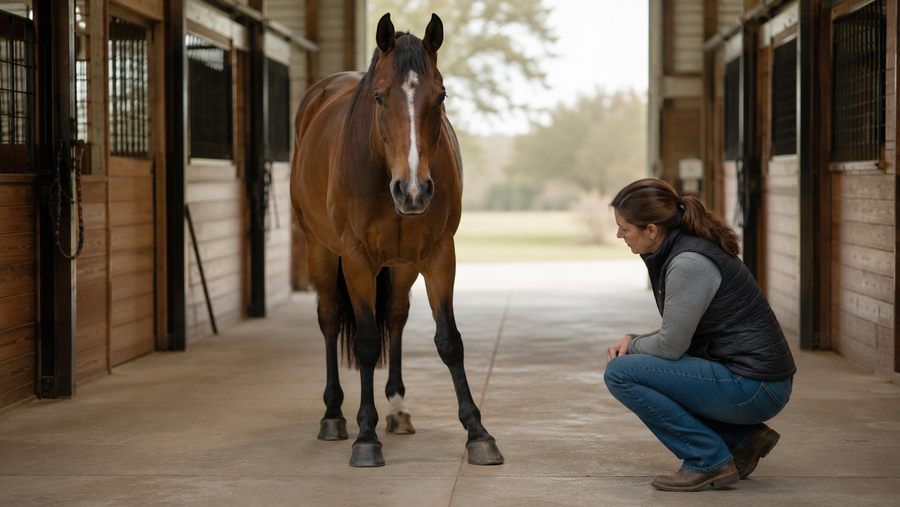
A horse that repeatedly points one front foot is giving you useful information. Compare stance, hoof heat, digital pulse, movement, and red flags before you ride or apply...
A practical horse health guide for sensitivity after a new saddle pad: sweat marks, dry spots, pad edges, saddle balance, and when to call for help.
A practical horse health guide for fetlock puffiness after deep sand: heat, pain, symmetry, boot marks, footing depth, and vet red flags.
!