Horse health checklist

Horse Kicked by Another Horse? What to Check Before You Ride

A horse kick can look like a simple pasture bump at first. Then a few hours later the swelling shows up, the horse gets guarded, or the first steps tell a different story. This checklist is for the real-world moment when your horse was kicked by another horse and you need to decide what to check, when not to ride, and when the veterinarian needs to be involved.

Quick answer: do not ride until the kick passes a basic safety check

If your horse was kicked by another horse, do not tack up until you check attitude, weight-bearing, wounds, swelling, heat, the exact location of the impact, hoof and coronary band involvement, and movement at the walk. A kick near a joint, tendon sheath, bone, eye, chest, belly, or head deserves extra caution. Call your veterinarian right away for non-weight-bearing lameness, heavy bleeding, a deep puncture, rapid swelling, obvious deformity, fever, depression, or pain that worsens instead of settling.

The goal is not to make a diagnosis in the barn aisle. The goal is to catch the signs that say, “This is more than a bruise,” before you turn a small problem into a bigger one by riding through it.

Why a horse kick deserves respect

Horses are built with power. A kick from another horse can land on muscle, bone, tendon, joint capsule, hoof wall, skin, or the soft tissue around the chest and belly. Some kicks leave an obvious mark. Others hide under hair, mud, sweat, winter coat, or a dark leg.

That is why the first mistake is assuming the horse is fine because he is standing. Many horses will stand quietly even when they are sore. Others will walk sound enough in a straight line but show discomfort when asked to turn, pick up a lead, load, back, or carry a rider.

Good horsemanship is not panic. It is disciplined inspection. You look first. You compare. You track. Then you decide whether this is a normal watch-and-wait situation, a call-the-vet-now situation, or a no-ride-but-monitor situation.

The first five minutes after a kick

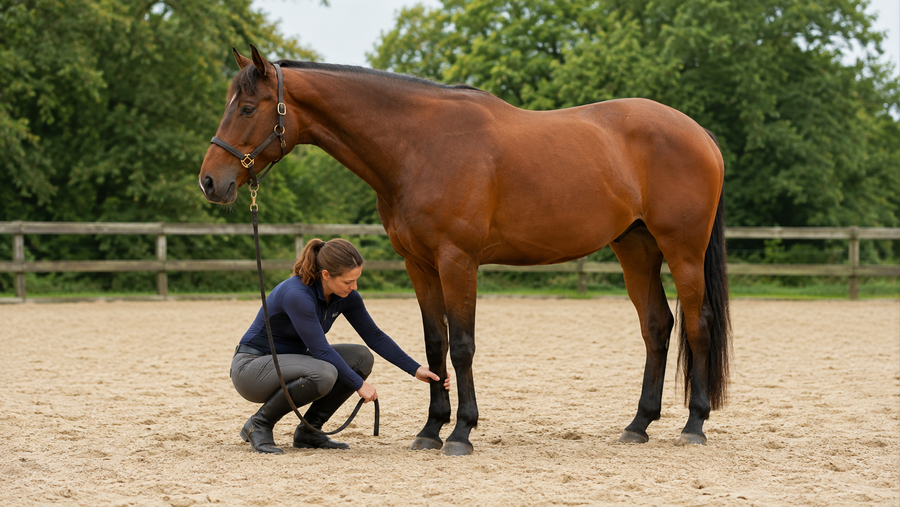
  1. Get the horse safely separated. Do not step between horses to inspect the injury. Move the horse to a calm place where you can see him without more pasture drama.
  2. Watch before touching. Notice whether he is standing square, guarding a leg, shifting weight, sweating, breathing hard, trembling, or acting dull.
  3. Check for bleeding or punctures. Part the hair and look closely. A small puncture can matter a lot if it is near a joint or tendon sheath.
  4. Find the exact impact zone. “He got kicked in the leg” is not enough. Hock, cannon bone, fetlock, knee, stifle, elbow, shoulder, belly, ribs, hip, chest, face, and hoof all mean different risk levels.
  5. Do not rub product into a fresh open wound. Clean observation comes first. If there is broken skin, deep tissue involvement, or uncertain severity, involve your veterinarian before turning the care routine into guesswork.

Barn rule: if you would not want to send a blurry photo and vague message to your vet, slow down and gather better information.

The 9-point post-kick checklist

1. Attitude

Is the horse bright, alert, and interested in what is happening, or is he dull, anxious, tucked up, or unusually quiet?

2. Weight-bearing

Can he stand on all four feet? Is he toe-touching, holding a leg up, resting more than normal, or rocking weight away from one side?

3. Broken skin

Look for hair loss, cuts, punctures, scrapes, drainage, or a small hole hidden under hair. Small openings can still be serious.

4. Swelling

Compare both sides. Is swelling flat, firm, puffy, rapidly growing, hot, painful, or located near a joint?

5. Heat

Use the back of your hand and compare right to left. Local heat with pain or increasing swelling is information, not something to ignore.

6. Joint location

Kicks around the hock, knee, fetlock, pastern, stifle, or elbow need more caution because joint and tendon structures may be close.

7. Hoof and coronary band

Check the hoof wall, shoe, clinches, heel bulbs, sole, frog, and coronary band. A kick to the foot can create a farrier problem as much as a leg problem.

8. Range of motion

If safe, ask for normal handling tasks. Will he pick up the foot? Does he resist flexing, backing, turning, or stepping over?

9. Walk-out pattern

Hand-walk on safe level ground. Look for shortened stride, head bob, toe dragging, hip hike, swinging out, or reluctance to turn.

Ride, wait, or call? A simple decision table

What you see What it may mean Smart next move
No swelling, no heat, no broken skin, normal walk, normal attitude Possible minor bump, but still worth watching Keep the ride easy or skip the ride if the impact was significant. Recheck later that day.
Mild swelling but horse is comfortable and walking normally Soft tissue irritation or developing bruise Do not drill. Monitor size, heat, and pain. Use conservative care and call your vet if it worsens.
Swelling near a joint, tendon path, or sheath Higher-risk location Do not ride. Call your veterinarian for guidance, especially if there is any wound or lameness.
Deep puncture, drainage, heavy bleeding, or wound over a joint Potential infection or deeper structure involvement Call your veterinarian promptly. Do not pack random products into the wound.
Non-weight-bearing lameness, obvious deformity, severe pain, or rapid swelling Emergency-level concern Call the veterinarian immediately. Keep the horse quiet and safe while waiting.
Horse seems okay standing but is short-strided when turning Discomfort may only show under movement demand Do not ride. Track movement and recheck. Call for help if it does not improve or if pain increases.

Where the kick landed matters

Kick to the leg

Leg kicks are common and easy to underestimate. Check the cannon bone, splint area, tendons, fetlock, hock, knee, and pastern. Heat, swelling, pain on pressure, or changes in the first steps are reasons to slow down.

Kick to the hock, knee, fetlock, or pastern

Any kick close to a joint needs more respect. If there is a wound near the joint, visible swelling, lameness, or pain, do not treat it like a simple cosmetic scrape. Call your veterinarian.

Kick to the hoof or coronary band

Look for a sprung shoe, bent shoe, shifted clinches, hoof wall damage, heel bulb trauma, or tenderness when the horse turns. If a shoe is damaged or the horse is footsore, contact your farrier and avoid riding until the foot is evaluated.

Kick to the chest, ribs, hip, or belly

These can be harder to judge from the outside. Watch breathing, posture, appetite, manure, willingness to move, and signs of guarding. A kick to the belly or chest should not be brushed off if the horse acts dull, painful, tucked up, or different from normal.

Kick to the head or eye area

Call your veterinarian. Eye and facial injuries can change quickly, and waiting to see if it looks better tomorrow is not a good plan.

When not to ride

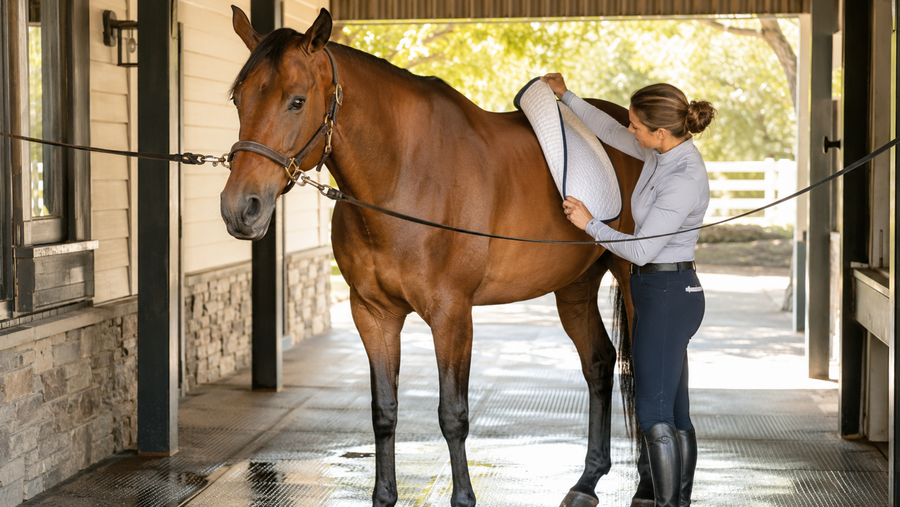
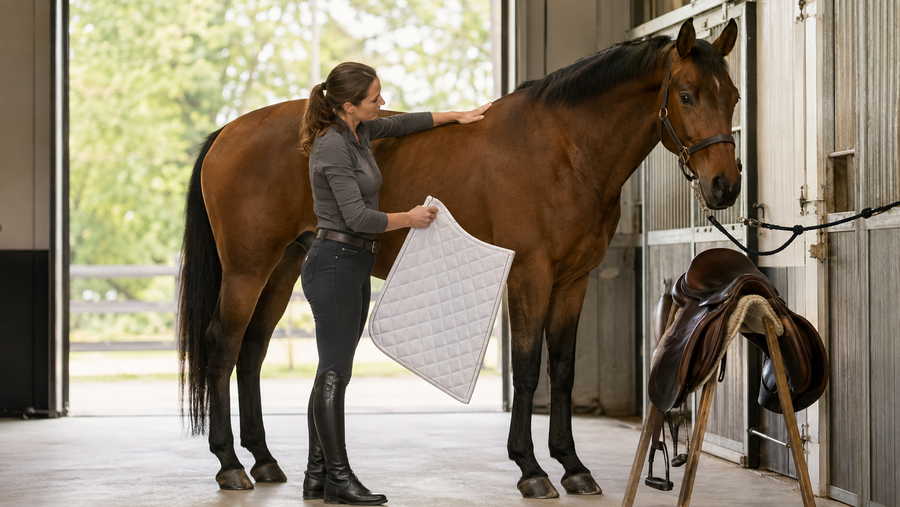
Do not ride after a kick if the horse is lame, guarding a leg, swollen near a joint, bleeding, punctured, unusually dull, reactive to touch, breathing abnormally, unwilling to turn, or not himself. A missed day is cheap compared to making a hidden injury worse.

That is the real rider standard: the horse does not have to prove he is tough enough. The rider has to prove they are disciplined enough to listen.

The 24-hour watch plan

Some swelling is not obvious right away. Recheck the horse later the same day and again the next morning. Use your phone to take photos from the same angle. Write down what you see instead of trusting memory.

  • Time of the kick or when you noticed it
  • Exact location of impact
  • Whether skin is broken
  • Swelling size and feel
  • Heat compared to the opposite side
  • Walk-out quality
  • Appetite, water, manure, and attitude
  • Whether the horse is better, worse, or unchanged at the next check

If the pattern is moving the wrong direction, get help. A horse that looks worse at the second check is telling you something.

What to tell the vet or farrier

A clear message saves time. Use this format:

“My horse was kicked by another horse around [time]. The impact is on [exact location]. There is/is not broken skin. Swelling is [size/shape]. Heat is [same/warmer than opposite side]. He is walking [normal/short/lame/non-weight-bearing]. Photos attached. Should I be seen today?”

If the hoof, shoe, heel bulbs, or coronary band are involved, send the same clear photos to your farrier. Do not make the farrier guess from “he looks a little off.”

Where Draw It Out® fits in the routine

Product does not replace a veterinarian, and it does not belong inside a deep wound. The job of a good barn shelf is to support a smart routine after you have looked first and ruled out the red flags.

  • Draw It Out® 16oz Liniment Gel is the hands-on format riders keep for everyday muscle and leg-care routines when skin is intact and the horse has passed the basic safety check.
  • Draw It Out® 32oz Liniment Concentrate is the flexible barn option when you want a mix-to-use liniment routine for broader coverage after work, travel, or a normal recovery check.
  • Rapid Relief Restorative Cream belongs in the skin-care lane for minor surface irritation and rub-prone areas, not as a substitute for wound care on deep punctures or serious injuries.
  • Silver Hoof EQ Therapy® fits the hoof-care lane when the kick makes you inspect the foot, hoof wall, heel bulbs, or coronary band as part of the larger check.

Use common sense: avoid eyes, mucous membranes, deep punctures, and open wounds unless your veterinarian tells you exactly what to do.

Related Draw It Out® guides

FAQ: Horse kicked by another horse

Can I ride my horse after he got kicked by another horse?

Only if the horse has no lameness, no broken skin, no heat, no swelling near a joint, normal attitude, and normal movement at the walk and turn. If there is any doubt, skip the ride and recheck. Riding through a developing kick injury is not worth it.

What should I check first after a horse kick?

Start with safety, attitude, weight-bearing, bleeding, punctures, swelling, heat, and the exact location of the impact. Then hand-walk on level ground and watch the first steps, turns, and willingness to move.

When does a horse kick need a vet?

Call your veterinarian for non-weight-bearing lameness, heavy bleeding, deep punctures, rapid swelling, swelling near a joint or tendon sheath, eye or head involvement, obvious deformity, fever, depression, worsening pain, or any kick that makes the horse clearly not himself.

What if the kick is on the hock, knee, fetlock, or pastern?

Be more cautious. Kicks near joints and tendon structures can be more serious than they look. If there is swelling, pain, broken skin, heat, or lameness around those areas, do not ride and contact your veterinarian.

Can I use liniment after a horse gets kicked?

Liniment can fit into a normal care routine when the skin is intact and red flags have been ruled out. Do not rub liniment into open wounds, deep punctures, eyes, or uncertain injuries. When in doubt, ask your veterinarian first.

Should I cold hose a kick?

Cold hosing may be useful for some fresh swelling or heat, but the decision depends on location, wound status, pain level, and severity. If the kick is near a joint, involves a puncture, or causes lameness, call your veterinarian before guessing.

Leave a comment

Please note, comments need to be approved before they are published.

Start here

Reading first? Here is the clean path.

This article gives you the background. If you are ready to put the idea into a real horse care routine, these are the next places most riders should go.

Daily recovery

Liniment Gels

Explore the Draw It Out® liniment gel lineup for everyday use, post-work routines, and targeted recovery support.

Shop liniment gels
Find the fit

Solution Finder

Match your horse’s workload, age, routine, and care goals to the Draw It Out® products that make the most sense.

Use the finder
Routine first

Prehabilitation

Learn how riders support soundness, comfort, and consistency before little issues become bigger problems.

Read the guide
Simple rule: read the article for context, use the Solution Finder for direction, then build the routine around the product format your horse will actually use consistently.

Real Barn Proof

What this looks like in real barns.

Real riders. Real horses. Real routines. These clips rotate automatically so the proof stays fresh without weighing the page down with a long feed.

Random rider clips

Why this matters: good horse care should make sense outside the ad. These clips show the kind of everyday use that builds trust one barn at a time.

Further Reading

Keep building the routine.

Horse care works better when the next step is clear. These related reads help connect today’s topic to better daily decisions in the barn.

Horse health news

Start with the principle, then build the habit. The right article should make the next barn decision easier, not more complicated.

Next Step

Keep your barn dialed in.

Simple care guides, practical product paths, and rider-trusted tools built for real horses and real routines.

Good care gets easier when the next step is obvious. Read the guide, match the routine, then choose the format that fits how your barn actually works.

Recovery Routine

Build a complete recovery routine.

Want a smarter way to think through post-ride care, heat, swelling, leg support, and daily recovery decisions? Start with the Performance Recovery Hub.

Better recovery starts with a repeatable routine. The hub gives riders a clearer path from workload to product format to aftercare timing.

Rider Favorites

Always in the kit.

Four core Draw It Out® staples riders keep close for daily recovery routines, wash rack use, targeted support, and quick barn-side care.

Core barn staples
Draw It Out® 16oz Liniment Gel | Daily Horse Care

Stay-Put Gel

16oz Liniment Gel

The everyday liniment gel format riders reach for when they want targeted, no-mess application.

View product
Draw It Out® 32oz Liniment Concentrate | Mix-to-Use Formula

Mix Your Way

32oz Concentrate

A flexible concentrate for riders who want to mix their own routine around workload and barn needs.

View product
Draw It Out® RTU Spray 24oz | Ready-to-Use Liniment Spray

Ready To Use

24oz RTU Spray

A ready-to-use spray format for quick application after work, travel, turnout, or daily care.

View product
CryoSpray® by Draw It Out® 24oz | Cooling Body Brace for Horses

Cooling Brace

CryoSpray

A cooling body brace spray for riders who want a fast, practical option after hard work or hot days.

View product

Format matters. Gel, concentrate, ready-to-use spray, and cooling spray each solve a different barn problem. Pick the one your routine will actually use.

Where To Go Next

Turn the idea into a routine.

If this topic connects to what you are seeing in your horse, these are the three cleanest next steps. Start with direction, then choose the product format that fits the way your barn actually works.

Next steps

Best next move: use the Solution Finder first when the issue is unclear. Go straight to the liniment gel collection when you already know the format you want.