Quick answer: If a horse becomes sensitive under boots, stop and remove the equipment. Compare both legs for heat, swelling, pain, rubs, wounds, hair disruption, trapped dirt, moisture, and movement. Do not put the same setup back on until the cause is understood. Call the veterinarian for lameness, significant swelling, heat, pain, wounds, or sensitivity that persists.
Boots can protect the leg, but protection depends on correct fit, placement, cleanliness, and use. Grit, sweat, hair, uneven tension, heat, and movement can turn useful equipment into a source of pressure or friction.
Stop and Remove the Boot
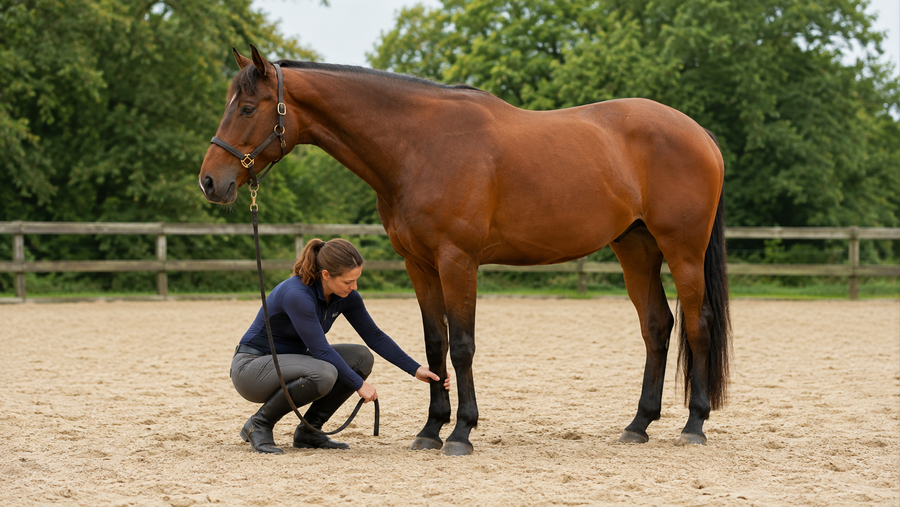
Do not wait until the end of the ride if the horse changes stride, paws, kicks, resists handling, or reacts when the area is touched. Remove the boot in a safe place and inspect both the leg and the equipment.
Read the Leg and Hair
- Heat, swelling, pain, or uneven filling.
- Redness, hair loss, scabs, abrasions, or a pressure line.
- Hair pushed the wrong direction or rolled beneath an edge.
- Trapped sand, shavings, mud, burrs, or other debris.
- Wet skin that has softened beneath neoprene or a liner.
- Different placement or tension compared with the opposite leg.
Matching equipment can sit differently because legs, movement, and application are not perfectly identical.
Inspect the Boot
Check seams, edges, hook-and-loop closures, liners, cracks, embedded grit, and stretched or twisted straps. Confirm that the boot is the correct model and size for the intended leg and activity. Follow the manufacturer’s placement and cleaning directions.
Review Heat and Duration
A boot that fits during a short, cool session may trap more heat and moisture during longer work. Note weather, footing, duration, speed, and how often the boot was removed and checked. More equipment is not automatically more protection.
Decide Whether to Reuse It
Do not reapply over broken or irritated skin unless the veterinarian and product directions support the plan. If sensitivity disappears after removal but returns with the same boot, stop using that setup and reassess fit, design, and the reason the horse is wearing it.
A boot can hide swelling, wounds, and heat that need to be seen.
Where Draw It Out® Fits
Draw It Out® 16oz Liniment Gel may fit label-directed external leg care for an appropriate horse. Do not apply a topical product beneath equipment unless the current product and equipment directions allow it, and do not use it to cover a wound or delay evaluation.
FAQ
Should I keep using boots if they rub?
No. Stop and correct fit, placement, cleanliness, and equipment condition before considering reuse.
Can trapped sweat make skin sensitive?
Moisture, heat, friction, and debris can irritate skin, but persistent or severe sensitivity may need veterinary evaluation.
When should I call the veterinarian?
Call for lameness, significant swelling, heat, pain, wounds, discharge, or sensitivity that remains after the boot is removed.
General horse-care education only. This article does not diagnose or treat a horse and does not replace veterinary advice.