Quick answer: A horse standing camped out may be stretching or resting, but a new or repeated stance can also accompany foot pain, body discomfort, abdominal pain, fatigue, or another problem. Check the whole horse, record the posture, and call the veterinarian for pain, colic signs, lameness, abnormal breathing, fever, distress, or a stance that persists or worsens.
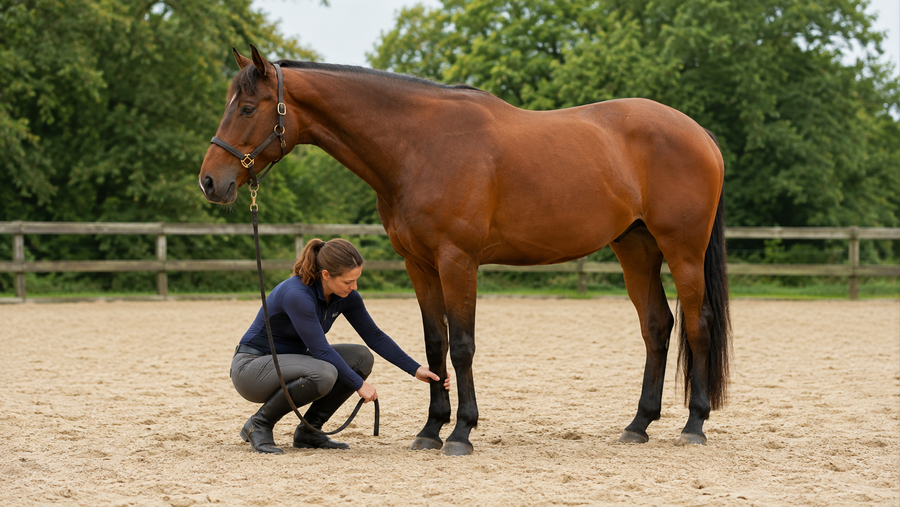
“Camped out” usually describes a horse standing with the front feet farther forward, the hind feet farther back, or both. The phrase describes what the posture looks like. It does not tell you why the horse is standing that way.
Decide Whether the Posture Is New
Some horses briefly stretch after rest, urination, work, or a trailer ride. A familiar momentary stretch is different from a horse that repeatedly parks out, looks guarded, shifts weight, resists moving, or changes its stance along with appetite or behavior.
Take a photo from the side if it is safe, note the time, and watch what happens when the horse walks naturally. Do not force movement when the horse appears painful or unstable.
Check the Whole Horse
- Attitude: bright and responsive, or dull, anxious, and uncomfortable?
- Appetite and manure: normal intake and output, or a possible digestive change?
- Feet: heat, stronger digital pulses, packed material, damaged hoof wall, or a loose shoe?
- Legs: heat, swelling, wounds, or uneven weight bearing?
- Back and belly: guarding, sensitivity, flank watching, pawing, stretching, or repeated attempts to lie down?
- Movement: sound and willing, or short, stiff, weak, and reluctant?
A stance becomes more concerning when it appears with pain, behavior change, abnormal movement, appetite changes, or altered manure.
Feet Can Change the Stance
A horse may place the feet differently to redistribute weight. Check recent trimming or shoeing, footing changes, bruising risk, hoof heat, and digital pulses. Contact the farrier about shoe or hoof concerns, and involve the veterinarian when pain or lameness is present.
Abdominal Signs Need Prompt Attention
Stretching or standing unusually can appear with abdominal discomfort. Call the veterinarian for pawing, rolling, flank watching, sweating without work, reduced manure, poor appetite, repeated lying down, or a horse that cannot get comfortable. Do not wait for every classic colic sign before calling.
What to Do While You Observe
- Move the horse to a safe, quiet area if appropriate.
- Record the stance, behavior, appetite, water, manure, and recent work.
- Check feet, legs, wounds, and movement only as safely tolerated.
- Take temperature and other observations if you know how and your veterinarian requests them.
- Avoid giving medication or applying a product to hide signs before professional guidance.
Where Draw It Out® Fits
A Draw It Out® equine product may fit label-directed routine care after the horse has been assessed and the use is appropriate. It does not diagnose the reason for a camped-out stance or replace veterinary and farrier care.
FAQ
Is standing camped out always serious?
No. Some horses briefly stretch or rest this way. A new, repeated, painful, or persistent posture deserves attention.
Can hoof pain make a horse stand camped out?
Foot discomfort can alter weight distribution and stance, but posture alone cannot identify the cause.
When should I call the veterinarian?
Call for colic signs, pain, lameness, weakness, fever, abnormal breathing, distress, or any stance that is persistent or worsening.
General horse-care education only. This article does not diagnose or treat a horse and does not replace veterinary advice.