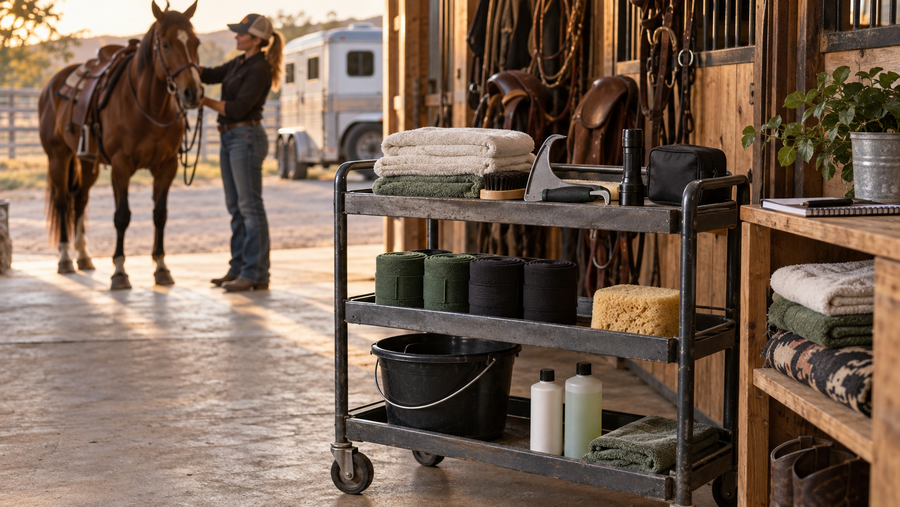
Horse trailering safety guide
A horse does not simply stand in a trailer. Every turn, stop, lane change, and rough patch asks for another balance correction. Safer hauling starts before the door closes and continues after the horse steps off.
Quick answer: Use a three-stage trailering plan. Before loading, confirm the horse, rig, route, weather, paperwork, feed, water, and emergency contacts are ready. During travel, drive smoothly, protect airflow, stop only in safe locations, and check the horse and equipment. After arrival, check breathing, attitude, hydration, legs, hooves, movement, and temperature when indicated before asking for work.
Jump to the colic-risk travel checklist
The before, during, and after system
Make the go or no-go decision. Inspect the horse, truck, trailer, documents, route, weather, supplies, and loading plan.
Reduce avoidable balance demands. Drive smoothly, maintain airflow, use safe stops, and watch for changes in the horse or rig.
Do not confuse unloading with recovery. Recheck the horse, offer water, observe movement, and allow time to settle.
Start with a go or no-go decision
Do not let a paid entry, hotel reservation, sale appointment, or tight schedule make the safety decision for you. A horse that is feverish, colicky, breathing abnormally, significantly lame, injured, or noticeably unlike itself needs veterinary guidance before loading. Severe weather, unsafe footing, a questionable trailer floor, brake problems, or an overloaded tow setup can also turn a routine trip into a no-go.
The rule: if the concern could become harder to manage once the truck is moving, settle it before departure.
Reducing Colic Risk While Hauling
Quick answer: Protect water intake, keep feeding changes gradual, and monitor appetite, manure, and behavior. These habits can reduce risk, but no travel routine guarantees a horse will not colic.
The trip changes the address. Keep as much of the horse's daily routine familiar as you can.
Before departure
- Pack the horse's usual forage and feed. Avoid sudden diet changes.
- Plan water access and safe drinking stops. Bring familiar water when practical.
- Discuss previous colic episodes and the travel plan with your veterinarian.
During the trip
- Offer clean water at safe stops and record actual drinking.
- Watch for reduced manure, poor appetite, or abdominal discomfort.
- Keep a simple trip log: time, water offered, water consumed, manure, and anything unusual. Share it with whoever takes over care.
After unloading
- Provide clean water and compare appetite, manure, and behavior with normal.
- Continue monitoring after the initial arrival check.
Suspect colic? Call your veterinarian immediately.
Repeated flank-watching, belly-kicking, rolling, little or no manure, and poor appetite can signal colic. Stop the normal travel or show routine and seek veterinary instructions. Do not wait to reach the destination.
Report your location, when signs began, and recent drinking and manure. Ask for instructions before giving medication. Never walk a horse to exhaustion.
For the arrival routine, use our post-haul recovery checklist.
Before loading: build the trip on solid ground
1. Know the horse's normal
Start with appetite, water intake, manure, attitude, temperature, breathing, and movement. Consider recent illness, medications, workload, respiratory history, past hauling behavior, and how the horse recovered from its last trip. A baseline makes it easier to recognize a real change at a fuel stop or after arrival.
2. Inspect more than what you can see from the aisle
A quick walk-around is useful, but it is not a substitute for maintenance. The American Association of Equine Practitioners notes that regular attention to tires, axles, wheels, floors, and the hitch matters for transport safety. Lift mats and inspect the floor. Check tire condition and pressure, including the spare. Test brakes, the breakaway system, lights, doors, latches, dividers, windows, vents, and the camera if you use one.
- Floor and ramp are solid, dry, and free of damage
- Tires are sound and inflated to the trailer manufacturer's specification
- Spare tire, jack, tools, and roadside plan are present
- Hitch, coupler, safety chains, breakaway cable, and electrical connection are secure
- Brakes, running lights, turn signals, and brake lights work
- Doors, latches, dividers, butt bars, and chest bars lock correctly
- Vents and screened windows provide airflow without unsafe openings
- Loose gear, buckets, tools, and feed are secured
- The tow vehicle and every hitch component are rated for the loaded combination
3. Practice loading when nothing is at stake
Travel day is the wrong time to introduce the trailer. Practice approaching, loading, standing, backing or turning, and unloading before the trip. Keep handlers out of pinch points and avoid trapping a person inside a narrow space with a worried horse. If loading is unsafe, get qualified help before an emergency forces the lesson.
4. Check the route, weather, weight, and rules
Review construction, grades, fuel stops, forecast changes, safe pull-off locations, and the destination's arrival instructions. Confirm the truck, trailer, hitch, and tires are rated for the actual load. State and federal requirements can change with weight, commercial use, route, and location, so verify the rules that apply to that specific trip.
Interstate travel commonly involves a current Certificate of Veterinary Inspection and proof of a negative equine infectious anemia test, but destination and event requirements vary. Confirm the current rules early enough to fix a paperwork problem without rushing.
5. Keep water, forage, and routines familiar
Bring familiar forage, feed, and water when practical. Track what is offered and what the horse actually consumes. A bucket that came back half full does not tell you whether the horse drank half or spilled half. Electrolytes can fit an established veterinary or nutrition plan, but they do not replace plain water or correct dehydration by themselves.
If your horse tends to drink less away from home, use the show and travel hydration guide to build the routine before the next trip.
6. Pack for the delay, not only the destination
A travel kit should still work if the primary driver's phone dies, the trailer is held on the shoulder, or another person must care for the horse. Keep paper and secure digital copies of identification, health documents, veterinarian and farrier contacts, destination details, insurance information when applicable, and emergency permissions.
| Horse supplies | Rig and roadside | Information |
|---|---|---|
| Spare halter and lead, familiar water and forage, thermometer, gloves, gauze, wraps, scissors, flashlight, first-aid supplies chosen with your veterinarian | Spare tire, jack, tire gauge, wheel chocks, reflective gear, basic tools, batteries, fire extinguisher, roadside assistance information | Health documents, horse identification, veterinarian and farrier numbers, destination contact, route, backup route, emergency authorization |
During the haul: drive like the horse is standing in the bed of the truck
The easiest way to understand trailer fatigue is to imagine standing with your knees unlocked while someone else controls every start, stop, and turn. Smooth driving is horse care. Leave more following distance, accelerate gradually, brake early, take turns slowly, and avoid abrupt lane changes.
Protect airflow without creating another hazard
Ventilation matters in heat and cold. Use vents and screened windows to move air without exposing the horse to road debris or creating an opening large enough for a head or limb. Dusty forage, dirty bedding, closed vents, smoke, and a parked trailer can quickly change the environment.
In hot weather, travel during the cooler part of the day when possible, maintain ventilation, offer water regularly, and never park a loaded trailer in direct sun while the interior is heating.
Use stops to reassess, not to create a new risk
There is no single stop schedule that fits every horse, route, season, and trip length. Build the plan with your veterinarian for long hauls or horses with added risk. At a safe stop, inspect the truck and trailer, check airflow and temperature, look at the horse, and offer water according to the plan. Never unload beside an active road or in an unsecured area just to let the horse stretch.
A camera is useful, but it is not a diagnosis
A trailer camera can show scrambling, unusual posture, equipment problems, or a horse that suddenly looks distressed. If something is wrong, pull over only where the entire rig can be secured. Video does not replace hands-on checks, and a horse standing still on camera is not proof that everything is normal.
After arrival: the first ten minutes matter
Unload calmly onto safe footing. Let the horse stand, look around, and breathe. Offer water. Then compare what you see with the baseline from before departure.
- Attitude, alertness, and willingness to settle
- Breathing effort, repeated coughing, nasal discharge, and unusual sweat
- Water interest, appetite, manure, and signs of abdominal discomfort
- Temperature when illness, heat stress, or abnormal behavior is a concern
- Heat, filling, wounds, rubs, or tenderness in all four legs
- Hooves, shoes, pads, and digital pulse when appropriate to the horse
- Back, shoulders, neck, poll, and hindquarters for new sensitivity
- A short walk on safe footing to observe evenness and coordination
Do not assume a horse is ready to perform because it walked off the trailer. Allow the horse to settle, drink, and return toward its normal pattern before adding work. Use the post-haul recovery checklist for a deeper arrival review.
Where Draw It Out® fits
Support the routine. Do not cover up the warning signs.
Observe the horse before applying any topical. When the horse is acting normally and the skin is clean and intact, Draw It Out® 16oz Liniment Gel can fit a familiar pre-haul or post-arrival routine. The ready-to-use gel stays where you place it and is designed for proper use under pads, boots, and wraps when used according to the current label and normal equipment practices.
It is odorless and colorless and made without menthol, camphor, capsaicin, alcohol, or witch hazel. That means no theatrical burn or strong smell competing with the hands-on check. New heat, pain, one-sided swelling, a wound, fever, or lameness belongs with the veterinarian, not under another layer of product or equipment.
See the 16oz Liniment GelDo not leave biosecurity at the showgrounds
Travel exposes horses, people, buckets, trailers, and equipment to new environments. Avoid sharing water buckets, hay bags, grooming tools, and hoses. Limit nose-to-nose contact when possible. Clean and disinfect the trailer and travel equipment appropriately after the trip, and follow the veterinarian's or facility's re-entry and monitoring plan.
For the cleanup side of the system, use the stall and trailer cleaning guide.
Call the veterinarian promptly when travel does not look normal
Seek veterinary guidance for abnormal or labored breathing, repeated coughing, fever, weakness, collapse, colic signs, injury, significant lameness, marked or rapidly increasing swelling, refusal to drink, abnormal manure, severe distress, signs of heat stress, or recovery that does not follow the horse's normal pattern.
If the horse is in immediate danger, contact emergency services and an equine veterinarian. Do not enter a damaged trailer or attempt a roadside unload unless trained responders have secured the scene.
Horse trailering questions riders ask
Can I prevent colic while traveling?
You can reduce some risks through consistent care and early attention to changes, but not every case is preventable. Use the before, during, and after checklist to prepare.
What should I record if my horse seems colicky on a trip?
Record your location, when the change began, water intake, manure, and behavior. Call your veterinarian immediately and follow their instructions about the next safe step.
How often should I stop when trailering a horse?
There is no universal schedule for every horse and trip. Trip length, heat, humidity, route, ventilation, age, health history, and water intake all matter. Build a plan with your veterinarian for long hauls or higher-risk horses, and use only locations where the entire rig can be secured safely.
Should a horse have hay in the trailer?
Forage may fit the travel plan, but placement, dust, respiratory history, trip length, and the horse's normal feeding routine matter. Use a safe setup and avoid making a sudden feed change on travel day. Ask your veterinarian when the horse has respiratory, dental, choke, or metabolic concerns.
Should horses wear shipping boots or leg wraps?
That depends on the individual horse, equipment fit, handler skill, trailer design, weather, and trip. Do not introduce unfamiliar gear on departure morning. Poorly fitted or slipping equipment can create a new problem. If you wrap, use proper padding and technique, and recheck the fit.
Can I apply liniment before trailering?
Yes, when it is already part of the horse's routine, the skin is clean and intact, and the current product label supports the intended use. Observe the horse first. Do not use a topical to delay evaluation of new heat, pain, swelling, wounds, fever, or lameness.
What should I do if my horse will not drink away from home?
Bring familiar water when practical, offer plain clean water, keep the bucket familiar, and track actual intake. Do not rely on flavored water or electrolytes without also offering plain water. Contact the veterinarian when reduced drinking is paired with abnormal behavior, manure changes, poor appetite, fever, colic signs, or dehydration concerns.
Can I ride immediately after a trailer trip?
First let the horse settle and check breathing, attitude, hydration, legs, hooves, back, and movement. The right recovery time depends on the horse, trip length, weather, and intended work. If anything is abnormal, stop and seek professional guidance rather than riding through it.
What is stocking up after trailering?
Riders often use “stocking up” to describe cool, soft lower-leg filling after prolonged standing. Because travel-related swelling can also accompany injury, infection, or another concern, compare both legs and check for heat, pain, wounds, fever, and lameness. New, one-sided, hot, painful, or worsening swelling needs veterinary guidance.
Sources and further reading
- University of Minnesota Extension: Colic signs, risk reduction, and veterinary care
- AAEP: Colic risk and prevention guidance
- American Association of Equine Practitioners: Equine trailer crash and transport safety considerations
- University of Minnesota Extension: Caring for horses during hot weather
- University of Minnesota Extension: Horse biosecurity during travel season
- Penn State Extension: Certificates of Veterinary Inspection
- University of Minnesota Extension: Weight, use, and trailering-law considerations
Educational information only. Travel laws, destination requirements, and veterinary recommendations can change. Confirm the rules and professional guidance that apply to your horse and route.