

Hunting Dog Paw Check After the Hunt: Pads, Toes and Nails
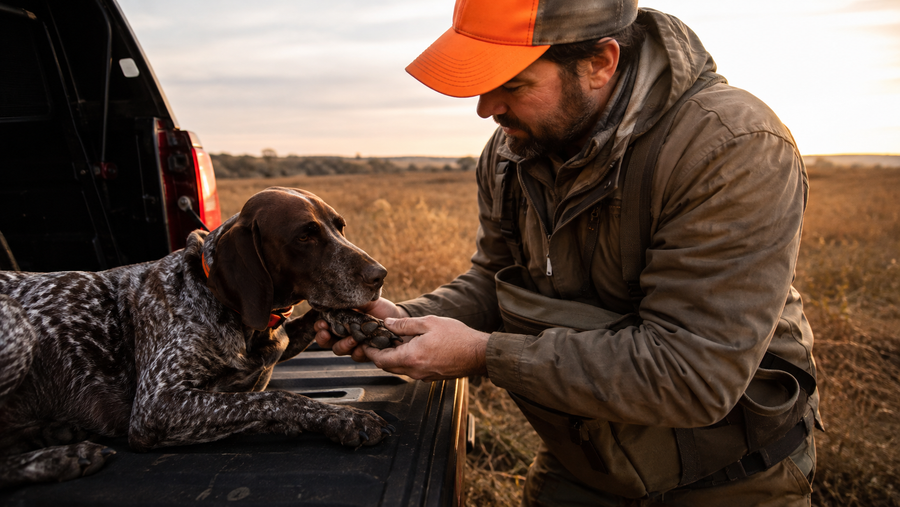
Use this three-minute tailgate paw check after every hunt to catch worn pads, burrs, torn nails, swelling, and gait changes before the next field.
Free U.S. shipping at $50+
Shipping details
Quick answer. After a walk on salted pavement, rinse your dog’s paws with lukewarm water, including between the toes and around the pads. Dry each paw with a towel and look for grit, redness, or cracks. If you think your dog ate ice melt directly or licked up ice melt, call your vet or a pet poison service promptly and have the package handy if you can.
Put a shallow basin or a squeeze bottle of plain water and a towel beside the door. Use a mat with traction if the floor gets slick. If your dog dislikes a basin, gently pour a little water over each paw while they stand comfortably, then towel it dry.
A damp cloth can remove light residue if you reach between the toes. When the paws are gritty, wet with salty slush, or have crystals stuck between the pads, use a rinse so you can flush the residue away. Then dry them.
Keep the same cleanup routine. Ice melt formulations vary, and residue can still get on paws and into a dog’s mouth during grooming. On heavily treated routes, try a less-treated path or use properly fitted dog boots. Check the paws when the boots come off, especially if slush got inside.
Call if your dog keeps limping or licking after the rinse, or if you see broken skin, swelling, or obvious pain. For known or suspected ingestion of ice melt, call your veterinarian or ASPCA Poison Control promptly for advice based on the product and exposure.
For the rest of the door-side routine, see what to check on your dog after a walk. For more on de-icer exposure, see ASPCA guidance on dogs and de-icers and VCA’s winter paw care guide.
Use this three-minute tailgate paw check after every hunt to catch worn pads, burrs, torn nails, swelling, and gait changes before the next field.
A paw-to-back check for hunting dogs after the first hard weekend, including next-morning decisions, conditioning fixes, veterinary red flags, and dog-specific care.
A paw-to-shoulder check for dogs that look sore after hiking, plus next-trail decisions, veterinary red flags, and a dog-specific after-activity care route.
!