Quick Answer
After deep footing, check breathing, sweat, stride length, feet, shoes, lower legs, shoulders, back, hocks, stifles, attitude, and movement after rest and the next morning. Reduce the next workload when recovery is slower than normal. Call the veterinarian for lameness, pain, heat, swelling, tendon sensitivity, weakness, or worsening movement.
Soft ground is not automatically easy ground. The horse must push out of the surface and stabilize on every stride. Depth, looseness, speed, circles, jumps, fatigue, and uneven spots all change the cost.
Notice the Effort During Work
Watch breathing, rhythm, coordination, and whether the horse begins taking shorter steps or losing balance. A familiar exercise may become harder as the footing breaks down through the session.
Measure more than minutes and repetitions.
Check Immediately After
- Cool-out time and breathing compared with normal.
- All four feet for packed material, stones, loose shoes, heat, and digital pulses.
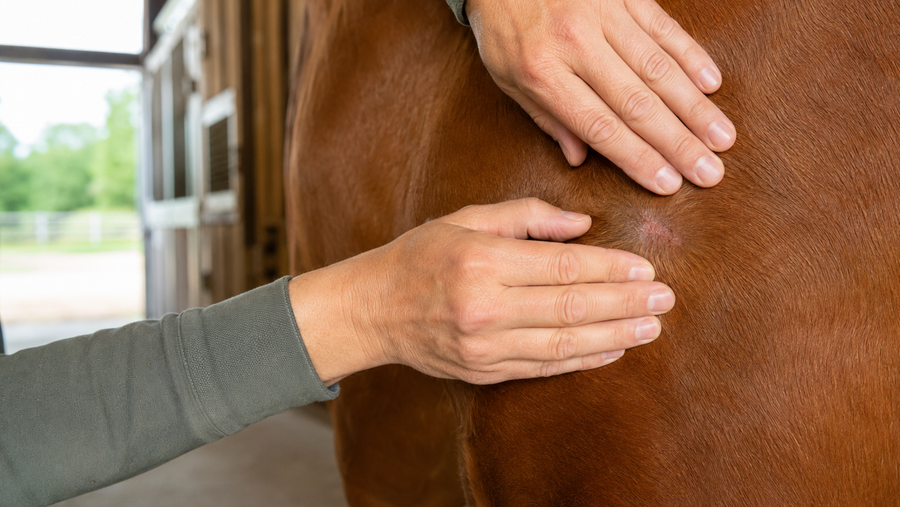
- Legs for heat, filling, wounds, and sensitivity.
- Back, shoulders, and hindquarters for guarding or altered posture.
- Attitude, appetite, water, and overall recovery.
Recheck After Rest
Some changes appear after the horse stands. Watch the first steps, straight lines, and gentle turns only if safe. Compare the horse with its normal, not another horse. Do not lunge or drill to decide whether the horse will “work out of it.”
Plan the Next Day
When recovery took longer or movement is not fully normal, make the next day easier or stop work. Record surface depth, duration, speed, turns, and any finding. A recurring pattern after deep footing deserves professional evaluation.
Where Draw It Out® Fits
An external Draw It Out® liniment may fit a familiar, label-directed post-work grooming routine for an otherwise appropriate horse. It does not diagnose short movement, cool an overheated horse, or replace rest, veterinary care, farrier care, and footing changes.
For a horse that is already moving short, use Horse Short-Strided After Deep Footing?
FAQ
Can deep footing make horses sore?
It can increase effort and fatigue, but pain or altered movement should be assessed rather than assumed to be routine.
Should I give the horse the next day off?
Base the decision on workload and recovery. Easy movement, rest, or professional guidance may be appropriate depending on the horse.
When should I call the veterinarian?
Call for lameness, pain, heat, swelling, tendon sensitivity, weakness, or movement that persists or worsens.
General riding education only. This article does not diagnose or treat a horse and does not replace veterinary advice.