


Jul 26, 2026
Hydrocortisone for Horses: When It Helps and When It Does Not
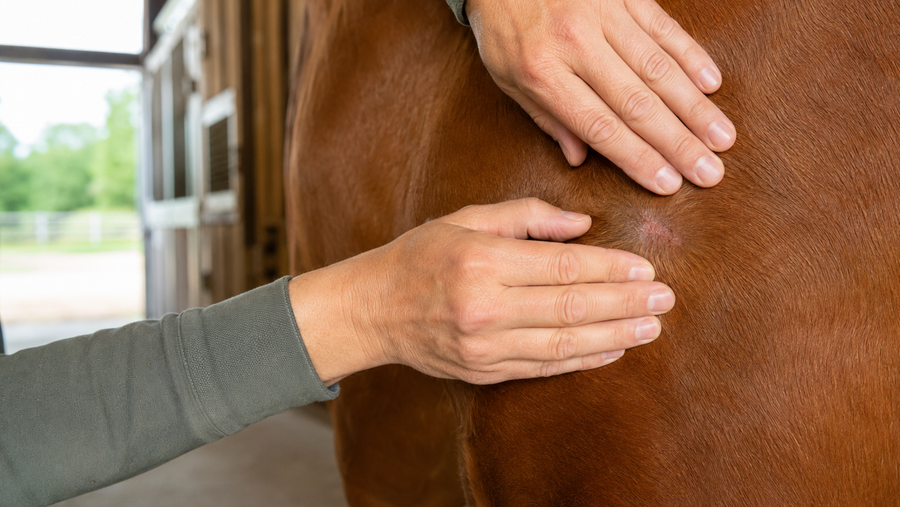
Can you use hydrocortisone on a horse? Learn what it does, when itching needs a veterinarian, and how to route intact skin versus broken ...
Free U.S. shipping at $50+
No code needed.
Shipping details
A horse that unloads tight is not automatically ruined for the day. But that horse is telling you the haul had a cost, and real riders listen before they throw a saddle on.
If a horse unloads tight, walk first, check legs and feet, watch the back and neck, offer water, give time to settle, and delay hard work until the horse shows you normal movement. Call your vet for lameness, swelling, wounds, abnormal breathing, or anything that worsens.
Horses brace in trailers. They shift weight, balance through turns, stand tied, sweat, paw, or ride tense even when they load quietly. The first few minutes after unloading can reveal more than the whole ride over.
Walk the horse quietly. Let the horse look around. Keep the first ask small. If the horse loosens and settles, make a fair plan. If the horse stays guarded, do not pretend the haul did not matter.
For travel and recovery planning, use the Horse Health Library. If external post-haul support is appropriate, review the active horse liniment collection.
Not until you have watched the horse move, checked legs and feet, and given the horse time to settle.
When it is uneven, painful, worsening, paired with swelling or wounds, or not improving with quiet movement.
Walk first. Watch honestly. Then decide what the day deserves.
Conditioning works best when the horse gets time to adapt, not just more work to survive.
Can you use hydrocortisone on a horse? Learn what it does, when itching needs a veterinarian, and how to route intact skin versus broken ...

A Real Rider Resource guide for handling rides that start wrong by simplifying the ask and protecting the horse’s try.

A practical rider checklist for a horse that is not acting normal, covering baseline behavior, appetite, water, manure, movement, legs, f...
Want a smarter way to handle soreness, heat, swelling, and post-ride leg care? Visit our Performance Recovery Hub for clear routines and product guidance.
Visit the Recovery Hub!