


Topical Gel for Feet and Ankles: A Clean Routine After Long Days
A practical feet-and-ankles routine for boots, hard floors, standing, riding, travel, skin checks, safe topical use, and medical red flags.
Free U.S. shipping at $50+
No code needed.
Shipping details
ReJüv™ Recovery Journal
By Jon Conklin · September 16, 2026 · 6-minute read

The first cold morning has a way of making the little jobs feel bigger. Closing your fingers around a coffee cup. Fastening a halter. Getting down the porch steps before the horses start asking where breakfast is.
If you live with arthritis and notice more stiffness as the seasons change, you deserve useful guidance. You also deserve an honest answer about what the weather can, and cannot, explain.
Does cold weather make arthritis worse? Some people report more joint discomfort during changing weather, but research has not established a simple rule that colder temperatures cause arthritis flares. Your symptoms matter even when the reason is uncertain. A sensible winter plan starts with manageable movement, practical changes to daily tasks, and the care plan you have worked out with your clinician.
The relationship is more complicated than a falling thermometer. In the 2019 Cloudy with a Chance of Pain study, researchers followed daily reports from 2,658 people with chronic pain. They found modest associations between pain and humidity, air pressure, and wind speed. The study did not establish that cold weather causes arthritis inflammation or that every person responds the same way. Read the University of Manchester research summary.
That leaves room for two truths: your hands may feel worse on a particular morning, and the weather alone may not explain why. Arthritis also includes different conditions, so another person's experience may not match yours.
Before blaming every difficult day on the forecast, look at the whole day. Did you spend longer in the truck? Tackle a heavier load? Skip your usual walk? Change your routine because it was dark and cold? A short record of symptoms, activity, sleep, and weather gives you something concrete to discuss at your next appointment.
Build a little breathing room between getting out of bed and the hardest chore. Start with comfortable movement suited to your abilities, such as a short walk indoors, instead of going straight to lifting or prolonged gripping.
The CDC recommends starting physical activity slowly and choosing activities that cause little or no pain. Short sessions count. Ask your clinician or physical therapist how to adapt movement to your joints, especially during a flare. See the CDC's guidance on physical activity and arthritis.
Put your jacket, suitable gloves, dry socks, and work boots where you can reach them without a morning scavenger hunt. Keep a spare pair of gloves handy for wet chores. Choose a fit that lets you handle gates, tools, and lead ropes safely.
This is a comfort and preparation step. It does not promise to prevent an arthritis flare. It simply removes one avoidable frustration from a morning that may already take more effort.
Look for the part of a task you can change before you ask yourself to push harder. A cart may replace a long carry. Supplies stored within easy reach can save repeated bending. Help with a heavy or awkward load can be a better choice than proving you can still do it alone.
Choose safe footing for every trip, and leave frozen, slippery routes out of the plan. If recurring pain is making ordinary jobs difficult, a physical or occupational therapist can help you find adaptations that fit your situation.
When outdoor plans become less appealing, have an indoor option ready. Comfortable walking, cycling, or water exercise may suit some people with arthritis. Your starting point should match your health and abilities, and you can build gradually with professional guidance.
A manageable routine is easier to repeat than an ambitious plan that disappears after the first cold week. Regular activity can help arthritis pain and function; severe symptoms are a reason to contact your clinician, not push through. CDC: choosing joint-friendly activity.
Continue prescribed medicines as directed. If your usual plan is no longer working, contact your healthcare team before changing doses or adding remedies. The NHS recommends discussing new over-the-counter medicines or supplements with your healthcare team because they can interact with existing treatment. Read the NHS guide to living with osteoarthritis.
The first cool week is a useful time to check that you have your clinician's contact details, know your agreed flare plan, and have help available for the chores you may need to hand off.
Seek urgent medical advice for sudden severe pain and swelling in a joint, a red or hot joint, or joint pain accompanied by fever or feeling unwell. Arrange a medical assessment for unexplained pain, swelling, or stiffness that persists, or symptoms that change from your usual pattern. The NHS arthritis guide explains symptoms that need medical attention.
You do not have to earn help by waiting until the work becomes impossible.
Horse people are good at noticing what an animal needs. We adjust the feed, check the water, and find the missing blanket. It is worth making the same deliberate space for ourselves.
A simple topical option for your personal-care routine
For people who prefer a low-odor, colorless gel without menthol or capsaicin, ReJüv™ is the human-labeled topical wellness gel in the Draw It Out® family. Use it according to the current package directions on clean, dry, intact skin, and stop if irritation occurs.
ReJüv™ is not an arthritis treatment or a replacement for your medical care plan.
Explore ReJüv™For a broader barn-day checklist, see our cold-weather rider and horse recovery routine. If you are comparing topical products specifically for arthritis, start with our guide to reading an arthritis gel label.
No forecast can tell you that with certainty. People report different experiences, and weather research does not give a universal rule for predicting arthritis flares.
Follow your clinician's advice for your condition and any active flare. In general, manageable activity is part of arthritis care, but new, severe, or unusual symptoms need assessment.
Have a practical plan you can repeat: suitable clothing, manageable activity, help with demanding jobs, and clear guidance from your healthcare team about worsening symptoms.
You prepare the barn for colder weather. Give yourself some of that same care.
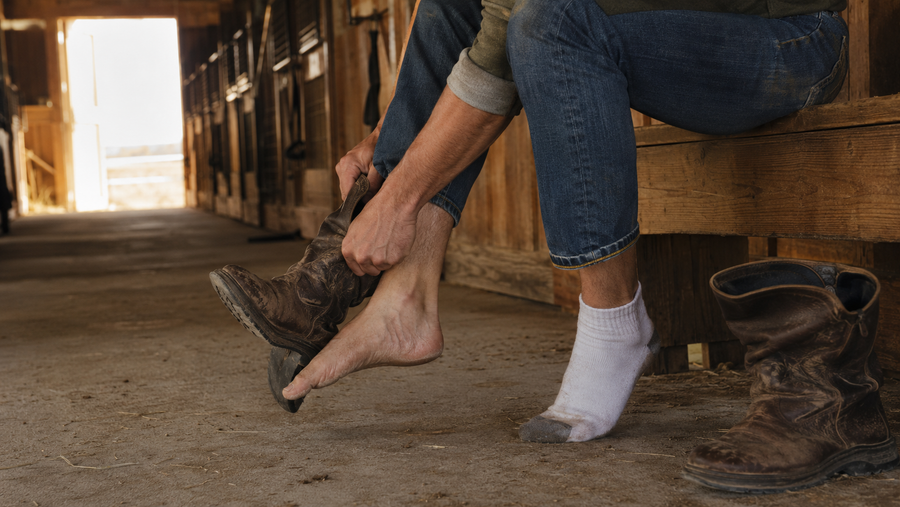
Written by Jon Conklin. General education, not individualized medical advice. Follow your clinician's guidance and the current product label. Feature image is an AI-generated editorial photograph.
A practical feet-and-ankles routine for boots, hard floors, standing, riding, travel, skin checks, safe topical use, and medical red flags.
Calf tightness after riding is often a workload or position clue. Review stirrup length, gripping, boots, hydration, recovery, and medical red flags first.
A practical rider overnight packing guide with a human-care checklist, current ReJüv™ package roles, travel boundaries, and label-first use guidance.
!

