ReJüv™ Recovery Journal
Horse Trainer Recovery Routine After Riding Multiple Horses
Riding one horse can be a workout. Riding several horses, changing tack, mounting repeatedly, teaching from the ground, and finishing barn jobs creates a different kind of cumulative load. The useful answer is not a heroic end-of-day stretch. It is a short reset between horses that keeps the trainer honest about posture, grip, hydration, and fatigue.
Why is riding several horses different from one long ride?
The trainer does not simply repeat the same effort. Each horse changes the stirrup length, saddle, width, motion, level of education, and amount of correction required. The rider also mounts and dismounts repeatedly, carries tack, closes gates, holds young or distracted horses, and moves between riding and ground work. Fatigue can shift the trainer from a balanced position into a shorter rein, tighter hip, collapsed shoulder, or heavier seat without a dramatic warning.
A 2024 systematic review of lower-back pain in equestrian athletes found that workload and stable duties were among the sport-specific factors associated with the problem, while also noting that the available studies vary widely in quality and methods. That is a good reason to manage the whole workday instead of blaming every ache on the time in the saddle. Review the equestrian workload research.
The practical Draw It Out® perspective is simple: the horse should not have to carry the trainer's unmanaged fatigue. A reset that improves the next ride belongs in the training plan.
What should a trainer do before the first horse?
Start fed and watered
Do not wait until the fourth horse to discover breakfast was coffee. Start with water and food that can support the first half of the schedule, then decide when the next break will happen.
Check the day's variation
List the horses by likely physical and mental demand. Put a short ground-work block or teaching break between the two rides most likely to tax the same position.
Warm the rider too
Use two or three minutes of easy walking, shoulder circles, ankle movement, hip shifts, and sit-to-stand practice. The goal is readiness, not a performance.
Set one baseline
Notice grip, neck rotation, back comfort, hip symmetry, knee comfort, and ankle movement before mounting. A baseline makes change easier to recognize later.
For a fuller warm-up, use the 10-minute mobility routine for riders and ranchers. On a packed morning, do the first two minutes instead of doing nothing.
What is the two-minute between-horse reset?
- Secure the horse first. Untack, cool out, and place the horse safely before turning attention to yourself.
- Walk for 30 to 60 seconds. Do not drop straight into a chair or truck seat. Let the hips, knees, and ankles move through ordinary steps.
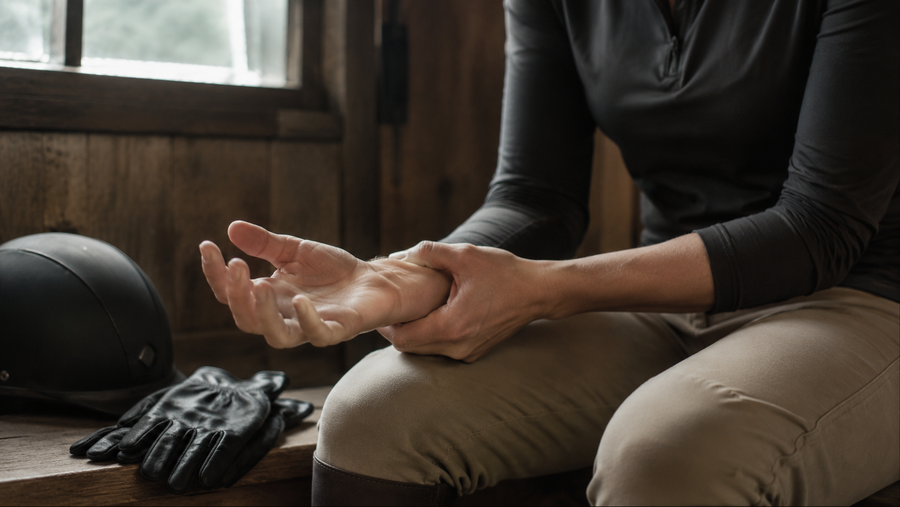
- Open the hands. Spread the fingers, rotate the wrists gently, and let the elbows straighten. If grip does not release normally, make a note before picking up another rein.
- Reset the shoulders. Let both arms hang, turn the palms forward briefly, and take two slow breaths without forcing a stretch.
- Shift the hips. Place one foot on a low safe rail or step, switch sides, then stand evenly. Do not use unstable buckets, tack trunks, or trailer edges.
- Take several drinks. Use the planned food break when it arrives instead of bargaining it away for one more ride.
How should a trainer decide whether to keep riding?
Use a simple green, yellow, red check instead of waiting for pain to make the decision.
| Lane | What you notice | Practical response |
|---|---|---|
| Green | General tiredness that eases with walking, normal grip, even movement, clear focus. | Continue the planned schedule and keep the between-horse resets. |
| Yellow | One area repeatedly tightens, position changes across horses, concentration slips, or the same correction feels harder. | Reduce the next ride's demand, add a longer break, teach from the ground, or move the horse to another day. |
| Red | Sudden or severe pain, weakness, numbness, loss of balance, chest symptoms, shortness of breath, major swelling, or symptoms after a fall or impact. | Stop riding and seek appropriate medical care. |
Keep the check about the human body and the quality of the next ride. ReJüv™ is not a test that proves it is safe to continue.
What is a practical end-of-day horse trainer recovery routine?
- Finish the horses' care. The horse-first handoff remains non-negotiable.
- Walk before driving home. Use three to five easy minutes around the barn or arena.
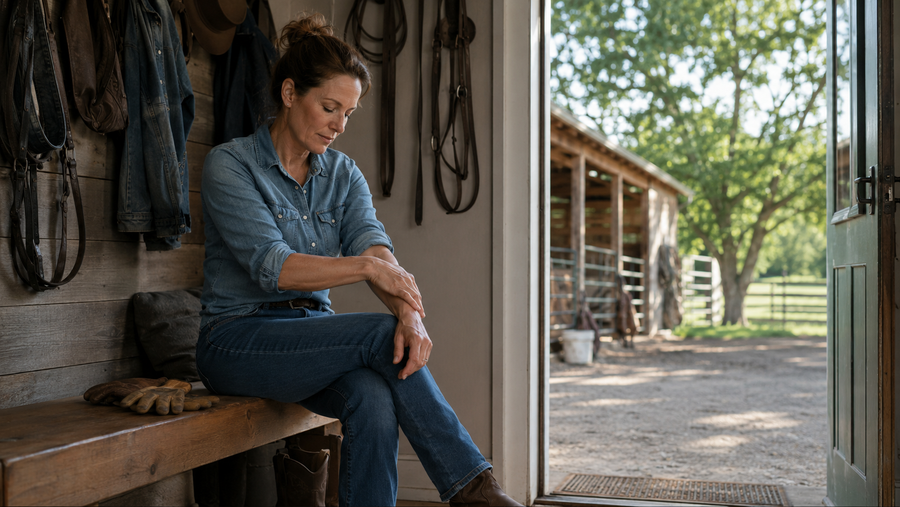
- Clean up. Change out of wet or dusty clothing and wash dirt, sweat, sunscreen, and barn residue from any skin that may receive a topical.
- Repeat the baseline. Recheck hands, neck, shoulders, back, hips, knees, and ankles without forcing range.
- Choose one or two areas. Avoid turning normal tiredness into an aggressive full-body project.
- Record the pattern. Note which horse, saddle, task, or part of the day changed the way you felt. Patterns are more useful than vague memory.
- Protect sleep and tomorrow's order. Put the most demanding ride where the trainer is most ready, not wherever it happens to fit.
The post-ride recovery guide covers the single-ride sequence in more detail, while the multi-day horse show routine helps when the schedule carries into another competition day.
Where does ReJüv™ fit after several rides?
ReJüv™ is the human-labeled topical wellness gel in the Draw It Out® family. Draw It Out® products are for horses, and K9 Advanced™ products are for dogs. Keep those lanes separate.
After the horses are secure and your skin is clean, dry, and intact, ReJüv™ can be applied according to its current label. Let it dry before tight clothing, sleeves, braces, or returning to tack and tools. The 8oz EZ Squeeze format is a practical barn-shelf choice because it supports controlled one-handed dispensing without turning the routine into a production.
Shop ReJüv™ 8oz EZ Squeeze Gel
Compare all formats in the ReJüv™ size guide, or use the hands and forearms routine when reins and repetitive grip are the main issue.
When should a trainer stop self-managing?
Stop riding and seek professional medical care for severe, sudden, traumatic, unexplained, persistent, or worsening symptoms. Urgent evaluation is appropriate for weakness, numbness, loss of coordination, inability to bear weight, a visible deformity, major swelling, chest pain, shortness of breath, fainting, a significant head impact, or symptoms after a hard fall.
Use ReJüv™ only as directed on clean, dry, intact skin. Avoid eyes, mouth, broken skin, external heat, and improvised topical combinations. Patch-test sensitive skin and discontinue use if irritation occurs. ReJüv™ does not diagnose, treat, cure, prevent, or heal an injury, arthritis, inflammation, or disease.
Horse trainer recovery questions
Should a trainer stretch between every horse?
A short movement reset is often more practical than long or aggressive stretching. Walk, release the hands, move the ankles and shoulders gently, and use symptoms and riding quality to decide whether the next horse belongs on the schedule.
What if one saddle or horse consistently changes how I feel?
Record the pattern. Review saddle fit for the rider and horse, stirrup setup, task demands, ride length, and technique with qualified professionals. Repeated symptoms deserve more than a topical workaround.
Can ReJüv™ help me ride through pain?
No. ReJüv™ is a topical wellness gel, not clearance to continue riding and not a substitute for diagnosis or care. Stop when symptoms affect strength, balance, function, judgment, or safety.
Which ReJüv™ size fits a training barn?
The 8oz EZ Squeeze is the most practical controlled-dispensing choice for a regular barn routine. The 3oz is more compact for a show bag, while the 16oz is the larger home or shared-household size.
General information only, not medical advice. Always follow the current product label and use professional guidance for persistent symptoms or training-related movement problems.