Quick take
If your horse bends easily one way but braces the other, falls in on circles, resists the inside leg, feels heavy on one rein, or cannot shape through the body, treat it as a useful signal. The question is not only whether the horse turns. The better question is whether the horse can bend, balance, and stay organized while turning.
Rider translation: “He goes forward, but I cannot shape him.” That is often where uneven bend first shows up.
What riders usually feel first
One rein feels heavierThe horse may lean into one hand while the other rein feels empty or disconnected.
Circles feel differentOne direction feels round and manageable. The other feels flat, braced, drifting, or stuck.
The shoulder escapesThe horse may fall in through the inside shoulder or bulge out through the outside shoulder.
The ribcage feels blockedThe horse may bend at the neck but not through the body, leaving the rider with a false bend.
The most common reasons a horse will not bend or turn evenly
1. Normal asymmetry
Most horses are not perfectly even from left to right. Mild difference can be normal, especially in young horses, horses returning to work, or horses that have repeated one pattern for a long time.
2. Muscle tightness
Tension through the neck, shoulder, ribcage, back, or hindquarter can make one direction feel harder. These horses may improve during warm up, then tighten again after effort builds.
3. Tack or rider imbalance
A saddle, pad, girth, bit, rein habit, or rider weight shift can make one side harder for the horse to use. Before blaming the horse, check the whole setup.
4. Weakness or fatigue
Bending takes strength. A horse may turn, but lose shape when the work asks for balance, engagement, or repeated circles. If bend gets worse late in the ride, fatigue may be part of the pattern.
5. Discomfort
A horse that suddenly refuses to bend, pins ears, shortens stride, swaps behind, trips, bucks, or gets more defensive deserves a slower look. Involve your veterinarian, farrier, trainer, or saddle fitter when the pattern is strong, new, worsening, or paired with other changes.
Pattern guide
| What you feel |
What it may suggest |
| Better one direction, sticky the other |
Asymmetry, one sided tightness, hoof balance difference, tack pressure, or compensation. |
| Stiff both directions |
General restriction, incomplete warm up, workload fatigue, or broader body tension. |
| Bends at the neck but not through the ribs |
False bend, blocked ribcage, shoulder escape, or lack of true body suppleness. |
| Starts okay, then bend gets worse |
Fatigue, conditioning gap, soreness after effort, or recovery shortfall. |
| Sudden refusal to bend |
Possible pain, tack issue, hoof issue, or acute discomfort that should not be pushed through. |
Quick rider checks before you overthink it
- Compare left and right on a large circle before asking for smaller work.
- Notice whether the horse bends through the whole body or only tips the neck.
- Check whether the problem improves after a correct warm up or gets worse with effort.
- Ride a straight line after a circle and see whether the horse stays organized.
- Look for matching signs like shortened stride, heavy contact, tail tension, ear pinning, or loss of forward.
Where daily routine support fits
Uneven bend is not fixed by one product or one ride. It usually improves through better observation, sound training, appropriate professional support, and a repeatable routine that helps the horse come into work prepared.
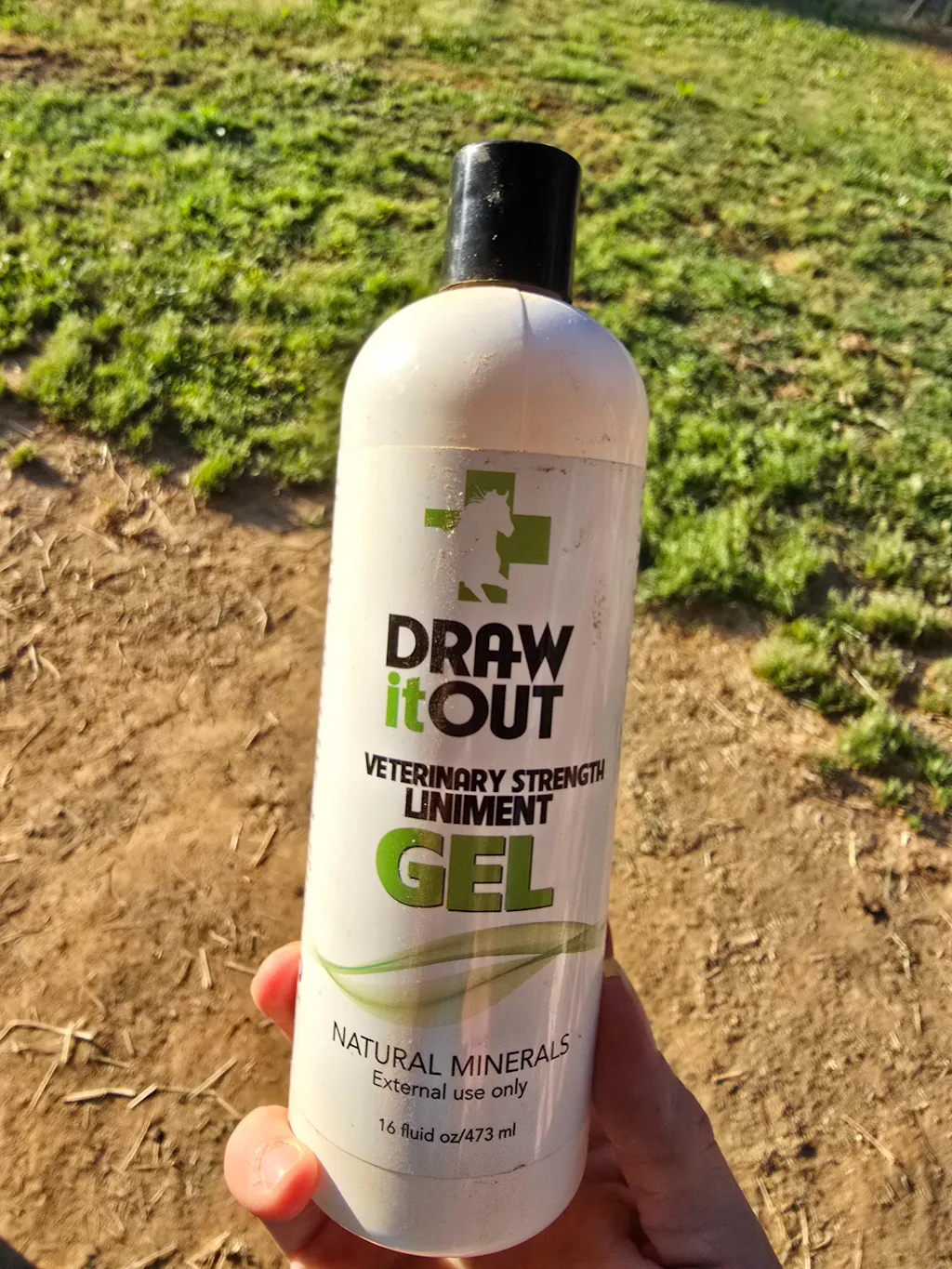
For riders building that routine, Draw It Out® liniment gel can fit into pre ride or post ride care where muscle tightness, daily stiffness, or recovery support are part of the picture. Use a thin, even layer and follow the label. Do not use topical care as a way to cover up a worsening movement problem.
Red flags
Stop and get help if the bend issue is sudden, severe, getting worse, paired with lameness, paired with swelling or heat, paired with back soreness, or paired with behavior that feels unsafe. A horse that cannot bend comfortably may be protecting something.
Better bend starts with better noticing.
Do not reduce the problem to “he is stiff.” Name the pattern. Direction, timing, warm up response, fatigue response, and tack context all matter.
FAQ
Why will my horse bend one way but not the other?
The most common reasons are natural asymmetry, one sided muscle tightness, tack or rider imbalance, hoof balance differences, weakness, fatigue, or discomfort. A mild difference can be normal. A strong or worsening pattern deserves more attention.
Is a horse that will not bend being stubborn?
Sometimes training is part of it, but resistance to bend can also be physical. The safer approach is to read the pattern before labeling the horse. Look at direction, timing, warm up response, fatigue, tack, and body comfort.
What does false bend mean?
False bend happens when the horse flexes the neck but does not bend through the ribcage and body. The horse may look turned, but the body is still braced, drifting, or disconnected.
Can liniment gel help a horse that feels stiff on circles?
Liniment gel can support a daily comfort and recovery routine when muscle tightness or workload recovery are part of the picture. It should not replace veterinary care, saddle fit evaluation, farrier work, or correct training when the pattern is strong or worsening.
When should I call a vet?
Call your veterinarian if the issue is sudden, painful, worsening, paired with lameness, paired with heat or swelling, or paired with major behavior changes. Do not push through a horse that is clearly protecting its body.
Educational content only. Always follow product labels and consult your veterinarian, farrier, trainer, or saddle fitter when movement changes are significant, sudden, or persistent.